In the dappled shade of Berlin’s Superbooth, Sam Gutman invites us to drift into the liminal space where the Korg Phase8 is born—a machine that blurs the membrane between acoustic resonance and electronic imagination. Through a conversation with Lukas, one of the minds behind its creation, we glimpse the alchemy of engineering and intuition that shapes this instrument. The Phase8 doesn’t just generate sound; it exhales magnetic ghosts and tactile echoes, hinting at new sonic landscapes yet to be charted. This is a tale of invention, iteration, and the shimmering possibilities that emerge when tradition and innovation collide.

Between Metal and Mirage: The Phase8’s Philosophy
The Korg Phase8 emerges not merely as a synthesizer, but as a vessel for sonic storytelling—a bridge between the tactile world of acoustic instruments and the boundless expanse of electronic sound. Sam Gutman’s conversation with Lukas, one of the Phase8’s inventors, reveals a design ethos rooted in curiosity: how can the physicality of reeds and resonators be woven into the circuitry of modern synthesis? This question is the gravitational center around which the Phase8 orbits.
From the outset, the team sought inspiration in the iconic Rhodes electric piano, yet their ambition was not to replicate, but to transcend. The Phase8’s architecture invites us to imagine a landscape where electromagnetic hammers and capacitive pickups conjure tones that shimmer between the familiar and the unknown. It’s a machine that asks us to listen not just with our ears, but with our sense of wonder.

"How can we embed acoustics into electronics?"
© Screenshot/Quote: Samgutman (YouTube)
Electromagnetic Dreams: Engineering the Impossible
"An optical pickup is, I guess, just an LED that's placed at the end of the resonator, and then there's a photo sensor underneath, and the resonator would cast a shadow, and that shadow becomes the audio signal that is the pickup."
© Screenshot/Quote: Samgutman (YouTube)
Engineering the Phase8 meant venturing into uncharted territory, where the laws of physics and the poetry of sound entwine. Lukas describes a journey marked by experimentation—testing electromagnetic drivers, capacitive pickups, and even the spectral allure of optical pickups. Each approach brought its own flavor of resonance, its own set of challenges and revelations.
The optical pickup, for instance, cast literal shadows into the audio realm, transforming the movement of a resonator into a ghostly signal. Yet, as with all dreams, reality imposed its limits: sensitivity to light and manufacturing hurdles nudged the team toward a more practical solution. The result is a hybrid system, born from trial and error, that captures the magnetic breath of steel and the delicate nuance of touch.
Iteration as Alchemy: Prototypes and Process
Creation, as Lukas shares, is rarely a straight line. The Phase8’s evolution unfolded across eight distinct phases—each a crucible for ideas, some blossoming into full instruments, others flickering briefly before dissolving into possibility. This iterative dance is reflected in the very name of the instrument, a nod to the winding path from concept to reality.
Prototypes ranged from single-voice testbeds to nearly complete instruments, each iteration a vessel for discovery. Many ideas, though set aside for this incarnation, linger in the wings—waiting to be reborn in future Korg creations. The Phase8, then, is not a static endpoint, but a living chapter in a much larger sonic narrative.
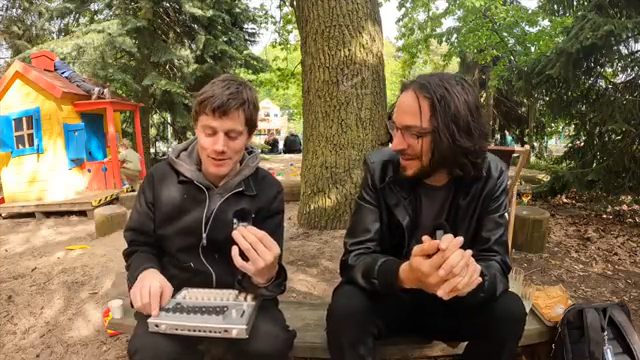
"Phase eight actually describes the stage of the research project, so that's where the name came from."
© Screenshot/Quote: Samgutman (YouTube)
Foundations for the Future: Phase8 as Catalyst
The Phase8 stands as both a culmination and a beginning—a foundation stone for Korg’s future explorations. Lukas hints that the instrument’s DNA, forged through countless experiments and material constraints, will ripple outward into new products. Some ideas, unsuited to the Phase8’s current form, may find their true voice elsewhere in the Korg universe.
Material realities shaped the journey as much as creative vision. The magnetic steel used for the resonators, borrowed from the world of harmonicas and accordions, speaks to the necessity of working within the gravitational pull of larger industries. In this way, the Phase8 is a testament to both ingenuity and adaptation, its very existence a negotiation between dream and practicality.
Seeds of Possibility: User Feedback and Future Growth

"It's really just like this beginning seed of kind of like, oh, what could people actually do with it."
© Screenshot/Quote: Samgutman (YouTube)
As the Phase8 finds its way into the hands of artists, its story is only beginning to unfold. Early feedback, as Sam and Lukas discuss, reveals a landscape of creative potential—one shaped as much by user imagination as by engineering intent. The instrument’s acoustic sequencer, in particular, sparks visions of new hybrids: perhaps a future Phase8 with a full keyboard, channeling the spirit of the Rhodes while retaining its unique mechanical soul.
Yet, as with all living instruments, the true magic of the Phase8 can only be felt in the wild. The video leaves us with the sense that this machine is less a finished product than a seed—one whose roots will burrow deep into the fertile ground of musical invention. To truly grasp its resonance, one must step inside its magnetic field and listen as new sonic ghosts are conjured into being.
This article is also available in German. Read it here: https://synthmagazin.de/korg-phase8-sam-gutman-beleuchtet-die-klangliche-grenze/
More articles about these products:
Watch on YouTube:
Latest articles
Watch on YouTube:
Visit the channel:
https://www.youtube.com/SamGutman
https://www.youtube.com/SamGutman
Links from SamGutman:
Website: https://samgutman.com
Instagram: https://instagram.com/samgutmankeys
Patreon: https://patreon.com/samgutman
Sponsored links:
If you purchase via these links, we may earn a small commission – at no extra cost to you. The link opens an Amazon keyword search, and results may vary depending on availability.
Korg Phase8
🔗 Check price on Amazon
🔗 Check price on Amazon