Intellijel’s latest video dives into the heart of modular techno patching, with a step-by-step walkthrough of building a dynamic loop generator using the Atlantix voice and a supporting cast of Eurorack essentials. The patch, orchestrated by Matt from Intellijel, leverages multiple modulation sources, sequenced envelopes, and clever routing to wring a surprising variety of timbres from a single synth voice. As always with Intellijel’s channel, the focus is on practical, hands-on patching—showing not just what the modules do, but how they interact to create evolving, performance-ready techno textures. If you’re after inspiration for your next rack session, this one’s a goldmine of modular ideas.

23. October 2025
MILES
Intellijel’s Atlantix: A Modular Techno Loop Generator in Action
Atlantix, ATLX Expander, Metropolix, Quad VCA, Quadratt 1U, Quadrax, Steppy
Building Blocks: The Atlantix Techno Patch Unveiled
The video opens with Matt from Intellijel introducing a patch built around the Atlantix synthesizer, designed specifically for generating techno loops. The approach is methodical, with each step broken down to demystify the process for viewers keen to follow along or adapt the ideas to their own setups.
Central to the patch is the use of Metropolix and Steppy as sequencers, driving the Atlantix voice through a series of carefully orchestrated modulations. The aim is to extract a wide palette of analog timbres from a single voice, using modulation sources and sequenced envelopes to keep the sound evolving. This is classic Intellijel territory: practical, modular-focused, and always with an eye on how each element contributes to the overall sonic result.
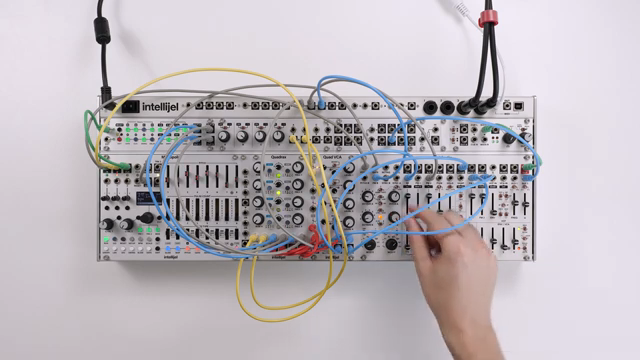
"I'll break down the patch step by step so you can see the process and perhaps take some inspiration for your own patching."
© Screenshot/Quote: Intellijel (YouTube)
Modulation Mayhem: Envelopes, VCAs, and Dynamic Timbres
"And now you can hear the envelope opening up the filter when Steppy triggers it."
© Screenshot/Quote: Intellijel (YouTube)
The patch’s character comes alive through a network of envelopes and modulation sources. Quadrax provides four envelopes, each assigned to a distinct role: modulating filter cutoff, oscillator pitch, index modulation, and injecting bursts of noise. These are triggered by different tracks on Steppy, ensuring that each modulation event is tightly sequenced and can be independently shaped.
Routing is handled with surgical precision: envelopes pass through the Quad VCA and Quadratt for attenuation and mixing before hitting their targets on the Atlantix. This setup allows for both manual and CV control over modulation depth, letting the user sculpt the patch’s dynamics in real time. The result is a techno loop with constantly shifting timbres—proof that even a single synth voice can sound vast when modulation is king.
Sequencers, VCAs, and the Art of Loop Construction
The workflow hinges on the interplay between sequencers, VCAs, and envelopes. Metropolix’s mod lane is brought into the mix to sequence the depth of modulation for the first three envelopes, adding another layer of movement to the patch. By assigning the mod lane to CV output B and routing it to Quad VCA, the patcher gains hands-on control over how much modulation is applied at any moment in the sequence.
Manual attenuation and CV modulation are balanced to taste, allowing for subtle or dramatic shifts in the loop’s character. Quadrat’s assignable CV inputs are used as macro controls, letting the user adjust envelope full time and level across all modulators simultaneously. This macro approach is a clever way to keep the patch performative and responsive, ideal for live techno or studio improvisation.
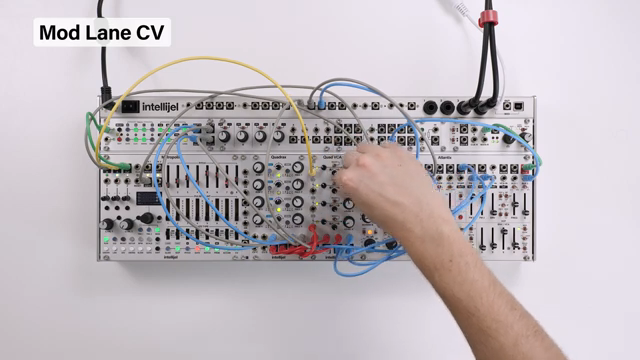
"This will become more obvious if we turn down the level of the attenuators as well."
© Screenshot/Quote: Intellijel (YouTube)
Creative Tweaks: Inspiration for Further Exploration
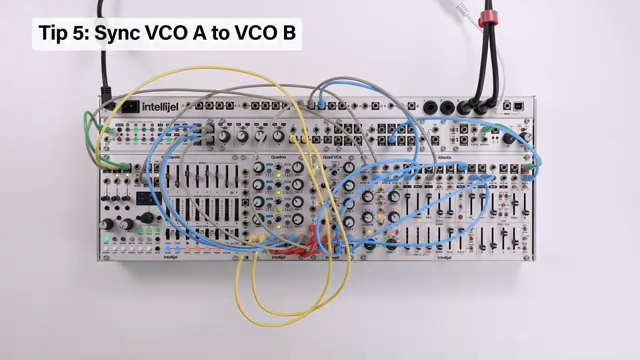
"If VCOB is a static note, you'll get plenty of interesting timbre changes as VCOA is modulated."
© Screenshot/Quote: Intellijel (YouTube)
With the core patch in place, the video shifts to creative possibilities and performance tweaks. Matt demonstrates how quickly the sequence can be transformed using Metropolix’s offset, pulse length, and stage length functions. Randomising the mod lane yields fresh modulation patterns on the fly, while uncoupling VCOB from pitch input allows for static bass notes—a classic techno move.
Further tricks include bypassing the filter for deeper tones, syncing oscillators for evolving timbres, and engaging Atlantix’s drive circuit for added grit. The video encourages viewers to experiment with envelope shapes and modulation types, highlighting the flexibility of Quadrax and the patch as a whole. These suggestions are less about rigid recipes and more about sparking ideas for users to adapt and mutate in their own racks.
Patch, Tweak, Repeat: The Modular Techno Mindset
The closing moments reinforce the ethos of modular patching: experiment, tweak, and don’t be afraid to stray from the script. Matt suggests adding drums or trying longer, more complex envelopes to push the patch in new directions. The Atlantix, when paired with thoughtful modulation and sequencing, proves itself a versatile engine for techno textures. As with any good modular demo, the real message is to use these ideas as a springboard for your own sonic explorations.
This article is also available in German. Read it here: https://synthmagazin.at/intellijel-atlantix-ein-modularer-techno-loop-generator-im-praxistest/
Watch on YouTube:
Latest articles
Watch on YouTube:
Visit the channel:
https://www.youtube.com/intellijel
https://www.youtube.com/intellijel
Links from intellijel:
website: https://intellijel.com
forum: https://forum.intellijel.com
instagram: https://instagram.com/intellijel
facebook: https://www.facebook.com/intellijel
Sponsored links:
If you purchase via these links, we may earn a small commission – at no extra cost to you. The link opens an Amazon keyword search, and results may vary depending on availability.
Atlantix
🔗 Check price on Amazon
🔗 Check price on Amazon
ATLX Expander
🔗 Check price on Amazon
🔗 Check price on Amazon
Metropolix
🔗 Check price on Amazon
🔗 Check price on Amazon
Quad VCA
🔗 Check price on Amazon
🔗 Check price on Amazon
Quadratt 1U
🔗 Check price on Amazon
🔗 Check price on Amazon
Quadrax
🔗 Check price on Amazon
🔗 Check price on Amazon
Steppy
🔗 Check price on Amazon
🔗 Check price on Amazon