Bored of synths that work too well? HAINBACH drags the RMIF TI-5 out of Soviet obscurity and straight into the rave bunker, warts and all. This rare, eight-voice hybrid is a Frankenstein’s monster of analog warmth and digital chaos, built with more hope than hardware. If you like your gear unpredictable, with filters that snarl and envelopes that lag like dial-up internet, you’re in for a treat. HAINBACH’s signature blend of dry humour and deep sound exploration makes this a must-watch for anyone who thinks perfection is overrated.

10. March 2026
SPARKY
HAINBACH vs. Soviet Juno: The RMIF TI-5 Synthesizer Gets a Proper Rinsing
Soviet Rarity: The TI-5 Emerges from the Shadows
Forget your polished Japanese classics—HAINBACH introduces the RMIF TI-5, a synth so rare even ex-Soviet collectors scratch their heads. This eight-voice analog/digital hybrid is the kind of machine you only find if you’re willing to decipher a Russian manual that reads like a fever dream. Built in Riga during the late 80s, the TI-5 is a true oddball, both in origin and operation.
HAINBACH wastes no time poking fun at the synth’s notorious reputation for being nearly impossible to service and even harder to find. With barely any working units left and zero schematics, it’s a miracle this one even powers on. If you’re after a synth with a story, the TI-5 is basically a Cold War relic with a MIDI port.
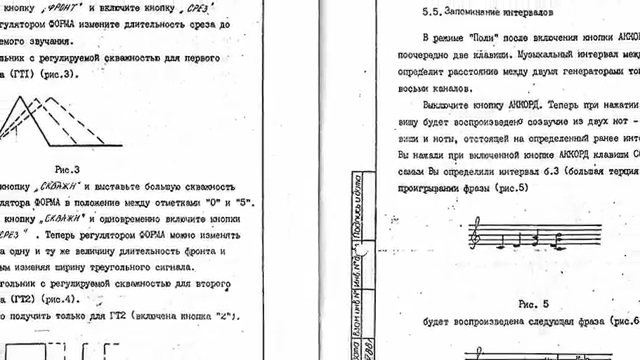
"But it has the most charming spelling mistakes of any synth ever made."
© Screenshot/Quote: Hainbach (YouTube)
Charm in Chaos: The TI-5’s Sound and Soul
"He did not even want me to put on the camera when he came in, because there were many faults with this machine still."
© Screenshot/Quote: Hainbach (YouTube)
Despite being a ticking time bomb, the TI-5 delivers a sound that’s hard to match. HAINBACH and his tech wizard Bartosz spent two years coaxing music out of this beast, battling digital gremlins and random failures along the way. When it works, though, it’s pure magic—think deep Moog basses, lush pads, and chiptune leads that sound like they crawled out of a Soviet arcade.
The synth’s quirks are part of its charm. Even with half the functions on strike, the TI-5’s raw oscillators and gritty filters create a palette that’s both nostalgic and unique. It’s not just about the notes you play—it’s about embracing the chaos and letting the machine’s unpredictable nature shape your sound. If you want safe and sterile, look elsewhere.
Engineering Oddities: Soviet Design on Display
The TI-5 is a masterclass in Soviet engineering, for better or worse. HAINBACH breaks down the feature set: eight voices, each with two oscillators based on Russian clones of the PID chip 85C53. Waveforms are selectable, detuning is handled by playing intervals, and envelopes are labelled with cryptic abbreviations that would make a Roland engineer weep.
But the fun doesn’t stop there. The synth boasts Moog-style ladder filters, a basic LFO with four shapes, and a noise source that’s more ambitious than practical. Advanced features like the arpeggiator and sequencer are mostly broken, and the legendary mono mode—where you could set each voice individually—is just a dream. Still, you can sense the ambition behind the design, even if reality didn’t quite catch up.
Lag City: When Speed Isn’t Everything
Here’s where things get spicy: the TI-5 is slow. Not ‘vintage charm’ slow—more like ‘firmware written during a blackout’ slow. Envelopes lag, knobs update at a glacial four times per second, and the whole thing runs on a Soviet 8080 clone that’s allergic to fast MIDI. Parameter jumps are the norm, not the exception.
HAINBACH doesn’t sugar-coat it: if you want snappy response, this isn’t your weapon. But sometimes, that lag becomes part of the instrument’s weird appeal. Just don’t expect it to keep up with your finger drumming.

"The envelopes are very laggy, and the knobs update just four times per second, so you get a lot of parameter jumps."
© Screenshot/Quote: Hainbach (YouTube)
Back to the Future: TI Revival on the Horizon?
Just when you think the TI-5 is doomed to fade into obscurity, HAINBACH drops a hint: a Latvian company might be reviving the TI series, aiming to keep the original’s character but ditch the Soviet unreliability. If they pull it off, we could see a new generation of synths that channel the TI-5’s wild spirit without the constant threat of meltdown.
Let’s hope they keep the legendary spelling mistakes—because nothing says ‘authentic’ like a synth that can’t even spell its own parameters.
This article is also available in German. Read it here: https://synthmagazin.at/hainbach-vs-sowjet-juno-der-rmif-ti-5-synthesizer-im-haertetest/
Watch on YouTube:
Watch on YouTube:
Visit the channel:
https://www.youtube.com/Hainbach
https://www.youtube.com/Hainbach
Links from Hainbach:
Bandcamp: https://hainbach.bandcamp.com
Instagram: https://instagram.com/hainbach101
Homepage: https://hainbachmusik.com
Sponsored links:
If you purchase via these links, we may earn a small commission – at no extra cost to you. The link opens an Amazon keyword search, and results may vary depending on availability.
RMIF TI-5 Synthesizer
🔗 Check price on Amazon
🔗 Check price on Amazon