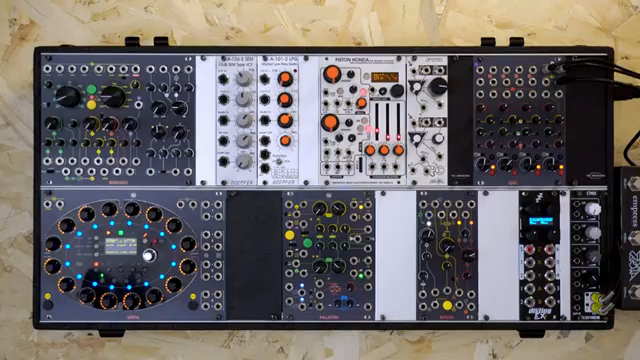
Frap Tools returns with a deep-dive into the art of modular sequencing, as Francesco Gennari unpacks his composition ‘Studio No.3’ using the USTA sequencer as the central brain. This video is a patch-by-patch breakdown of a performance that weaves together four voices, intricate polyrhythms, and a blend of classic and digital modules. Expect a detailed exploration of how rhythmic structures, random modulation, and live pattern changes can transform a modular rig into a living, breathing instrument. For those who care about patch logic, modulation sources, and the subtle interplay of voices, this is a masterclass in Eurorack composition, Frap Tools style.
21. May 2025
MILES
Frap Tools USTA in Action: Polyrhythms and Polymeters in Francesco Gennari’s Modular Labyrinth
Disting EX, Doepfer Low Pass Gate, Doepfer SEM Filter, Empress Zoia, Frap Tools Bagài, Frap Tools Brenso, Frap Tools Falistri, Frap Tools USTA, Make Noise Optomix, Piston Honda MKIII, QSC Mixer
Polyrhythms Unleashed: The Modular Performance Blueprint
Francesco Gennari opens the session with a performance of ‘Studio No.3’, a piece constructed around the exploration of polyrhythmic patterns and polymetric phrasing. The video immediately sets the tone for a journey into rhythmic complexity, with Gennari promising a post-performance walkthrough of the patching and compositional decisions that underpin the track.
The initial performance is a showcase of four interwoven voices, each contributing to a dense and evolving modular texture. Gennari’s approach is methodical, using the Frap Tools USTA sequencer as the central hub to coordinate pattern lengths and rhythmic structures. The result is a composition that feels both meticulously crafted and alive, with shifting harmonic and melodic landscapes emerging from the interplay of sequenced voices and live manipulation.
"Today I'll perform Studio #3, a piece that explores polyrhythmic patterns and polymetric phrasing."
© Screenshot/Quote: Fraptools (YouTube)
Voice Craft: Brenso, Doepfer, and Piston Honda in Concert
The heart of the patch lies in its four-voice structure, each voice built from a carefully chosen combination of modules. The main melodic line is driven by the yellow oscillator of the Brenso complex oscillator, paired with a Doepfer low pass gate for that signature plucked character. Meanwhile, the bass is handled by Brenso’s green oscillator, routed through a SEM filter for a rounder, more foundational tone.
Voices three and four introduce digital grit via the Piston Honda MKIII, each channel running saw waves and processed through the Optomix for envelope shaping. These voices are sequenced independently, with glide and percussive elements added through Frap Tools Falistri and random clocking from Bagai. The mix is then sent through a QSC mixer, with each voice occupying its own channel for maximum control and spatial separation.
Modulation Mayhem: Bagai, Disting EX, and the Art of Controlled Chaos
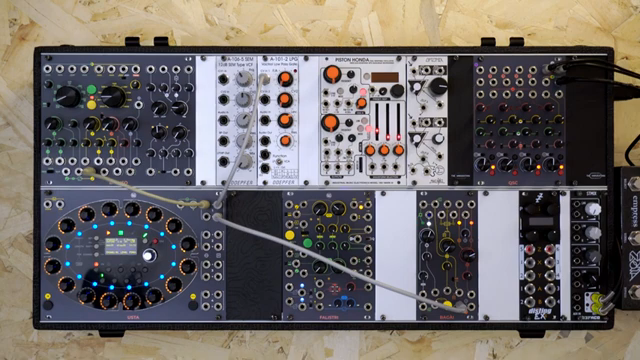
"I choose Bagai because its sample and hold outputs are bipolar, which is really useful, for example, to modulate the pan of one of the QSC mixer channels."
© Screenshot/Quote: Fraptools (YouTube)
Gennari’s patch is a study in modulation, with the Bagai module taking centre stage for random voltage duties. Unlike the more expansive Sapèl, Bagai’s bipolar sample and hold outputs are put to work modulating parameters like pan and wave shaping, injecting unpredictable motion into the soundscape. The module’s independent clocking options allow for asynchronous modulation, further enhancing the organic feel of the performance.
Effects are handled with equal care. The Disting EX is configured as a dual ping pong delay, with each channel clocked differently—one by Bagai (divided via Falistri’s flip-flop), the other by a separate random clock. The Empress Zoia pedal is also brought into the modular fold, clocked by USTA and patched for both reverb-vibrato-distortion and reverb-delay-distortion chains, each switchable on the fly. This combination of random modulation and flexible effects routing gives the performance its distinctive, ever-evolving texture.
Live Pattern Sculpting: USTA as Performance Engine
A key strength of the USTA sequencer, as demonstrated here, is its ability to switch patterns and manipulate sequence structure in real time. Gennari walks through how tracks can be set to play specific pattern ranges, and how these can be changed on the fly by entering performance mode and using the encoders. This allows for dynamic shifts in phrasing and rhythmic density, essential for keeping a modular performance engaging.
The video details how starting and ending patterns can be adjusted mid-performance, looping on a single pattern or expanding to a longer sequence as needed. This flexibility is further enhanced by USTA’s gate layers, which allow for ratcheting and probability-based variations. The result is a sequencer that feels less like a rigid grid and more like an improvisational partner, capable of responding to the performer’s intent in real time.
"Houston has been extremely useful, especially because changing patterns is quick and very performance friendly."
© Screenshot/Quote: Fraptools (YouTube)
Polymetric Finale: Layered Rhythms and Expanding Space
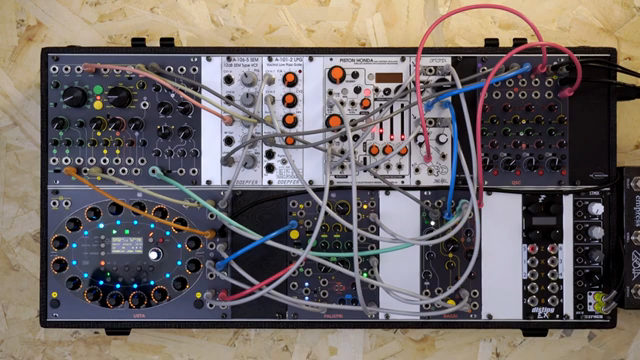
"This creates a layered, non-aligned phrasing, almost a phase shifting effect."
© Screenshot/Quote: Fraptools (YouTube)
The closing section of ‘Studio No.3’ introduces a polymetric twist, with voice one shifting to a 15-note pattern while the other voices maintain their established structures. This creates a phase-shifting effect, as the voices drift in and out of alignment, producing a layered and non-repetitive phrasing that keeps the listener guessing.
To heighten the sense of space and movement, Gennari isolates voices three and four, routing them through additional effects and stereo panning. The Disting EX and Empress Zoia are used to full effect here, with delays and reverbs clocked independently to further decouple the rhythmic layers. The result is a finale that feels both meticulously constructed and delightfully unpredictable—a fitting end to a modular étude that celebrates complexity, modulation, and the art of live patching.
This article is also available in German. Read it here: https://synthmagazin.at/frap-tools-usta-im-einsatz-polyrhythmen-und-polymeter-im-modularen-labyrinth-von-francesco-gennari/
Watch on YouTube:
Latest articles
Watch on YouTube:
Visit the channel:
https://www.youtube.com/FrapTools
https://www.youtube.com/FrapTools
Links from FrapTools:
website: https://frap.tools
instagram: https://instagram.com/fraptools
facebook: https://www.facebook.com/fraptools
twitter: https://twitter.com/fraptools
soundcloud: https://soundcloud.com/fraptools
Sponsored links:
If you purchase via these links, we may earn a small commission – at no extra cost to you. The link opens an Amazon keyword search, and results may vary depending on availability.
Disting EX
🔗 Check price on Amazon
🔗 Check price on Amazon
Doepfer Low Pass Gate
🔗 Check price on Amazon
🔗 Check price on Amazon
Doepfer SEM Filter
🔗 Check price on Amazon
🔗 Check price on Amazon
Empress Zoia
🔗 Check price on Amazon
🔗 Check price on Amazon
Frap Tools Bagài
🔗 Check price on Amazon
🔗 Check price on Amazon
Frap Tools Brenso
🔗 Check price on Amazon
🔗 Check price on Amazon
Frap Tools Falistri
🔗 Check price on Amazon
🔗 Check price on Amazon
Frap Tools USTA
🔗 Check price on Amazon
🔗 Check price on Amazon
Make Noise Optomix
🔗 Check price on Amazon
🔗 Check price on Amazon
Piston Honda MKIII
🔗 Check price on Amazon
🔗 Check price on Amazon
QSC Mixer
🔗 Check price on Amazon
🔗 Check price on Amazon