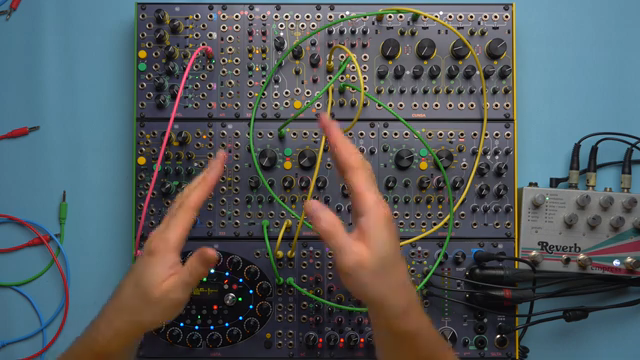
Frap Tools, the Italian maestros of modular design, take a classic patching paradigm and flip it on its head in this video. Instead of the usual oscillator-into-filter routine, they demonstrate what happens when you send a filter’s output into an oscillator—using their own CUNSA filter and BRENSO oscillator modules. The result? A journey into unconventional FM territory, with cross-modulation, pinged filters, and a taste of creative chaos. If you’re curious about how filters can become modulation sources and want to see just how far you can push a Eurorack setup, this demo is a must-watch.
25. September 2024
MILES
Frap Tools Turns the Tables: Feeding Filters into Oscillators for Sonic Mayhem
Frap Tools Bagài, Frap Tools Brenso, Frap Tools Cunsa, Frap Tools Falistri, Whistler Sequencer
Reversing the Signal: Filters as Oscillator Food
Most of us have patched an oscillator into a filter more times than we care to admit, but Frap Tools asks the forbidden question: what if you patch a filter into an oscillator instead? This video kicks off with a simple yet subversive setup, where the CUNSA filter’s output is sent directly into the BRENSO oscillator, turning the usual subtractive workflow on its head.
The patch is built around two sequences—a bass and a lead—each handled by one half of a BRENSO oscillator. Both voices are routed through separate filters on the CUNSA, each set to low pass mode, with the bass using a 12dB/octave slope and the lead a 24dB/octave. The result is a foundation for exploring how filters can shape and even generate modulation signals when fed into an FM-capable oscillator.
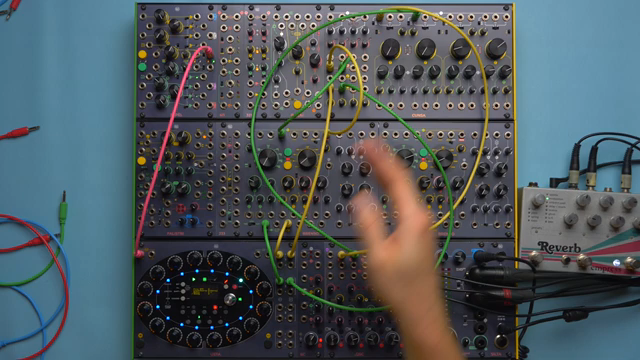
"Now everybody is capable of sending an oscillator into a filter but what about the other way around?"
© Screenshot/Quote: Fraptools (YouTube)
BRENSO in the Spotlight: True Zero FM and Modulation Playground
"We all know that Brenso is a true zero analog FM oscillator."
© Screenshot/Quote: Fraptools (YouTube)
BRENSO’s reputation as a true zero analog FM oscillator is on full display here. The video highlights how both its oscillators can be independently modulated in true zero linear FM, opening up a playground for cross-modulation and complex timbral shifts.
Instead of sticking to the usual sine-to-sine FM, the patcher demonstrates that BRENSO’s FM circuit is flexible enough to accept other signals—like those coming from the CUNSA filters—making it possible to treat the module as two independent FM engines. This flexibility is key to the patch’s experimental edge.
Filter Tricks and Cross-Modulation: Crafting Complexities
A clever detail in this patch is the use of two CUNSA filters, both set to low pass, but with different slopes and in combo mode. Each filter is pinged by gate tracks from a Whistler sequencer, eliminating the need for envelopes and allowing for percussive, plucky responses straight from the filters.
The real magic happens when the sine-like outputs from these filters are used to modulate the BRENSO oscillators’ frequencies. By cross-patching these signals, the video demonstrates how to achieve intricate FM textures and shifting harmonics. This approach turns the filter from a mere tone shaper into an active participant in the synthesis process, capable of generating its own modulation content.
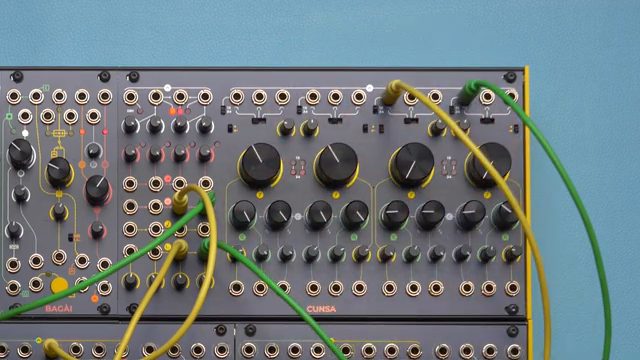
"They will become actual sine waves like this."
© Screenshot/Quote: Fraptools (YouTube)
Creative Modulation Workflows: From LFOs to Randomness
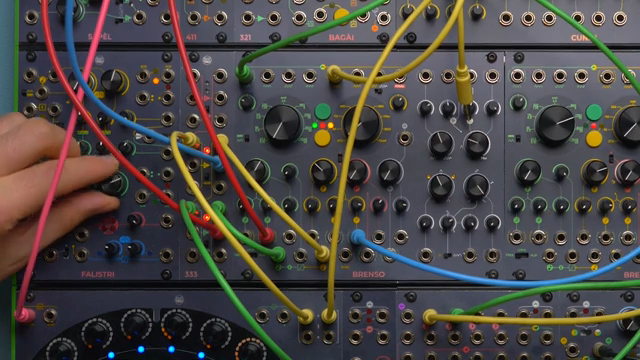
"I may also use Bagais fluctuating random voltage to control the bass."
© Screenshot/Quote: Fraptools (YouTube)
Once the basic patch is established, the video dives into more creative workflows. The volt-per-octave signals are duplicated and routed to both the BRENSO and the CUNSA filters, ensuring that pitch tracking remains consistent across the system. This careful routing is essential for keeping the resulting sounds musical, even as the patch grows more complex.
To add further movement, modulation sources like the FALISTRI (set to LFO mode) are brought in to control the amount of FM applied to both oscillators. The BAGÀI module’s fluctuating random voltages are also introduced, targeting the bass for extra unpredictability. By tweaking ratios and parameters, the patcher showcases how easy it is to morph between different timbral landscapes, from subtle FM to outright chaos.
A final touch of reverb rounds out the sound, demonstrating how this unconventional patch can yield rich, evolving textures. The workflow encourages experimentation, showing that filters and oscillators can interact in far more adventurous ways than tradition suggests.
This article is also available in German. Read it here: https://synthmagazin.at/frap-tools-dreht-den-spiess-um-filter-in-oszillatoren-fuer-klangliches-chaos/
Watch on YouTube:
Latest articles
Watch on YouTube:
Visit the channel:
https://www.youtube.com/FrapTools
https://www.youtube.com/FrapTools
Links from FrapTools:
website: https://frap.tools
instagram: https://instagram.com/fraptools
facebook: https://www.facebook.com/fraptools
twitter: https://twitter.com/fraptools
soundcloud: https://soundcloud.com/fraptools
Sponsored links:
If you purchase via these links, we may earn a small commission – at no extra cost to you. The link opens an Amazon keyword search, and results may vary depending on availability.
Frap Tools Bagài
🔗 Check price on Amazon
🔗 Check price on Amazon
Frap Tools Brenso
🔗 Check price on Amazon
🔗 Check price on Amazon
Frap Tools Cunsa
🔗 Check price on Amazon
🔗 Check price on Amazon
Frap Tools Falistri
🔗 Check price on Amazon
🔗 Check price on Amazon
Whistler Sequencer
🔗 Check price on Amazon
🔗 Check price on Amazon