Frap Tools brings us an in-depth conversation with Tim Davies, a modular synth artist and drummer whose background in physics and jazz informs his unique approach to electronic music. In this episode, Tim unpacks his journey from jazz trumpet to modular synthesis, revealing how the modular format enables him to weave together layered soundscapes that blur the lines between jazz, house, and experimental electronics. Expect a deep dive into compositional strategies, patch breakdowns, and the subtle art of modulation—plus a look at how Frap Tools’ modules fit into Tim’s creative workflow. For anyone interested in the crossroads of jazz harmony and modular rig complexity, this is essential viewing.
20. June 2024
MILES
Frap Tools: Tim Davies on Modular Jazz, House, and the Art of the Patch
Ableton Live, Analog Rytm, Clex Delay, Frap Tools AGOGO, Frap Tools Brenso, Frap Tools Falistri, Frap Tools Fumana, Frap Tools Sapèl, Intellijel ADSR, Mutable Instruments Morphagene, Oberheim OB-X, Pittsburgh Primary Oscillator, Polaris Filter, Quadrax, Verbose Mixer
From Jazz Trumpet to Modular Patch Cables
Tim Davies’ musical path is a winding one, beginning with the trumpet in school jazz bands and evolving through drums, recording, and eventually the world of modular synthesis. His scientific background—he holds a Master’s in Physics—has shaped his creative process, encouraging a methodical yet exploratory approach to sound. Tim’s early exposure to electronic music came via computer-based tools like Ableton and Max, but he soon found himself drawn to the tactile, hands-on nature of hardware synthesis. The modular format, with its endless patching possibilities, offered a way to bridge his love of jazz improvisation and the sonic experimentation of electronic music.
What stands out in Tim’s story is the convergence of two seemingly disparate worlds: the collaborative, improvisational energy of jazz and the precise, sculptural possibilities of modular synthesis. He notes that while software can get you close to certain sounds, there’s a particular magic in using the “right tool for the job”—in this case, the physical modules themselves. The pandemic lockdowns provided the time and space for Tim to dive deep into modular, allowing him to chase the sounds he’d long imagined but couldn’t quite reach with software alone. For Tim, modular isn’t just a set of gear; it’s a way to physically engage with music, moving beyond the screen and into a space where voltage and intuition meet.
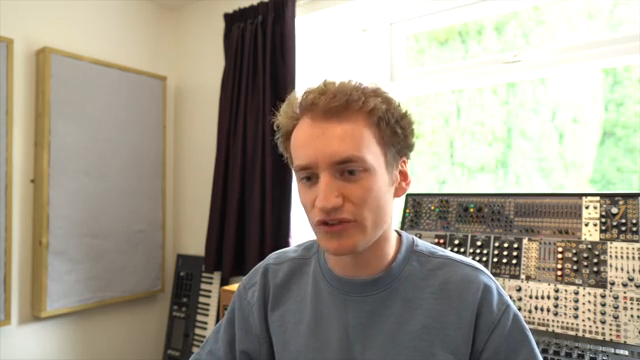
"One of the things I really like about modular as a format is how you can, just from having a simple selection of items, make so many different types of instrument with it that can be played in so many different ways."
© Screenshot/Quote: Fraptools (YouTube)
Compositional Alchemy: Jazz Meets Modular Layering
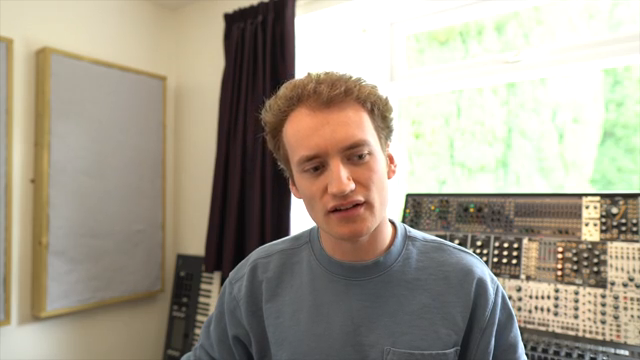
"If you have a chord sequence that changes chromatically a lot and doesn't have too many shared notes between adjacent chords, you can get into trouble very quickly especially when you're using like delays and reverbs."
© Screenshot/Quote: Fraptools (YouTube)
Tim’s compositional workflow is a hybrid affair, integrating the strengths of both DAW-based sequencing and modular hardware. In his main project, Marble Sun, he collaborates with singer Olivia Williams to create music that sits at the intersection of dance, jazz, and pop. The songwriting process often begins with piano-based chorale structures, focusing on voice leading and harmonic continuity—a nod to jazz tradition. These harmonic frameworks are then fleshed out with rhythm, bass, and modular arpeggios, resulting in tracks that are both harmonically rich and rhythmically engaging.
A key insight from Tim is the importance of shared notes and smooth transitions between chords, especially when sequencing modular synths with time-based effects or arpeggiators. By ensuring that adjacent chords have overlapping tones, he avoids unwanted dissonance and creates a foundation for modular parts to sit comfortably within the mix. Interestingly, melodies in Marble Sun’s tracks are often composed last, layered atop the existing harmonic and rhythmic scaffolding. This approach, while unusual in pop contexts, draws from jazz’s improvisational ethos and results in music that feels both natural and sophisticated.
Patch Breakdown: Voices, Modulation, and Texture
The heart of the video is a detailed breakdown of Tim’s modular patch, which demonstrates how multiple voices and clever modulation can yield a cohesive, dynamic soundscape. Four main voices are at play: a subtractive bass voice using classic ladder filtering, two arpeggiator voices (one via Frap Tools BRENSO and another through the Pittsburgh Primary Oscillator with its distinctive fragments output), and a high pedal part sampled and manipulated via Morphagene and Fumana. Each voice is sculpted with its own envelope and filter path, with modulation sources carefully distributed to glue the patch together.
Tim’s approach to modulation is particularly instructive. Rather than flooding the system with unrelated mod sources, he uses a small number of sequencer lanes and random voltages, multed to several destinations. This strategy keeps the patch lively and evolving without descending into chaos—a lesson in restraint and intentionality. The result is a patch where envelope decays, filter cutoffs, and timbral shifts move in concert, producing a sound that’s both organic and tightly controlled.
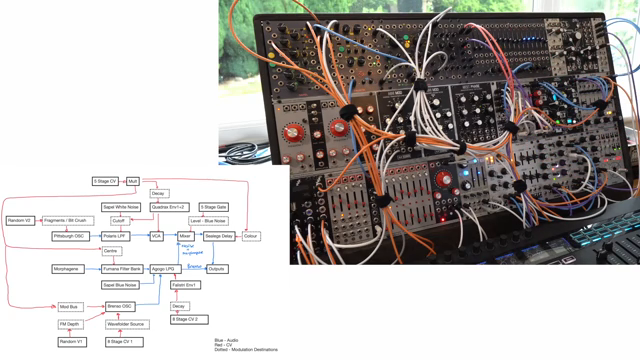
"The agogo here has a really nice feature where you can kind of send in one or two envelopes and then split them between all the different channels."
© Screenshot/Quote: Fraptools (YouTube)
Versatility in Modular: Melodic Lines and Harmonic Depth
Tim illustrates how modular synthesis can serve multiple roles in a production chain—from generating raw musical ideas to acting as a sophisticated effects processor. He often treats his modular rig as a set of flexible instruments, sometimes using it as an external plugin for bass, leads, or arpeggios, and other times leveraging it for post-production effects and transitions. This versatility is a key advantage, allowing him to tailor the modular’s role to the needs of each track.
The discussion also highlights the challenges and rewards of integrating modular hardware with DAW sequencing, especially when dealing with complex jazz harmonies and shifting time signatures. Tim prefers to handle note sequencing in Ableton, reserving the modular for tone shaping and modulation duties. This division of labour enables him to achieve both traditional melodic lines and intricate harmonic textures, all while maintaining a distinctive sonic identity. The modular’s limitations—finite voices, envelopes, and modulation lanes—become creative constraints, fostering a deeper understanding of signal flow and musical relationships.
Marble Sun: Jazz, Dance, and Modular in Performance
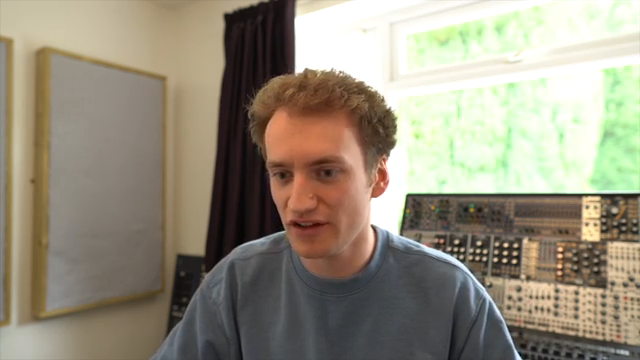
"You don't actually have to work anywhere near as hard to have a sound and I think modular does totally help with that because your combination of modules that you pick... you'll get a really distinctive and unique sound to you."
© Screenshot/Quote: Fraptools (YouTube)
The final section turns to Marble Sun, Tim’s main project, which exemplifies the fusion of jazz sensibility with dancefloor energy. Tracks like “Sunflower” showcase how Frap Tools modules such as Fumana can be used in unconventional ways—here, as a vocoder processing drum machines and synth chords. Tim and Olivia’s shared jazz background informs their approach, resulting in music that’s both harmonically adventurous and immediately accessible.
Practical workflow tips abound: Tim discusses the value of sonic consistency achieved by working with a limited palette of modules and instruments, and the importance of modulation strategies that are both performable and repeatable. The conversation closes with musings on future module designs—Tim dreams of a simple, slider-based CV sequencer for more hands-on control—and reflections on how modular’s constraints can actually deepen one’s understanding of both gear and musical structure. For those navigating the intersection of jazz, electronic music, and modular synthesis, Marble Sun’s approach offers a compelling blueprint.
This article is also available in German. Read it here: https://synthmagazin.at/frap-tools-tim-davies-ueber-modular-jazz-house-und-die-kunst-des-patchens/
Watch on YouTube:
Latest articles
Watch on YouTube:
Visit the channel:
https://www.youtube.com/FrapTools
https://www.youtube.com/FrapTools
Links from FrapTools:
website: https://frap.tools
instagram: https://instagram.com/fraptools
facebook: https://www.facebook.com/fraptools
twitter: https://twitter.com/fraptools
soundcloud: https://soundcloud.com/fraptools
Sponsored links:
If you purchase via these links, we may earn a small commission – at no extra cost to you. The link opens an Amazon keyword search, and results may vary depending on availability.
Ableton Live
🔗 Check price on Amazon
🔗 Check price on Amazon
Analog Rytm
🔗 Check price on Amazon
🔗 Check price on Amazon
Clex Delay
🔗 Check price on Amazon
🔗 Check price on Amazon
Frap Tools AGOGO
🔗 Check price on Amazon
🔗 Check price on Amazon
Frap Tools Brenso
🔗 Check price on Amazon
🔗 Check price on Amazon
Frap Tools Falistri
🔗 Check price on Amazon
🔗 Check price on Amazon
Frap Tools Fumana
🔗 Check price on Amazon
🔗 Check price on Amazon
Frap Tools Sapèl
🔗 Check price on Amazon
🔗 Check price on Amazon
Intellijel ADSR
🔗 Check price on Amazon
🔗 Check price on Amazon
Mutable Instruments Morphagene
🔗 Check price on Amazon
🔗 Check price on Amazon
Oberheim OB-X
🔗 Check price on Amazon
🔗 Check price on Amazon
Pittsburgh Primary Oscillator
🔗 Check price on Amazon
🔗 Check price on Amazon
Polaris Filter
🔗 Check price on Amazon
🔗 Check price on Amazon
Quadrax
🔗 Check price on Amazon
🔗 Check price on Amazon
Verbose Mixer
🔗 Check price on Amazon
🔗 Check price on Amazon