Frap Tools, the Italian maestros of modular design, take centre stage with a deep-dive into building and performing a true polyphonic modular synth—one that can be played with a keyboard and sequenced simultaneously. In this video, Francesco Gennari reconstructs his track ‘Studio No.7’ from the ground up, revealing not just the patching intricacies but also the creative decisions behind each voice. Expect a blend of classic Frap Tools elegance, clever routing, and a healthy dose of formant oscillator wizardry, all aimed at those who see their modular as more than just a wall of drones. If you’ve ever wondered how polyphony, sequencing, and hands-on play can coexist in a Eurorack rig, this is essential viewing.

29. October 2025
MILES
Frap Tools: Polyphony, Patch Cables and the Art of Modular Keyboard Play
Befaco ST-MIX, Doepfer A-101-2 (Lopez Gate), Expert Sleepers Disting MK4, Frap Tools 321, Frap Tools 333, Frap Tools Falistri, Frap Tools USTA, Happy Nerding FX AID XL, Noise Engineering Desmodus Versio, Pamela's New Workout
A Modular Synth That Actually Plays Polyphony
The video opens with Francesco Gennari introducing his performance of ‘Studio No.7’, built around a modular system that manages to be both polyphonic and playable from a keyboard. This is not your average wall of bleeps—here, the modular rig is wrangled into a five-voice instrument, with four voices handled by a polyphonic synth patch and a fifth, distinct melodic line courtesy of a formant oscillator. The performance is not just a demonstration of technical prowess but a statement: modular can be expressive, playable, and structured, not just experimental.
After the performance, the patch is deconstructed and rebuilt from scratch. Gennari promises to guide viewers through every step, from creative choices to the nitty-gritty of signal flow. The focus is on how the modular system can be both sequenced and played live, with the keyboard controlling the main polyphonic voices while other elements are driven by carefully orchestrated modulation and sequencing. It’s a rare glimpse into a modular workflow that puts musicality and playability front and centre.
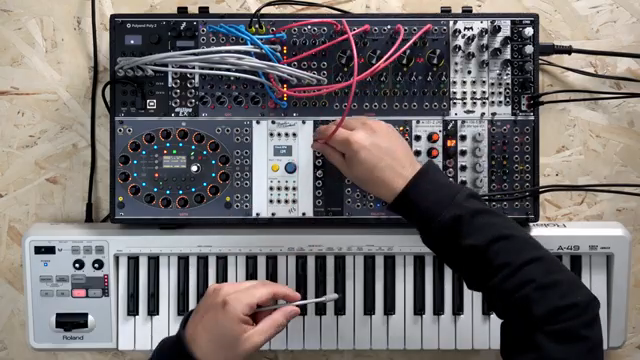
"I reconstruct the patch from the ground up and guide you through the techniques, creative decisions, and structural choices that shaped it."
© Screenshot/Quote: Fraptools (YouTube)
Five Voices and a Formant: The Heart of the Patch
Central to this setup is the five-voice architecture: four voices form a classic polyphonic synth, while the fifth voice stands out with its unique formant character. The polyphonic section is routed for keyboard control, allowing for chordal play and expressive performance, a feat not often seen in Eurorack systems. Meanwhile, the formant oscillator is reserved for the melodic line, offering a contrasting timbre and behaviour.
The video highlights how the formant voice is not just an afterthought but a key player in the arrangement. By dedicating a separate oscillator and modulation path to this voice, Gennari achieves a layered texture that goes beyond simple polyphony. The interplay between these voices is what gives the track its distinctive sound, demonstrating the creative potential of combining traditional polyphonic techniques with modular flexibility.
Routing, Sequencing, and the USTA Factor
"Ustapp is used in several different ways throughout this patch. Track 1 controls the formant voice."
© Screenshot/Quote: Fraptools (YouTube)
Routing in this patch is a study in modular discipline. The USTA sequencer is the brain, handling four tracks that each serve a distinct function: controlling the formant voice, modulating it with complex CV sequences, driving the bass pitch, and generating envelopes for dynamic articulation. The fourth track even clocks and triggers external modulation sources, showing how deeply integrated the sequencing is with the rest of the system.
This approach allows for simultaneous keyboard play and intricate sequencing, with modulation routed to shape both melodic and rhythmic elements. The result is a patch that feels alive, with voices interacting and responding to both manual input and automated control. It’s a showcase of how a well-chosen sequencer like USTA can transform a modular rig from a static sound source into a dynamic, performable instrument.
Reconstructing 'Studio No.7': Patch Logic and Creative Choices
Gennari takes us through the process of rebuilding the patch, explaining not just what is patched where, but why. The main melodic voice is crafted using FALISTRI as a formant oscillator, with the yellow generator set to audio rate and sequenced by USTA. Clever use of the green generator in On Rest mode introduces frequency division, creating a formant-like effect that is then further animated by rapid CV modulation of the rise and fall parameters. This results in a sound that is more complex and lively than a typical formant patch.
Signal flow is meticulously detailed: the green generator’s bipolar output feeds a Doepfer Lopez Gate, which is opened by a gate from USTA and further modulated by a sample and hold from Pamela’s New Workout. The signal then passes through a filter, with cutoff modulated for extra movement, before being split—one path goes direct to the interface, the other is attenuated and summed before hitting the Desmodus Versio reverb. The bassline, meanwhile, is handled by a Disting MK4 running as a sine oscillator, with amplitude shaped by FALISTRI’s four-quadrant multiplier acting as a VCA and envelopes from USTA.
Throughout, Gennari explains the reasoning behind each routing and modulation choice, focusing on how these decisions impact the musicality and expressiveness of the patch. The result is a modular system that feels less like a collection of modules and more like a purpose-built instrument, tailored to the needs of the composition.
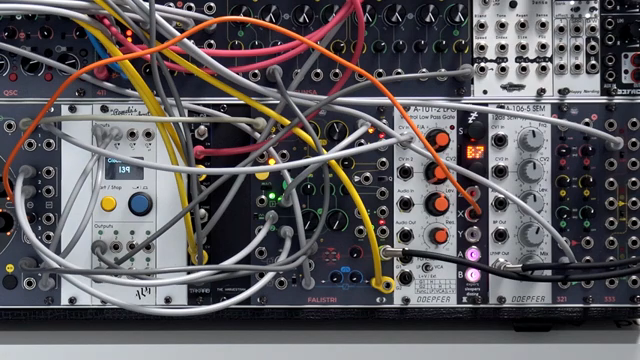
"In this track the resulting sound is not the typical formant effect, because I'm modulating the rise and fall parameters, which in this context correspond to the frequency division, of the green generator, with a very fast CV sequence producing a more complex and animated behaviour."
© Screenshot/Quote: Fraptools (YouTube)
Effects, Modulation, and the Final Polish
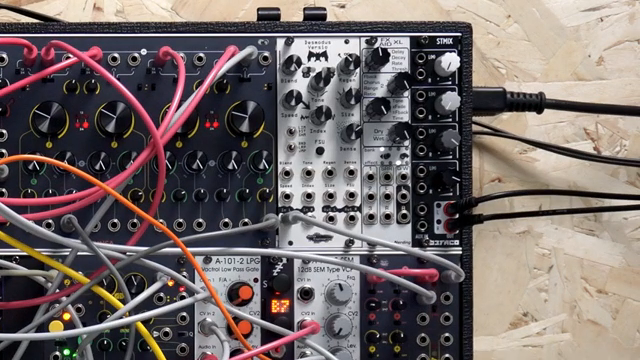
"I used two different reverb styles on this module."
© Screenshot/Quote: Fraptools (YouTube)
No modular patch is complete without a few effects to tie everything together, and here Gennari employs both the Desmodus Versio and FX AID XL. The Desmodus Versio serves as a reverb for both the polyphonic synth and formant voice, with two distinct reverb styles used across the track: a saturated Distort mode in the opening, and a pitch-shifting Shimmer mode for the finale. The FX AID XL is dedicated to chorus duties, processing only the polyphonic voices for added width and movement.
Signal routing to and from these effects is handled with typical Frap Tools precision, using the 321 for attenuation and the 333 for summing before signals hit the effects and final mixer. Modulation sources, including sample and hold from Pamela’s New Workout, are used to animate filter cutoffs and effect parameters, ensuring the patch remains lively and evolving. The result is a sound that’s both polished and organic, with every element carefully considered in the broader musical context.
This article is also available in German. Read it here: https://synthmagazin.at/frap-tools-polyphonie-patchkabel-und-die-kunst-des-modularen-keyboard-spiels/
Watch on YouTube:
Latest articles
Watch on YouTube:
Visit the channel:
https://www.youtube.com/FrapTools
https://www.youtube.com/FrapTools
Links from FrapTools:
website: https://frap.tools
instagram: https://instagram.com/fraptools
facebook: https://www.facebook.com/fraptools
twitter: https://twitter.com/fraptools
soundcloud: https://soundcloud.com/fraptools
Sponsored links:
If you purchase via these links, we may earn a small commission – at no extra cost to you. The link opens an Amazon keyword search, and results may vary depending on availability.
Befaco ST-MIX
🔗 Check price on Amazon
🔗 Check price on Amazon
Doepfer A-101-2 (Lopez Gate)
🔗 Check price on Amazon
🔗 Check price on Amazon
Expert Sleepers Disting MK4
🔗 Check price on Amazon
🔗 Check price on Amazon
Frap Tools 321
🔗 Check price on Amazon
🔗 Check price on Amazon
Frap Tools 333
🔗 Check price on Amazon
🔗 Check price on Amazon
Frap Tools Falistri
🔗 Check price on Amazon
🔗 Check price on Amazon
Frap Tools USTA
🔗 Check price on Amazon
🔗 Check price on Amazon
Happy Nerding FX AID XL
🔗 Check price on Amazon
🔗 Check price on Amazon
Noise Engineering Desmodus Versio
🔗 Check price on Amazon
🔗 Check price on Amazon
Pamela's New Workout
🔗 Check price on Amazon
🔗 Check price on Amazon