Australian multi-instrumentalist Mat Watson sits down with Frap Tools for a deep dive into his modular synthesis philosophy, blending the wilds of the EMS Synthi with the precision of Eurorack. This episode of “Let’s Talk Music” is less a product demo and more a journey through Watson’s patching mindset—where voltage, rhythm, and sound design collide. Expect thoughtful musings on the evolution of musical discovery, hands-on patch breakdowns using Frap Tools modules, and a candid discussion about challenging the defaults in both music and modular workflows. If you’re after patch inspiration or just want to hear how a seasoned artist bends modular systems to his will, this one’s for you.

30. October 2024
MILES
Frap Tools: Mat Watson, Modular Systems and the Art of Distorting Time
EMS Synthi AKS, Frap Tools Brenso, Frap Tools CGM Mixer, Frap Tools Falistri, Frap Tools Fumana, Frap Tools KUNZŌ, Frap Tools Sapèl, Frap Tools USTA, Intellijel Planar, Michigan Synthworks 16 Fader Bank
From Rural Victoria to Modular Frontiers
Mat Watson’s musical trajectory is anything but conventional. Growing up in rural Victoria, Australia, he was surrounded by the sounds of the bush rather than an urban arts scene, with music and skateboarding as his chosen escapes. Early exposure to drums, jazz studies, and a fascination with the likes of Herbie Hancock and Tangerine Dream laid the foundation for his later explorations. Watson’s formative years were marked by a hunger for discovery, whether through scouring record stores or experimenting with early synthesizers like the Korg Mini 700 and four-track tape machines.
His journey reflects a time before the internet’s infinite library, where musical knowledge was hard-won and physical media was treasured. Watson describes how this scarcity shaped his appreciation for sound artifacts, influencing both his listening habits and his approach to music-making. The tactile relationship with records and instruments, and the process of learning through direct experience, underpin his later embrace of modular synthesis as a tool for personal expression and sonic adventure.
Challenging Defaults: Watson’s Modular Approach
Watson’s entry into modular synthesis was catalysed by his acquisition of an EMS Synthi AKS in 2006—a machine that, for him, embodied the mysterious, limitless potential of electronic sound. The Synthi’s matrix-based patching and idiosyncratic behaviour became a touchstone for his creative process, leading him to explore Eurorack as a way to build a portable, customisable version of that experience. Rather than simply replicating the Synthi, Watson found himself drawn into the unique logic and quirks of each modular format.
In the video, Watson demonstrates a patching philosophy that resists default settings and encourages lateral thinking. He discusses the transition from the Synthi’s matrix to Eurorack’s point-to-point cabling, noting the increased need for attenuation and voltage conditioning. For Watson, modular is less about emulating classic machines and more about creating a personal sound world—embracing unpredictability, feedback, and the nuanced behaviour of each module. This ethos is evident in his patch examples, where sequencers, function generators, and gestural controllers are used to sculpt evolving, event-driven soundscapes.
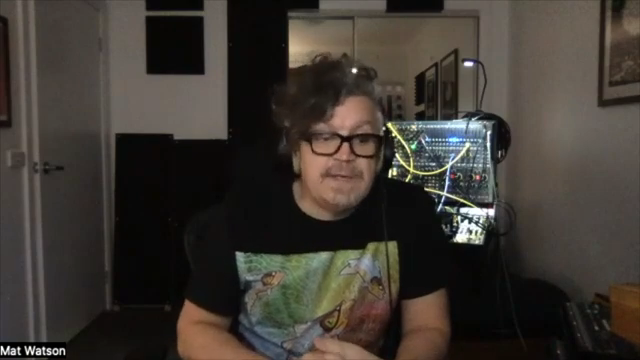
"It was a life-changing moment because it was a machine that reflected all of this stuff that I've been listening to, you know, all the sounds I talked about before."
© Screenshot/Quote: Fraptools (YouTube)
Voltage, Rhythm, and the Art of Modulation
"It's a point where you think out, you're forced to think outside the square and challenge the way that you work with these systems."
© Screenshot/Quote: Fraptools (YouTube)
Central to Watson’s patching style is the creative use of voltage control to animate parameters and subvert rhythmic expectations. In his breakdown of two key patches, he highlights how sequencers like Frap Tools’ USTA are used not just for melodies, but as engines for generating events—pulses, gates, and modulations that drive the system in unexpected directions. By varying stage lengths and gate durations, he crafts animated, non-repetitive patterns that blur the line between rhythm and texture.
Watson is particularly interested in distorting the perception of time within a patch. He often works in odd time signatures—fives, sevens, and nines—and uses manual or voltage-controlled shifts to move sequences off the grid. This approach is reinforced by his use of gestural controllers like the Intellijel Planar, allowing for real-time manipulation of FM, timbre, and spatial parameters. The result is a dynamic interplay between structure and chaos, where modulation is as much about feel and intuition as it is about technical precision.
Synthi, Eurorack, and the Personal Sound World
Watson’s relationship with the EMS Synthi continues to inform his modular practice. He describes the Synthi as both a muse and a benchmark—a machine whose quirks and limitations inspire new ways of thinking about patching. While the Synthi’s matrix offers a different flavour of interaction compared to Eurorack, Watson values both for their capacity to foster deep, focused exploration. He recounts making entire albums with the Synthi, embracing its pitchiness and funkiness as creative assets rather than flaws.
In the discussion, Watson draws parallels between his instrument-based albums and the tradition of using single systems as compositional frameworks. He sees each modular setup as an opportunity to get inside the logic of the designer, extracting beauty from the intended architecture while also challenging misconceptions about what the instrument “should” do. For Watson, the modular environment is a space for personal reflection and escape, as well as a platform for performance and collaboration.
His patch demonstrations further illustrate this philosophy. Whether using Frap Tools modules or the Synthi, Watson is less concerned with genre conventions and more interested in the freedom to shape sound and time according to his own sensibilities. The interplay between manual control, voltage automation, and system design becomes a playground for sonic experimentation.
Future Modular: Creative Workflows and New Horizons
The conversation concludes with a look toward the future of modular synthesis and the workflows that emerge from breaking away from tradition. Watson and the Frap Tools team discuss the potential for new modules—such as complex CV mixers or touchplate controllers—that could further expand the possibilities for performance and interaction. Watson expresses a desire for tools that facilitate the creation of “CV soup,” allowing for intricate blending and manipulation of control voltages with tactile, performative interfaces.
Underlying this discussion is a recurring theme: the importance of freedom and intentionality in modular practice. Watson sees the modular environment as a space for ongoing experimentation, where the boundaries between studio and stage, composition and improvisation, are constantly negotiated. The video closes with a sense of open-ended curiosity—an invitation to keep challenging the defaults and to find new ways of making modular systems serve the music, not the other way around.
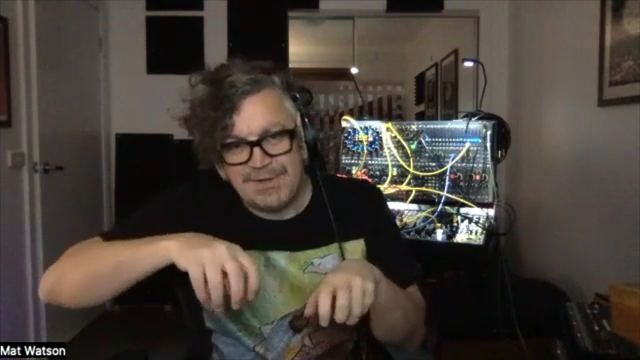
"I would love to see something that is that allows for some complex CV mixing not audio CV... I want to create like a soup of CV and I want to know that almost like a patch like my whole all of the CV sources in my system into into this device and twist some knobs and get an array of of complex voltages with the the option for offsets and inverting."
© Screenshot/Quote: Fraptools (YouTube)
This article is also available in German. Read it here: https://synthmagazin.at/frap-tools-mat-watson-modulare-systeme-und-die-kunst-zeit-zu-verbiegen/
Watch on YouTube:
Latest articles
Watch on YouTube:
Visit the channel:
https://www.youtube.com/FrapTools
https://www.youtube.com/FrapTools
Links from FrapTools:
website: https://frap.tools
instagram: https://instagram.com/fraptools
facebook: https://www.facebook.com/fraptools
twitter: https://twitter.com/fraptools
soundcloud: https://soundcloud.com/fraptools
Sponsored links:
If you purchase via these links, we may earn a small commission – at no extra cost to you. The link opens an Amazon keyword search, and results may vary depending on availability.
EMS Synthi AKS
🔗 Check price on Amazon
🔗 Check price on Amazon
Frap Tools Brenso
🔗 Check price on Amazon
🔗 Check price on Amazon
Frap Tools CGM Mixer
🔗 Check price on Amazon
🔗 Check price on Amazon
Frap Tools Falistri
🔗 Check price on Amazon
🔗 Check price on Amazon
Frap Tools Fumana
🔗 Check price on Amazon
🔗 Check price on Amazon
Frap Tools KUNZŌ
🔗 Check price on Amazon
🔗 Check price on Amazon
Frap Tools Sapèl
🔗 Check price on Amazon
🔗 Check price on Amazon
Frap Tools USTA
🔗 Check price on Amazon
🔗 Check price on Amazon
Intellijel Planar
🔗 Check price on Amazon
🔗 Check price on Amazon
Michigan Synthworks 16 Fader Bank
🔗 Check price on Amazon
🔗 Check price on Amazon