In this episode from Frap Tools, Australian composer and educator Ben Carey takes us through his journey from classical saxophone to the unpredictable world of modular synthesis. The conversation dives deep into the tactile joys of patching, the creative divide between building custom instruments and using ready-made synths, and the unique character of feedback and resonance in modular patches. With a dry wit and a patch-oriented perspective, the discussion unpacks not just the technical details of Carey’s latest patch, but also the philosophical and practical reasons why hands-on control and generative processes remain at the heart of inspiring electronic music. If you’re curious about the real-world quirks of feedback, clocks, and interface design, this is essential listening.
26. February 2025
MILES
Frap Tools: Ben Carey on Feedback Patching, Tactile Design and Resonant Modular Workflows
Frap Tools 321, Frap Tools Brenso, Frap Tools CGM, Frap Tools Sapèl, Frap Tools USTA, Make Noise Morphagene, Mutable Instruments Rings, Serge VCFQ, Tokyo Tape Music Center Tambur and Gate, XAOC Devices Belgrad
From Saxophone to Solder: Ben Carey's Modular Journey
Ben Carey’s path into modular synthesis is anything but typical. Trained as a classical saxophonist, his early musical life revolved around wind bands, chamber music, and interpreting contemporary classical works. Electronic music, by contrast, entered the scene much later, initially through tinkering with software like Pure Data and Max/MSP. This software-centric approach allowed Carey to explore improvisation and interactive performance, often using the saxophone in unconventional ways—think feedback techniques inspired by John Butcher and the experimental Sydney scene.
As his curiosity for electronic sound grew, so did his technical skills. Carey’s journey took him from building interactive software environments to experimenting with analog gear, eventually leading to the modular world. The transition wasn’t just about swapping cables for code; it was about embracing the tactile immediacy and constraints of hardware. For Carey, modular synthesis became both a compositional tool and a performance instrument, offering a hands-on interface that software simply couldn’t match.
Custom Builds vs. Ready-Made Synths: The Creative Divide
The discussion quickly turns to the philosophical difference between designing your own instruments and working with pre-built synthesizers. Carey’s background in low-level programming meant he was used to shaping sound from the ground up, but he found something liberating in the limitations of hardware. Unlike the blank-slate terror of a Max patch, a modular system presents a finite set of possibilities, inviting creativity through constraint.
Physical interaction is a recurring theme. The ability to tweak two parameters simultaneously, to feel the response of a pot or fader, and to have the instrument always ready to play—these are qualities that digital environments struggle to replicate. The conversation highlights how analog gear encourages a more intuitive, forgiving approach, where approximation and happy accidents are part of the process. In contrast, digital tools often demand a level of precision and mapping that can stifle spontaneity.
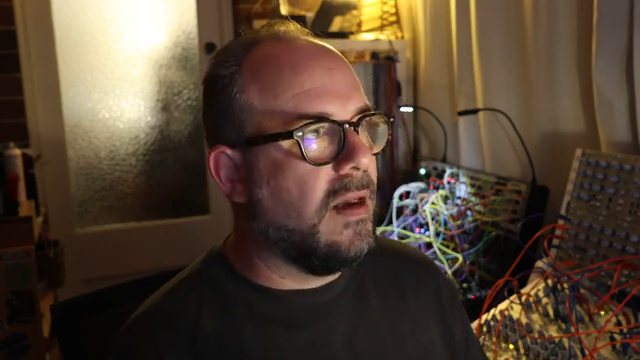
"There's constraints. There's like you can do a lot of things with a small amount of gear and that gear that's sitting in front of you."
© Screenshot/Quote: Fraptools (YouTube)
Knots of Feedback: Resonance and Patching Techniques
"The first source really of this patch came about by thinking about pinged filters and how much I love the sound of pinged filters, particularly through wave folders and wave shapers and things."
© Screenshot/Quote: Fraptools (YouTube)
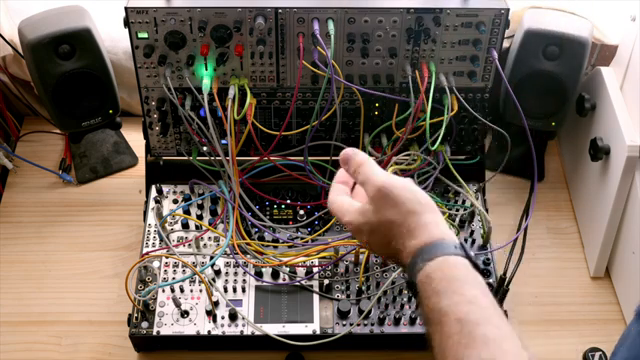
Carey’s patch breakdown is a masterclass in feedback patching and resonance. The heart of the patch is a pinged filter setup, using the Tokyo Tape Music Center Tambur and Gate to excite a Surge VCFQ filter, with random clocks from SAPÈL combined via a 321 utility to generate complex rhythmic triggers. The filter’s resonance and pitch are modulated by a mix of sample-and-hold voltages and LFOs, while feedback paths are created by routing the filter’s output back into itself and into wavefolder CV inputs, resulting in evolving, unpredictable textures.
Resonance is further explored through the use of Mutable Instruments Rings and Make Noise Morphagene. Rings is set to a string model with infinite sustain, its position modulated by random voltages to create shifting harmonic layers. Morphagene, meanwhile, acts as a live sampler, capturing and reprocessing the output of Rings rather than the main filter, creating a feedback loop where one resonant source samples another. This approach sidesteps clichéd reverb effects, producing a more organic, evolving sense of space.
The patch’s complexity is heightened by the integration of Frap Tools Brenso, which is modulated by both internal and external feedback sources, including blue noise and various FM paths. Sync and ring modulation inputs are dynamically controlled, and the patch is rounded out with a Belgrad dual peak filter for additional timbral movement. The result is a dense, dark, and knotted soundscape—proof that feedback, when carefully piloted, can yield both chaos and control.
Generative Processes: Randomness with Intent
Generative techniques are central to Carey’s approach, but he’s quick to distinguish between randomness for its own sake and randomness as a compositional tool. By combining multiple clocks, slewed voltages, and carefully routed feedback, he creates patches that surprise even their creator—yet always within a defined territory. This is not about relinquishing control entirely, but about setting up processes that generate new material while remaining musically coherent.
Carey’s use of Morphagene as a live sampler, clocked by irregular gates and fed by other resonant sources, exemplifies this philosophy. The patch evolves over time, with layers of feedback and modulation interacting in ways that are deterministic at the macro level but unpredictable in detail. It’s a balance between structure and surprise, where the machine becomes a collaborator rather than a mere tool.

"What I really like in all music as a performer and as a listener is when I am completely surprised and bamboozled by something that's going on within limits."
© Screenshot/Quote: Fraptools (YouTube)
The Future of Tactile Control: Module Wishlists and Interface Dreams
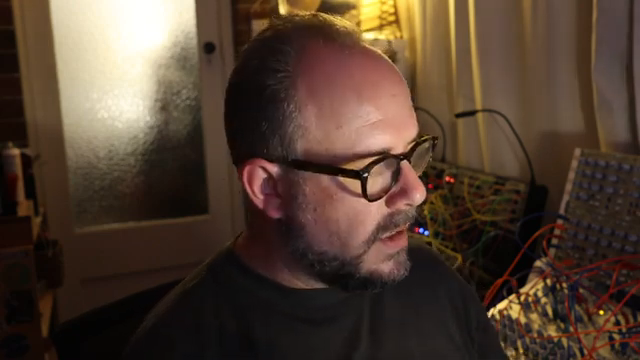
"For me it feels like the CGM system is a way of sculpting things."
© Screenshot/Quote: Fraptools (YouTube)
The conversation concludes with a look toward the future of modular instrument design. Carey expresses a desire for more tactile controllers—faders, buttons, touch surfaces—that can be integrated seamlessly into a modular setup without the need for complex mapping or configuration. He highlights the importance of physicality in performance, suggesting that the next frontier for Frap Tools could be a dedicated control surface that complements the flexibility of modules like USTA and the CGM mixer.
There’s a sense that, despite the sophistication of modern digital and analog tools, the most inspiring instruments are those that invite direct, intuitive interaction. Whether it’s the quirks of a ribbon controller or the immediacy of a button that simply outputs a gate, the tactile experience remains at the heart of creative modular work. As the wishlist for new modules grows, the challenge is to design tools that foster both control and serendipity—keeping the spirit of patching alive.
Watch on YouTube:
Latest articles
Watch on YouTube:
https://www.youtube.com/FrapTools
Links from FrapTools:
Sponsored links:
If you purchase via these links, we may earn a small commission – at no extra cost to you. The link opens an Amazon keyword search, and results may vary depending on availability.
🔗 Check price on Amazon
🔗 Check price on Amazon
🔗 Check price on Amazon
🔗 Check price on Amazon
🔗 Check price on Amazon
🔗 Check price on Amazon
🔗 Check price on Amazon
🔗 Check price on Amazon
🔗 Check price on Amazon
🔗 Check price on Amazon