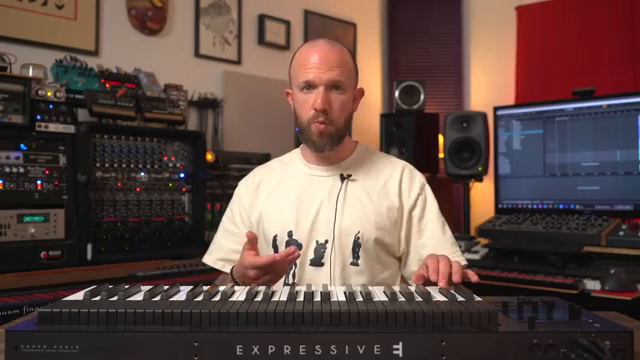
Expressive E, the French innovators behind the Osmose, are on a mission to inject new life into electronic performance—and their MPE Arpeggiator might just be the boldest leap yet. In this deep-dive video, the Osmose’s arpeggiator is revealed not as a rigid step machine, but as a living, breathing extension of the player’s gestures. Pressure, pitch bends, aftertouch, and slides all become real-time performance tools, blurring the line between sequencing and expressive play. If you’ve ever felt boxed in by traditional arps, this demonstration offers a compelling vision of what’s possible when digital architecture meets physical nuance.
7. July 2025
LYRA
Expressive E’s Osmose: The MPE Arpeggiator That Redefines Expressive Sequencing
Beyond Rigid Patterns: The Osmose MPE Arpeggiator’s Core Philosophy
The Osmose’s MPE Arpeggiator is introduced as a radical departure from the fixed, mechanical nature of traditional arpeggiators. Where most arps simply cycle through held notes in a set rhythm and direction, the Osmose leverages its MPE (MIDI Polyphonic Expression) engine to track pressure, aftertouch, and pitch bend per key, in real time. This isn’t just about sequencing notes—it’s about infusing each step with orchestral-level dynamics and nuance, transforming the arpeggiator from a cold machine into a responsive musical partner.
Expressive E’s approach, as demonstrated in the video, is all about continuous, microscopic tracking of gestures. The result is an arpeggiator that feels alive: every repetition can be subtly different, every note can be shaped on the fly. For performers and sound designers used to the limitations of classic arps, this opens up a new world where the boundaries between sequencing and expressive play are blurred.
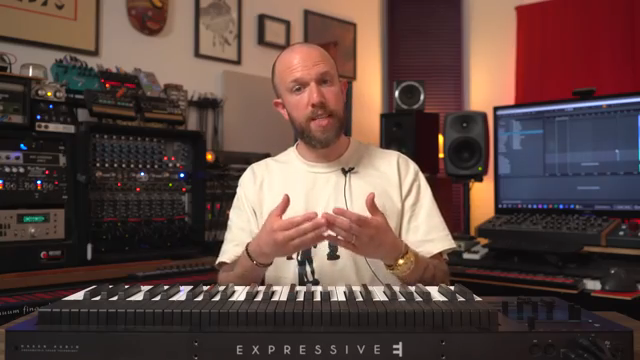
"It's continuously tracking pressure, independently per key, with microscopic accuracy."
© Screenshot/Quote: Expressivee (YouTube)
Modes in Motion: Gesture-Responsive Arpeggiation
"Listen to just how sensitive it is."
© Screenshot/Quote: Expressivee (YouTube)
Diving into the core functionalities, the Osmose’s arpeggiator offers a suite of modes—Chord, Aftertouch Octave, Converge, Press Ratchet, and Like Harp Strum—each designed to respond dynamically to the player’s gestures. In Chord mode, the arpeggiator acts as a note repeater, but with pressure sensitivity maxed, every note’s dynamics can be sculpted in real time. Aftertouch Octave mode lets individual notes leap octaves based on aftertouch, while Converge mode produces evolving, unpredictable textures ideal for pads.
Press Ratchet mode is a standout for rhythmic experimentation: the harder you press, the more the rhythm ratchets up, perfect for percussive sounds. Like Harp Strum delivers glissando-like sweeps, and all modes benefit from the Osmose’s detailed sensitivity controls. The video showcases how these modes, combined with the instrument’s gesture tracking, allow for a level of nuance and immediacy rarely seen in hardware arpeggiators.
Individual Note Control and Seamless Integration
A defining feature of the Osmose’s MPE Arpeggiator is its ability to control each note independently, both in terms of gesture and MIDI output. Most modes are monophonic, which means the arpeggiator can drive external synths—even those without MPE support—by sending out note and velocity data as if played by hand. The video demonstrates this by routing the Osmose’s arpeggiator to a Prophet 08 via Ableton and USB MIDI, showing that integration with external gear is straightforward and doesn’t require complex setup.
This architecture also enables creative workflows: the arpeggiator can function as a modulation source, generating textures instead of traditional note patterns. The hold function further expands possibilities, turning the arpeggiator into a looper or sequencer. These features make the Osmose not just a standalone instrument, but a flexible hub for controlling and enhancing other hardware and software instruments in a modern setup.
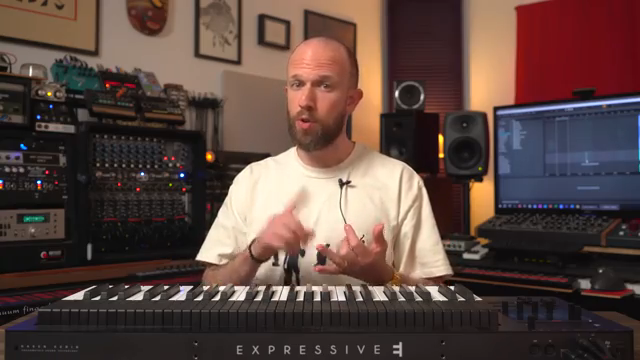
"It's just going to think that I played all of those notes myself with those exact velocities."
© Screenshot/Quote: Expressivee (YouTube)
Genre-Spanning Versatility: From Ambient to Techno and Beyond
The demonstrations in the video highlight the arpeggiator’s adaptability across genres. Whether crafting ethereal ambient textures, driving techno rhythms, or adding cinematic movement for scoring, the Osmose’s MPE Arpeggiator proves itself capable of producing complex, evolving soundscapes. The ability to assign each MIDI channel to a different instrument—creating a ‘super synth’—further showcases its potential for experimental layering and polyrhythmic interplay.
By leveraging MPE’s multi-channel architecture, the Osmose can distribute arpeggiated notes across multiple external instruments, each responding to individual gestures. This opens up creative avenues that go far beyond what’s possible with conventional arpeggiators, making the Osmose a powerful tool for producers and performers seeking to push genre boundaries and explore new sonic territories.
Sound Design Unleashed: Dynamic Textures and Expressive Performance
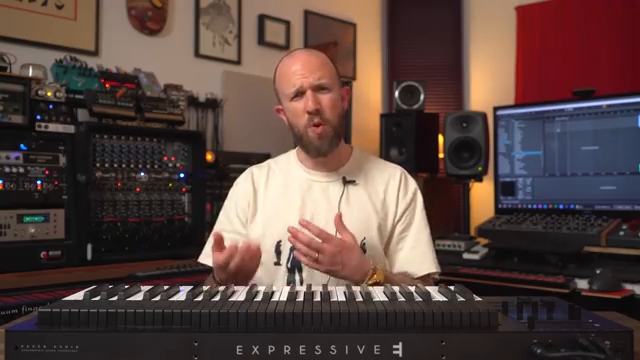
"One of my favorite things about using the MPE arpeggiator on the Osmose is that it opens up new ideas and possibilities that I would never think to play with my fingers and in some cases would be impossible for me to play."
© Screenshot/Quote: Expressivee (YouTube)
Beyond arpeggiation, the Osmose’s architecture empowers musicians to explore a vast palette of textures and dynamics. The video demonstrates how the arpeggiator can be used to control piano sounds, manipulate synth layers, and even humanize machine-like rhythms through creative use of compression and gain. The result is a system where sound design and performance are deeply intertwined, allowing for real-time sculpting of both timbre and rhythm.
Expressive E’s focus on physical gesture translates into a workflow where no two performances are identical. The Osmose’s MPE Arpeggiator doesn’t just sequence notes—it invites players to shape every aspect of their sound, making it a compelling choice for anyone seeking expressive depth in both studio and live contexts.
This article is also available in German. Read it here: https://synthmagazin.at/expressive-e-osmose-der-mpe-arpeggiator-der-expressive-sequenzen-neu-definiert/
Watch on YouTube:
Latest articles
Watch on YouTube:
Visit the channel:
https://www.youtube.com/ExpressiveE
https://www.youtube.com/ExpressiveE
Links from ExpressiveE:
Sponsored links:
If you purchase via these links, we may earn a small commission – at no extra cost to you. The link opens an Amazon keyword search, and results may vary depending on availability.
Osmose
🔗 Check price on Amazon
🔗 Check price on Amazon
Prophet 08
🔗 Check price on Amazon
🔗 Check price on Amazon
Yamaha Reface YC
🔗 Check price on Amazon
🔗 Check price on Amazon