Expressive E, the French pioneers of musical expressivity, take center stage in this tutorial as they demystify MPE—MIDI Polyphonic Expression—for a new generation of synth enthusiasts. In this episode, film composer Josh Madoff walks us through the architectural leap from traditional MIDI to MPE, showing how instruments like Osmose and a host of compatible synths unlock nuanced, independent control over every note. The video isn’t just a technical explainer; it’s a hands-on demonstration of how MPE transforms performance workflows, sound design, and even the very feel of playing electronic instruments. If you’re curious about the future of expressive synthesis or how digital architecture is reshaping musical interaction, this is essential viewing.

19. February 2025
LYRA
Expressive E and the MPE Revolution: A Deep Dive into Polyphonic Expression
Ableton Push 3, Arturia CS-80 V, Black Corporation Deckard's Dream, Cherry Audio Miniverse, Dave Smith Prophet 08, Erae Touch, Expressive E Osmose, GS Music E7, Haken Continuum, Haken ContinuuMini, LinnStrument, Surge XT, Synapse Audio The Legend HZ, Warbl-E
MPE: A New Era of Polyphonic Control
MPE, or MIDI Polyphonic Expression, is positioned as a paradigm shift in how musicians interact with synthesizers. Unlike traditional MIDI, which sends control data affecting all notes simultaneously, MPE allows for independent manipulation of pitch, volume, and timbral character for each note. This means that each finger on a keyboard can shape its own sonic destiny, rather than being bound to global changes.
The video opens with a historical overview, tracing the evolution from pipe organs and harpsichords—where dynamics were fixed—to the piano, which introduced velocity but still lacked real-time per-note control after the initial strike. Synthesizers added more modulation options, but until MPE, even the most advanced knobs and pedals affected the entire instrument at once. MPE breaks this limitation, giving each note its own channel and, with it, unprecedented expressive potential.
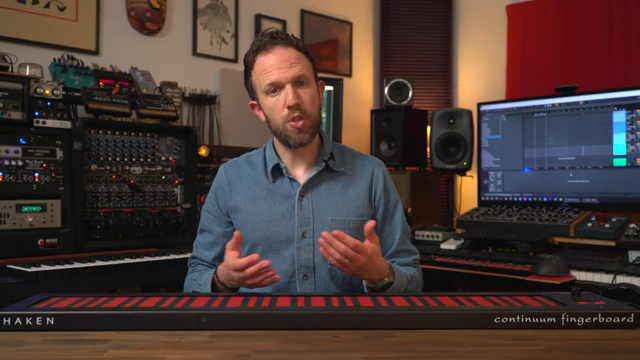
"This 'every note gets its own road' approach is what makes it possible for MPE to give you that continuous and independent control over every single note you play."
© Screenshot/Quote: Expressivee (YouTube)
Expressive E’s Osmose: Redefining Performance Workflows
Expressive E’s Osmose is showcased as a flagship MPE instrument, demonstrating how nuanced finger gestures translate into unique articulations for every note. The key innovation here is the ability to control sound parameters—such as pitch, volume, and timbre—independently and continuously from the moment a note is played. This granular control is not just a technical feat; it fundamentally changes the way musicians approach performance and sound design.
The video emphasizes that with Osmose, musicians can craft complex, layered sounds in real time, without resorting to post-production programming or automation. This immediacy fosters a deeper connection between performer and instrument, making electronic music creation feel more akin to playing an acoustic instrument in terms of expressivity and responsiveness.
MPE in Software Synths: Dynamic Sound at Your Fingertips
"When you connect it to a highly capable MPE instrument, an entire universe of sound and potential opens up."
© Screenshot/Quote: Expressivee (YouTube)
Josh Madoff moves on to demonstrate MPE-compatible software synthesizers, starting with Surge XT. He highlights how, when paired with a capable MPE controller, Surge XT responds to nuanced finger movements, offering a diverse palette of articulations and dynamic responses. This level of expressivity, he notes, would be unattainable with standard MIDI control.
The Miniverse by Cherry Audio is then compared in both traditional MIDI and MPE modes. With standard MIDI, expressive changes require manual knob-twisting, but with MPE, finger pressure and movement can simultaneously modulate multiple parameters—unlocking vibrato, pitch bend, and more per note. This workflow not only enhances musicality but also streamlines the creative process by reducing reliance on automation or post-editing.
Hardware synths like the GS Music E7 and Black Corporation’s Deckard’s Dream are also featured, demonstrating that MPE’s benefits extend beyond software. When controlled via MPE, these instruments reveal new layers of articulation and player-instrument connection, reinforcing the point that MPE is as much about workflow transformation as it is about sound.
MPE Arpeggiators: Layering Complexity and Expression
The tutorial takes a creative turn with the introduction of MPE arpeggiators, particularly those integrated into the Osmose. Unlike standard arpeggiators, which simply repeat held notes, MPE arpeggiators track each finger’s position in real time, allowing for independent modulation of volume, pitch, and timbre per note—even as the pattern evolves. This opens up possibilities for cinematic soundscapes and intricate, evolving textures that would be difficult to achieve otherwise.
Madoff further demonstrates the concept of an “MPE super synth” by routing different MPE channels to multiple software and hardware synthesizers simultaneously. This approach enables performers to layer and blend sounds from various sources, all while maintaining independent expressive control over each note and synth. The result is a workflow that encourages experimentation and the creation of massive, dynamic sonic environments.
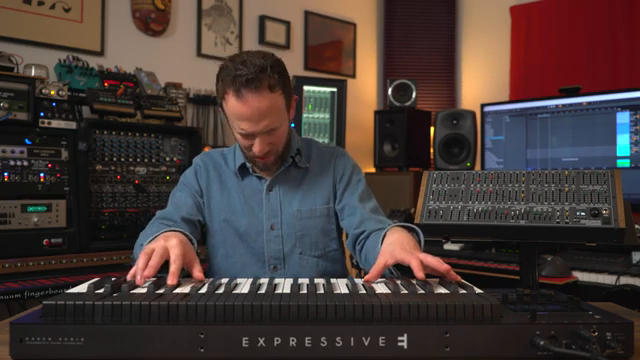
"This gives me the ability to create a massive cinematic soundscape in a single visceral performance."
© Screenshot/Quote: Expressivee (YouTube)
A Growing Ecosystem: MPE Instruments and the Future of Expression
The video rounds out by surveying a range of high-level MPE instruments, including the LinnStrument, Ableton Push 3, Haken Continuum, ContinuuMini, Warbl-E, and Erae Touch. Each device offers its own take on expressive control, with unique strengths in terms of form factor and playability. This diversity signals a broader trend: MPE is no longer a niche feature but a growing standard in modern music production.
As more musicians adopt MPE-capable gear, the boundaries between acoustic nuance and electronic sound design continue to blur. Expressive E’s tutorial makes it clear that MPE is not just a technical upgrade—it’s a fundamental shift in how electronic instruments are played, composed with, and integrated into creative workflows.
Watch on YouTube:
Latest articles
Watch on YouTube:
https://www.youtube.com/ExpressiveE
Links from ExpressiveE:
Sponsored links:
If you purchase via these links, we may earn a small commission – at no extra cost to you. The link opens an Amazon keyword search, and results may vary depending on availability.
🔗 Check price on Amazon
🔗 Check price on Amazon
🔗 Check price on Amazon
🔗 Check price on Amazon
🔗 Check price on Amazon
🔗 Check price on Amazon
🔗 Check price on Amazon
🔗 Check price on Amazon
🔗 Check price on Amazon
🔗 Check price on Amazon
🔗 Check price on Amazon
🔗 Check price on Amazon
🔗 Check price on Amazon
🔗 Check price on Amazon