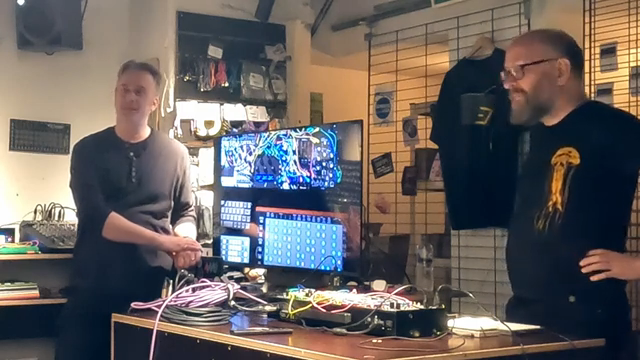
Expert Sleepers, long known for bridging the gap between modular hardware and the digital realm, take centre stage in this Schneiderskeller Q&A, with Simon Kirby and Os delving into the disting NT. This session isn’t your usual product pitch—it’s a deep dive into the real-world patching, performance, and community-driven evolution of the module. From algorithm chaining to USB audio integration, the disting NT emerges as a chameleon for Eurorack sound design and live rigs. If you’re curious about how a single module can morph from mixer to sequencer to polyphonic playground—and why its development is never truly finished—this masterclass is a must-watch for modular tinkerers and patching obsessives alike.
21. March 2026
MILES
Expert Sleepers’ disting NT: A Swiss Army Knife for the Modular Age
First Impressions: disting NT as Modular Multitool
The disting NT from Expert Sleepers is introduced as a remarkably versatile Eurorack module, aiming to be accessible even for those just dipping their toes into modular synthesis. Simon Kirby, joined by Os, sets the tone by addressing the perennial question: can a module this deep be beginner-friendly? The consensus is that, while the sheer breadth of features might seem daunting, the module’s design encourages exploration and learning by doing.
Rather than overwhelming users with complexity, the disting NT offers a modular approach to modularity itself. Its interface and structure allow users to start simple—perhaps with a single algorithm or function—and gradually layer on more advanced features as confidence grows. This ethos fits squarely within Expert Sleepers’ tradition of making powerful tools that don’t force users down a single workflow, but instead invite them to build their own sonic paths.
Chaining, Routing, and the Algorithmic Playground
Simon Kirby delves into the disting NT’s internal architecture, highlighting its ability to chain algorithms and route signals flexibly. The discussion touches on the practicalities of linking multiple algorithms within the module, allowing for complex processing chains without the need for external patching. This opens up a playground for sound designers who want to experiment with intricate signal flows entirely inside a single module.
Routing isn’t limited to simple one-to-one connections; the disting NT supports sending the output of one algorithm to several others, multiplying the creative possibilities. This internal patching mirrors the freedom of a full modular system, but with the added benefit of digital recall and tight integration. For those who thrive on experimentation, the module’s routing options are a clear invitation to push boundaries and try unconventional combinations.
Performance Page and Control: Hands-On Modulation
The performance page is presented as a central hub for live manipulation, giving users immediate access to key parameters during a set or jam. Simon demonstrates how this page can be mapped to control levels, effects, or any number of algorithm-specific features, making it a powerful tool for spontaneous tweaks and expressive performance.
Beyond the performance page, the disting NT is shown to play nicely with a variety of control sources—MIDI, CV, and even USB controllers like the Linnstrument. This flexibility means users can shape sounds in real time using whatever interface suits their style, from traditional patch cables to advanced MPE controllers. The result is a module that doesn’t just sit in the rack; it begs to be played, modulated, and pushed to its expressive limits.
Mixing, USB Audio, and the Modular Ecosystem
Mixing within the disting NT is both a feature and a philosophical choice. Simon discusses the pros and cons of handling mixing duties internally versus routing signals out to dedicated hardware mixers. While the module can serve as a capable mixer—complete with gain controls on the performance page—some users may prefer the tactile immediacy of physical faders, especially when juggling multiple voices in a complex patch.
The conversation shifts to integrating the disting NT with external gear via USB audio. With support for up to 12 inputs and 8 outputs over USB, the module can function as a full-fledged audio interface, bridging the gap between Eurorack and DAW or mobile setups. This opens up possibilities for hybrid workflows, where modular signals are mixed, processed, and recorded directly into a computer or even an iPad.
Simon and Os also touch on the evolving nature of these features, noting that user requests have already led to new options and expanded channel counts. The disting NT’s role as a mixer, interface, and creative hub is clearly shaped by both its hardware capabilities and the needs of its user base, making it a flexible node in any modular ecosystem.
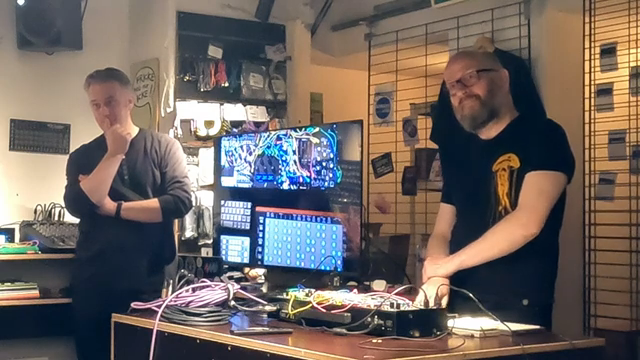
"You've got a lot of voices you can use now, which is kind of a new problem."
© Screenshot/Quote: Expertsleepersltd (YouTube)
A Living Platform: Community, Updates, and the Future
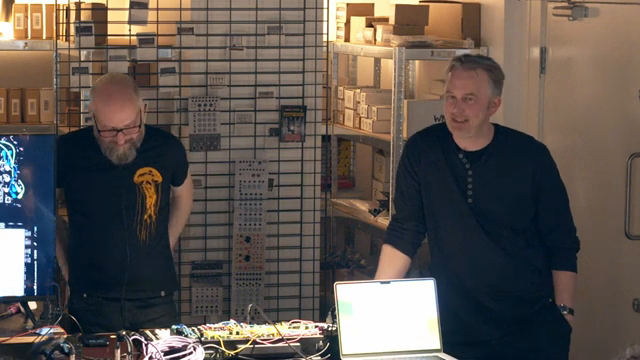
"It's like all I've done is write code for the NT. So, no, it's not, it's far from done."
© Screenshot/Quote: Expertsleepersltd (YouTube)
Perhaps the most striking aspect of the disting NT, as revealed in this Q&A, is its status as a living, evolving platform. Os shares insights into the ongoing development process, emphasising that the module is far from “finished.” New algorithms, user-contributed plugins, and firmware updates are continually expanding its capabilities, often in response to community feedback and requests.
The active user community—especially on Discord and forums—has become a driving force behind the module’s evolution. From user-written apps to niche algorithm ports, the disting NT is as much a collaborative project as it is a product. For modular enthusiasts, this means investing in a module that grows alongside its users, with future enhancements limited only by the imagination (and coding stamina) of its creator and community.
This article is also available in German. Read it here: https://synthmagazin.at/expert-sleepers-disting-nt-das-schweizer-taschenmesser-fuer-die-modulare-gegenwart/
Watch on YouTube:
Latest articles
Watch on YouTube:
Visit the channel:
https://www.youtube.com/ExpertSleepersLtd
https://www.youtube.com/ExpertSleepersLtd
Links from ExpertSleepersLtd:
Sponsored links:
If you purchase via these links, we may earn a small commission – at no extra cost to you. The link opens an Amazon keyword search, and results may vary depending on availability.
Expert Sleepers disting NT
🔗 Check price on Amazon
🔗 Check price on Amazon