Elektron’s Digitone II brings a new dimension to digital synthesis with the introduction of the Wavetone machine—a dual-oscillator synth engine brimming with waveshaping and modulation possibilities. In this official walkthrough, Elektron’s team methodically unpacks every parameter, revealing how phase distortion, harmonic wavetables, and a nuanced noise circuit come together for intricate sound design. True to Elektron’s reputation for performance-centric instruments, the video focuses on hands-on workflows, highlighting how Wavetone’s architecture supports both experimental textures and practical studio layering. For those curious about the engine’s depth, this is a rare look under the hood, parameter by parameter.
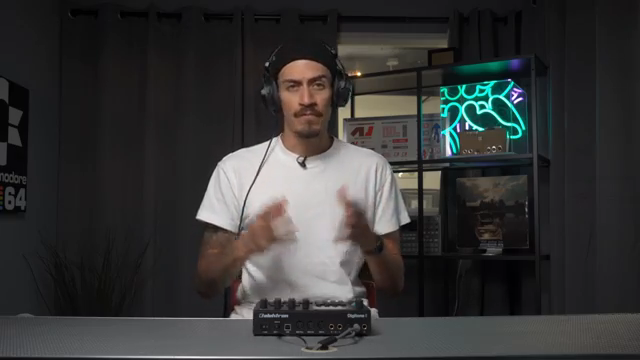
5. June 2025
LYRA
Elektron’s Wavetone Machine: A Deep Dive into Digitone II’s Sonic Architecture
Meet Wavetone: Digitone II’s New Sonic Core
Digitone II’s Wavetone machine marks a significant expansion of Elektron’s digital synthesis palette, offering a two-oscillator engine with a strong emphasis on flexible waveshaping. The video opens with a step-by-step guide to selecting Wavetone from the synth menu, immediately signaling Elektron’s commitment to workflow clarity and direct access to sound engines. The interface reveals three dedicated parameter pages, each packed with controls that invite deep exploration rather than surface-level tweaking.
Wavetone’s architecture draws inspiration from phase distortion, wavetables, ring modulation, and hard sync, all wrapped into a single, performance-friendly environment. This synthesis engine is clearly designed for users who want to sculpt sounds at both macro and micro levels, with the potential for everything from classic tones to highly experimental textures. Elektron’s approach here is to make advanced synthesis approachable, without hiding essential controls behind excessive menu diving.
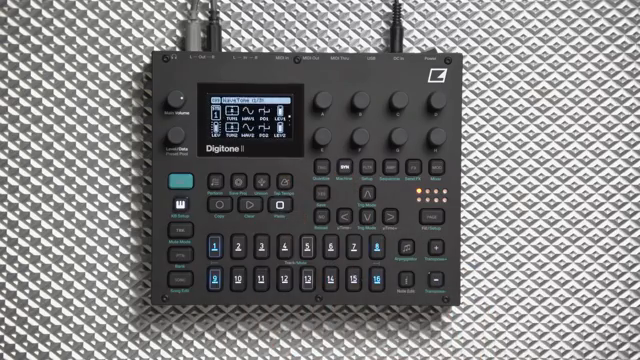
"Wavetone is a two-oscillator synth with super flexible wave shaping possibilities."
© Screenshot/Quote: Weareelektron (YouTube)
Waveforms and Wavetables: Expanding the Sonic Palette
"These waveforms by default are our primary wave shapes, think sine, triangle, saw, tooth, square."
© Screenshot/Quote: Weareelektron (YouTube)
Wavetone’s oscillator section provides a broad selection of waveforms, starting with the familiar—sine, triangle, saw, and square. What sets it apart is the ability to morph between these shapes using a crossfade parameter, allowing for smooth transitions and hybrid timbres. This morphing isn’t just a gimmick; it’s a practical tool for evolving sounds in real time, especially when paired with Elektron’s sequencer and modulation capabilities.
Beyond the primary shapes, users can select from a range of harmonic wavetables on the second synth page. This opens up a spectrum of spectral content, from pure fundamentals to richly layered overtones. The video demonstrates how switching from primary to harmonic wavetables instantly transforms the oscillator’s character, providing a playground for sound designers who crave more than just static waveforms.
Oscillator Interplay: Modulation, Sync, and Drift
Wavetone’s modulation options are where its digital DNA truly shines. The two oscillators can interact via several modes: ring modulation, ring mod fixed (where oscillator two ignores keyboard tracking), and hard sync. Each mode introduces a distinct flavor, from metallic clangs to aggressive, harmonically rich leads. The hard sync implementation is classic yet flexible, resetting oscillator one’s phase with each cycle of oscillator two for those signature sync sweeps.
A noteworthy detail is the phase reset control, which lets users choose between free-running oscillators, phase reset on key press, or random phase start per note. This parameter alone can dramatically alter the attack and consistency of a patch, making it a subtle but powerful tool for both percussive and evolving sounds.
Drift adds another layer of organic unpredictability, introducing random pitch variations to both oscillators. This is especially effective for thickening chords or emulating analog instability, a nod to Elektron’s understanding of what makes digital synthesis feel alive. The combination of these features enables users to craft complex, animated textures that go far beyond static digital timbres.

"Hard sync, which, not to get too nerdy, resets oscillator one's phase every time oscillator two completes its cycle."
© Screenshot/Quote: Weareelektron (YouTube)
Noise Circuit: Shaping and Integrating Complexity

"This is where we shape and adjust our noise circuit."
© Screenshot/Quote: Weareelektron (YouTube)
Wavetone’s third page is dedicated to its noise circuit, which is far from an afterthought. The noise level can be blended with the oscillators, and its amplitude envelope is fully adjustable via dedicated encoders. The hold parameter is particularly flexible, functioning as a gate when maxed or as a timed envelope for more precise noise bursts—ideal for percussive or atmospheric applications.
Filtering options for the noise circuit include bass and width controls, allowing users to sculpt the frequency content and stereo spread of the noise. The type selector offers three distinct flavors: grain, tuned sample and hold (which tracks pitch), and untuned sample and hold. Each type brings its own character, from granular textures to classic analog-style noise, and can be further shaped by the character parameter, which adapts based on the selected noise type.
This level of control over noise integration is rare in digital synths at this price point, and Elektron’s implementation encourages creative layering. Whether used subtly to add air or aggressively for glitchy effects, the noise circuit is a core part of Wavetone’s sound design toolkit.
Creative Workflows: Wavetone in Practice
With its comprehensive set of controls, Wavetone is clearly built for intricate sound design and layered compositions. The video showcases how combining ring modulation, harmonic wavetables, and nuanced noise shaping can yield everything from lush pads to wild, experimental textures. Elektron’s parameter-per-page approach keeps the workflow fast and intuitive, even as the sonic possibilities multiply.
For users invested in performance and studio production, Wavetone’s architecture supports both hands-on tweaking and deep programming. The engine’s flexibility makes it equally at home in DAWless jams, live sets, or as a sound design workhorse in the studio. While the video focuses on parameter explanation rather than full musical contexts, it’s clear that Wavetone is designed to reward those who dig deep.
This article is also available in German. Read it here: https://synthmagazin.at/elektrons-wavetone-maschine-ein-architektur-check-des-digitone-ii/
Watch on YouTube:
Latest articles
Watch on YouTube:
Visit the channel:
https://www.youtube.com/WeAreElektron
https://www.youtube.com/WeAreElektron
Links from WeAreElektron:
website: https://www.elektron.se
twitter: https://twitter.com/WeAreElektron
facebook: https://www.facebook.com/WeAreElektron
instagram: https://instagram.com/weareelektron
Sponsored links:
If you purchase via these links, we may earn a small commission – at no extra cost to you. The link opens an Amazon keyword search, and results may vary depending on availability.
Digitone II
🔗 Check price on Amazon
🔗 Check price on Amazon