Elektron’s Tonverk is not just another groovebox—it’s a modular playground for audio routing and sound design, offering 16 tracks with a dizzying array of processing and sequencing options. In this official tutorial, Risa T methodically unpacks how Tonverk’s tracks, buses, and effects interlock, revealing a system built for creative flexibility and sonic experimentation. As is typical for Elektron’s nerdy-yet-musical approach, the focus here is on workflow: how you can sculpt, route, and sequence audio in ways that invite both precision and chaos. If you care about digital architecture, macro-level control, and the fine details of track management, this is a must-watch breakdown.
18. September 2025
LYRA
Elektron Tonverk: Deep-Dive into Tracks, Routing, and Audio Architecture
Sixteen Tracks, Infinite Possibilities
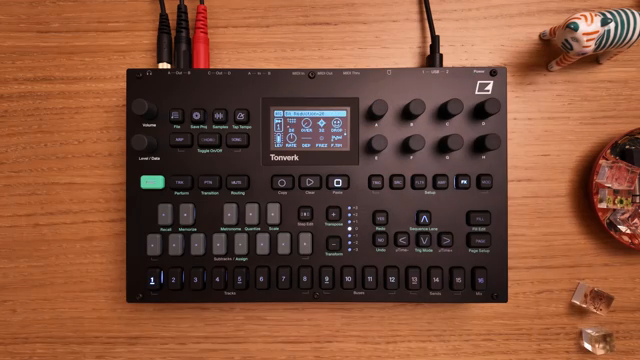
Tonverk opens with a clear architectural statement: 16 tracks, each mapped to a trigger key, and each serving a distinct function within the device’s audio ecosystem. Tracks 1 through 8 are dedicated audio tracks, tracks 9 through 12 serve as bus tracks, 13 to 15 are send FX tracks, and track 16 is the mix track. This segmentation is not just for show—it underpins the device’s routing flexibility and the granular control users have over every layer of their sound.
Both audio and bus tracks can double as MIDI tracks, adding a further layer of versatility. The tutorial promises a walk-through of each track type, setting the stage for a deep exploration of how Tonverk’s internal structure supports complex audio processing and creative manipulation. This architecture is classic Elektron: modular, multi-purpose, and designed for users who want to shape their workflow as much as their sound.
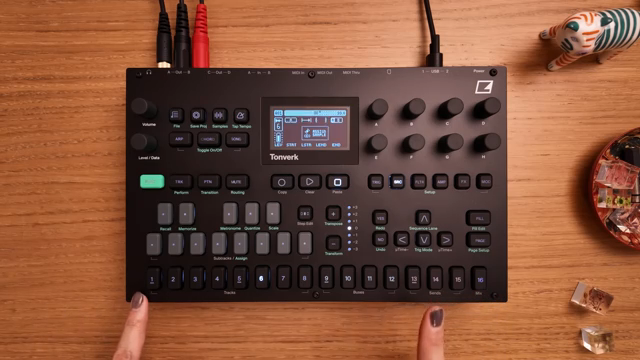
"Both audio and bus tracks can be used as MIDI tracks."
© Screenshot/Quote: Weareelektron (YouTube)
Audio Tracks: Polyphony, Sampling, and Effects
"Track 1 is sounding pretty different with these two effects."
© Screenshot/Quote: Weareelektron (YouTube)
Tonverk’s audio tracks are built for flexibility, capable of playing back both mono and stereo samples, as well as multi-sampled instruments with polyphony. The workflow begins by selecting a source machine for each track, which determines how samples are handled—though the video leaves deeper details of these machines for future exploration. Once a sample is loaded, the keyboard allows for polyphonic playback, opening up melodic and harmonic possibilities.
Each audio track is equipped with two insert effect slots and can be routed to three send effects, providing a robust palette for sound design. The process of adding effects is streamlined: users cycle through FX pages, select from available FX machines, and load them directly into insert slots. The demonstration shows how quickly a track’s character can be transformed by stacking effects like comb filter and degrader, underscoring the system’s potential for both subtle enhancement and radical alteration.
Managing Effects: Interface and Layering
Effect management on Tonverk is designed for immediacy and depth. The FX key cycles through three dedicated pages per track, allowing users to add, tweak, and layer effects with minimal menu-diving. Insert effects are loaded per track, while send levels for the three global send FX are adjusted directly from the first FX page, making it easy to dial in reverb, delay, or other spatial treatments on a per-track basis.
Send FX themselves reside on tracks 13, 14, and 15, each hosting a single FX machine that can be swapped out as needed. Adjusting parameters for these send effects is as simple as selecting the relevant track and entering its FX menu. The mix track (track 16) serves as the final audio destination, offering a master effect slot and mixer controls for balancing levels and managing external inputs. This layered approach to effects—insert, send, and master—enables intricate soundscapes and performance-ready setups without overwhelming the user with complexity.
Routing: Creative Signal Paths and External Integration
Routing in Tonverk is where things get truly modular. Bus tracks (9–12) allow for the simultaneous processing of multiple tracks, each with their own insert and send FX slots. The tutorial demonstrates how audio tracks can be routed to buses, which in turn can host effects like granular pitch shifters, enabling group processing and parallel effects chains.
Routing destinations are managed either per track via the FX page or globally through a dedicated routing menu. The menu provides a visual overview of all track routings and allows for rapid reassignment—either by turning knobs or by holding multiple tracks and pressing a destination. This flexibility extends to external integration: tracks can be routed to outputs CD for processing with external pedals, then returned via input AB, effectively turning Tonverk into a hybrid hub for both internal and outboard effects.
Perhaps most impressively, routing destinations themselves can be parameter locked, allowing for step-by-step changes in signal flow within a sequence. This opens up possibilities for dynamic, evolving arrangements where tracks jump between buses, mix, and external sends in real time, all under sequencer control.
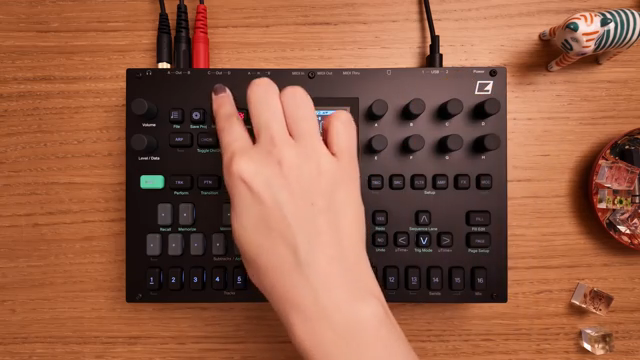
"Out CD which is right here is particularly useful for incorporating external gears."
© Screenshot/Quote: Weareelektron (YouTube)
Sequencers and Parameter Locks: Evolving Performance
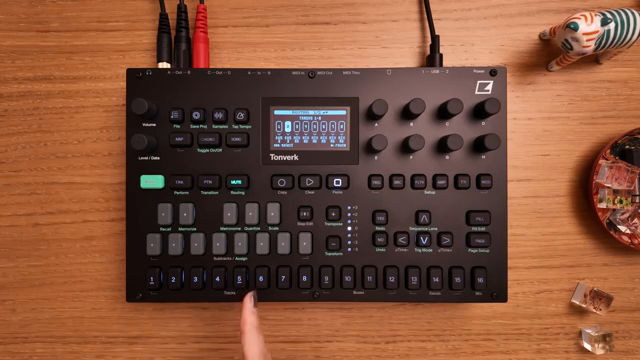
"Allowing each step to sound completely different."
© Screenshot/Quote: Weareelektron (YouTube)
Every track in Tonverk—audio, bus, send FX, and mix—features its own dedicated sequencer. This means not only can you sequence notes and triggers, but you can also automate effect parameters, routing destinations, and more, all on a per-step basis. The tutorial highlights the power of parameter locks, which allow users to lock specific parameter values (like filter cutoff or routing) to individual steps, resulting in sequences that are dynamic and unpredictable.
A practical example is shown on the mix track: the low pass filter effect is parameter locked for frequency and resonance across different steps, with additional modulation of speed and depth. This demonstrates how even the master effect can become a living, breathing part of a performance, rather than a static afterthought.
The result is a system where complexity is not just possible but encouraged. By combining step-based automation, flexible routing, and deep effect control, Tonverk empowers users to craft evolving, chaotic, and highly personal soundscapes—hallmarks of Elektron’s design philosophy.
This article is also available in German. Read it here: https://synthmagazin.at/elektron-tonverk-tiefenanalyse-von-tracks-routing-und-audio-architektur/
Watch on YouTube:
Latest articles
Watch on YouTube:
Visit the channel:
https://www.youtube.com/WeAreElektron
https://www.youtube.com/WeAreElektron
Links from WeAreElektron:
website: https://www.elektron.se
twitter: https://twitter.com/WeAreElektron
facebook: https://www.facebook.com/WeAreElektron
instagram: https://instagram.com/weareelektron
Sponsored links:
If you purchase via these links, we may earn a small commission – at no extra cost to you. The link opens an Amazon keyword search, and results may vary depending on availability.
Elektron Tonverk
🔗 Check price on Amazon
🔗 Check price on Amazon