Step into the nebula where film history and modular synthesis entwine. DivKid, ever the sonic cartographer, invites Todd Barton to trace the spectral origins of the Krell patch—a generative marvel inspired by the haunting score of Forbidden Planet. This is not just a technical walkthrough; it’s a poetic meditation on randomness, feedback, and the tactile act of shaping sound. As Barton shares his journey from accidental discovery to intricate expansion, we’re reminded that true synthesis is as much about listening and touch as it is about voltage and wire. Prepare to drift inside a world where every note is a living, evolving ghost.
20. January 2026
LUMINA
DivKid and Todd Barton: Krell Patches, Cinematic Echoes, and the Art of Touching Sound
Echoes from Forbidden Planet: Krell’s Cinematic Genesis
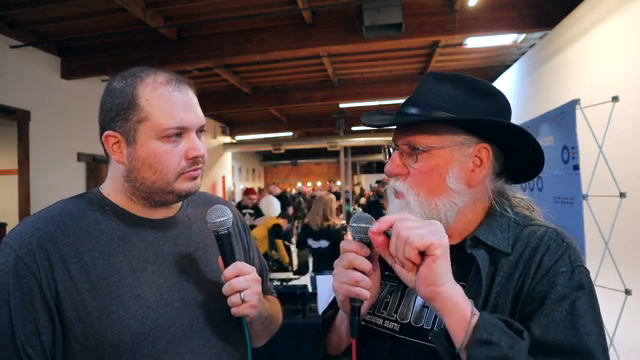
The story of the Krell patch begins not with a circuit, but with a cinematic mythos. Todd Barton, in conversation with DivKid, reveals how the spectral sounds of Bebe and Louis Barron’s Forbidden Planet score became the primordial soup from which Krell would emerge. The Barrons’ ancient Krell civilization, conjured through self-destructive tube circuits, left behind a legacy of feedback, unpredictability, and electronic swan songs—a dying resonance that still haunts the modular cosmos.
Barton’s homage is more than a technical nod; it’s a poetic echo. He describes stumbling upon the Krell patch by accident, not by design, and finding within its perpetual motion a living, organic presence. The patch does not simply repeat—it breathes, flutters, and dissolves, with sounds that fade, bloom, and bifurcate like sonic ghosts. This is synthesis as storytelling, where each note is a fragment of a lost civilization’s dream.
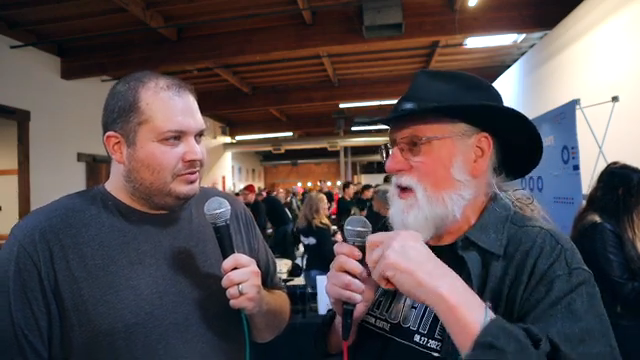
"It's this lovely kind of electronic component, swan song almost, the dying sound of the past."
© Screenshot/Quote: Divkid (YouTube)
Randomness as Muse: The Core of Krell
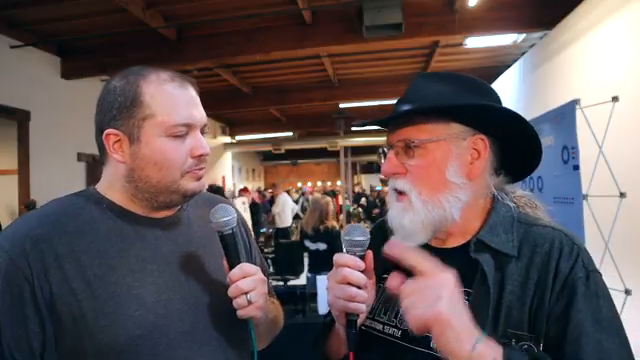
"A cycling function generator."
© Screenshot/Quote: Divkid (YouTube)
At the heart of the Krell patch lies a dance of random voltages—currents that shape attack, decay, and pitch with every cycle. Barton outlines the essentials: a cycling function generator, random voltages mapped to envelope stages, and the subtle interplay of oscillator and VCA. Each new voltage is a roll of the cosmic dice, birthing soft swells, sharp staccatos, and shifting tonalities. The result is a texture in constant flux, never settling, always evolving—a living system that refuses to repeat itself, yet never truly ends.
Listening for Ghosts: The Art of Modular Experimentation
Barton’s approach to sound design is less about control and more about discovery. He describes the ritual of arriving at the instrument, turning it on, and simply listening—waiting for the system to reveal its hidden shapes. Slow, deliberate adjustments become a kind of sonic archaeology, uncovering sweet spots that would be lost to haste. Each knob turned is an invitation to the unknown, a gentle coaxing of the machine’s latent spirits.
The process is guided by curiosity and patience. Barton encourages us to ask, “What if?”—to embrace the possibility of failure as much as success. Sometimes a tweak kills the magic; sometimes it births a new world. The Krell patch, in this sense, is less a fixed recipe and more a philosophy: go slowly, listen deeply, and let the instrument surprise you. The real alchemy happens in the spaces between intention and accident.
"Turn knobs really slowly and listen to the changes because often there's changes inside that slow thing that if you go fast, you skip over them."
© Screenshot/Quote: Divkid (YouTube)
Expanding the Nebula: Krell in Motion
Once the basic Krell patch is breathing, Barton invites us to multiply its mysteries. Adding a second cycling function generator, or routing random voltages to filters and timbre controls, opens new constellations of interaction. The system becomes a web of feedback and inversion, where each random current can be mirrored, twisted, or sent spiraling into new pitches. The result is a dynamic interplay—an ecosystem of sound where no two moments are ever the same.
These expansions are not just technical flourishes; they are invitations to deeper exploration. Barton’s advice is to let the system evolve, to allow complexity to emerge organically. The video hints at intricate setups and evolving behaviors that are best witnessed firsthand—some things, after all, can only be felt in the magnetic resonance of the patch itself. For those who crave the full immersion, the video is a portal into the living heart of Krell.
Touching the Sound: The Krell Philosophy
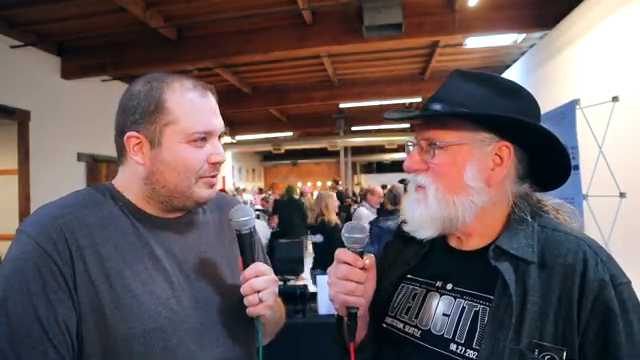
"I love to basically touch the sound with sliders on the easel or actually touching the sound when I'm using the easel keyboard because it's body capacitance, so basically I'm completing the circuit, touching the electrons."
© Screenshot/Quote: Divkid (YouTube)
The final message is one of intimacy and participation. Barton speaks of ‘touching the sound’—not just metaphorically, but physically, through sliders and capacitive keyboards. This is synthesis as embodied experience, where the boundary between human and machine dissolves in a circuit of shared electricity. To create generative music is to live inside the patch, to follow the sound wherever it leads, and to let one’s own presence become part of the evolving story.
This article is also available in German. Read it here: https://synthmagazin.at/divkid-und-todd-barton-krell-patches-filmische-echos-und-die-kunst-klang-zu-beruehren/
Watch on YouTube:
Latest articles
Watch on YouTube:
Visit the channel:
https://www.youtube.com/DivKid
https://www.youtube.com/DivKid
Links from DivKid:
Patreon: https://patreon.com/divkid
Website: https://divkidvideo.com
Instagram: https://instagram.com/divkidvideo
Twitter: https://twitter.com/divkid
Facebook: https://facebook.com/Sir.DivKid
Sponsored links:
If you purchase via these links, we may earn a small commission – at no extra cost to you. The link opens an Amazon keyword search, and results may vary depending on availability.
Buchla Modular-Synthesizer
🔗 Check price on Amazon
🔗 Check price on Amazon