Exploring the origins and intricacies of MIDI feels like uncovering a dirty little secret buried in the music industry. TheCrowHillCo delves into the 1983 NAMM conference, revealing how a group of rival manufacturers came together against all odds to create a universal standard. Expect witty insights and historical anecdotes that paint MIDI as both a relic and a vital force in today’s music landscape. This isn’t just a technical deep dive; it’s a celebration of the simplicity and power of a system that transformed music creation forever.
7. September 2025
JET
Decoding MIDI with TheCrowHillCo: Punk Meets Theory
The Spooky Startup of MIDI
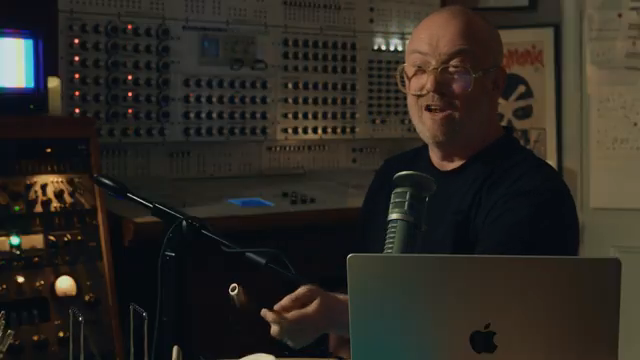
The birth of MIDI is like the stuff of legends, with dirty little secrets tucked inside its cables telling tales of frugal business moves and unholy rival alliances. As TheCrowHillCo points out, it wasn’t just about creating a standard but a reluctant bet on the future. A collection of competitors, usually at each other’s throats, decided to give the world something that everyone could use to their advantage. It’s like expecting a pub brawl to turn into a jam session. Yet, here we are, with MIDI still going strong, proving that even the dodgiest of intentions can spawn revolutions.
"There was certainly a sense of, well, we shouldn't waste any money on it."
© Screenshot/Quote: Thecrowhillco (YouTube)
1983: A Year of Synth Legend
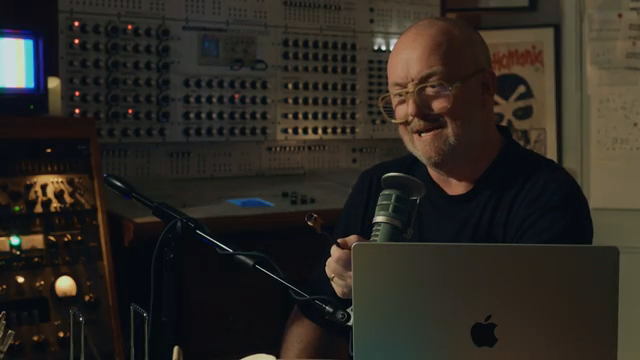
"A motley crew of manufacturers, including Roland, Yamaha, and Korg, gathered to address the music tech industry's growing pains."
© Screenshot/Quote: Thecrowhillco (YouTube)
Back in 1983, the world had its fill of synth hits like ‘Man Eater’ and ‘Down Under,’ but the real magic was happening in Anaheim, California. Here, Sequential Circuits’ Dave Smith showcased a breakthrough at the NAMM conference that would reshape music forever: MIDI. A motley crew of manufacturers, including Roland, Yamaha, and Korg, gathered to address the music tech industry’s growing pains. As TheCrowHillCo narrates, their agreed-upon protocol marked a historic truce, giving rise to the now-legendary MIDI.
The reality that MIDI was born from a collective desire to make disparate machines talk sounds like a science fiction plot gone rogue. Dave Smith and his contemporaries decided to put aside their rivalries for the common good, crafting the Universal Musical Interface, or UMI before settling on the less corny name, MIDI. This protocol brought about the formation of the MIDI Manufacturers Association. TheCrowHillCo’s vivid storytelling paints a picture of a time when business was a bit less cutthroat and a dash more innovative.
The idea was simple: connect any MIDI capable device to another, creating a digital symphony of communication. Yet, getting there required more than just goodwill. It demanded a platform, a common language that transcended brand wars, with each manufacturer playing their part in the growth of what would become the backbone of modern music production.
Cracking the Code with Bit-Sized Bytes
MIDI might seem like a mysterious relic from the past, but its binary roots run deep. TheCrowHillCo breaks down how MIDI messages are crafted from eight-bit bytes, splitting the technical cobwebs away with the precision of a seasoned hacker. Every note on, pitch bend, or modulation feeds into this digital bloodstream, governed by a protocol that boasts both simplicity and brilliance.
In essence, MIDI relies on the ingenious concept of status and data bytes. Each message dances between these two, transmitting instructions in a language of ones and zeros. As TheCrowHillCo illustrates, this system ensures that everything from note velocity to pitch can be conveyed across the musical spectrum efficiently. The binary heart of MIDI taps into something profoundly logical, setting a foundation so robust it’s still in use 40 years later. Despite the jargon, TheCrowHillCo unravels this tech spaghetti with aplomb, making it accessible even to those of us who think of ones and zeros as bug-eyed critters skittering across circuits.
The Shakespeare of Synths: The MIDI Story Continues
From the dim, flickering screens of early digital studios to today’s cutting-edge music labs, MIDI remains the common thread of genius. TheCrowHillCo unveils the evolution of this technology, describing how the marriage of electricity and music gives rise to a whole new way of thinking about sound. MIDI, in all its beautifully simplistic arrogance, allows numerous devices to communicate in a digital dialect not unlike Shakespearean writ.
The secret to this electronic bard isn’t speed per se but the ineffable transfer of energy – a bit like getting a band to play in sync without physically being in the same room. Fascinating as it sounds, the charm lies in its apparent simplicity. Bits and bytes combine in a symphony of technical wizardry, with each voltage fluctuation akin to a maestro’s baton waving time.
This section of TheCrowHillCo’s video dives deep into the heart of the MIDI protocol. He explains that MIDI doesn’t just consist of a series of signals, but of a timeless conversation between microprocessors. It’s all wonderfully befuddling yet compelling, as TheCrowHillCo guides us through this electric landscape, reminding us why MIDI is still a pulse-quickening component of modern music making. As usual, his storytelling is as engaging as it is enlightening.

"Electricity, not a man-made thing, just something we harness."
© Screenshot/Quote: Thecrowhillco (YouTube)
The Untapped Potential of MIDI: A Time Capsule Awaits
With delights ranging from pitch bends to aftertouch, MIDI’s scope is staggering, yet often misunderstood. TheCrowHillCo ventures into what MIDI could achieve with a few nimble tweaks, reminding us that the original MIDI specification was a mere starting point. Each feature, such as the ability to change the sounds on your keyboard, showcases foresight into what musicians would crave decades later.
There are whispers of bygone arguments and disagreements among those early developers – choosing slap bass over other sounds, for one. Despite its quirky limitations, MIDI’s adaptability is a testament to its design genius. TheCrowHillCo’s exploration highlights how decades may have passed, but MIDI’s potential remains largely untapped, poised to surprise the music world once more.
In true CrowHillCo style, the analysis penetrates deeply into the technical caverns of MIDI, peeling back layers of complexity to reveal an artifact as fresh in innovation as it is in nostalgia. It leaves viewers contemplating what could happen if MIDI received the upgrade treatment, and whether today’s synths could handle such a bold move. After all, what’s a relic today could be the catalyst of tomorrow’s revolution in sound.
This article is also available in German. Read it here: https://synthmagazin.at/midi-entschluesseln-mit-thecrowhillco-punk-trifft-theorie/
Watch on YouTube:
Latest articles
Watch on YouTube:
Visit the channel:
https://www.youtube.com/TheCrowHillCo
https://www.youtube.com/TheCrowHillCo
Links from TheCrowHillCo:
Website: https://thecrowhillcompany.com
Socials: https://linktr.ee/thecrowhillcompany
Podcast & Extras: https://youtube.com/@crowhillxtras
Facebook: https://facebook.com/TheCrowHillCompany/
Instagram: https://www.instagram.com/thecrowhillcompany
Sponsored links:
If you purchase via these links, we may earn a small commission – at no extra cost to you. The link opens an Amazon keyword search, and results may vary depending on availability.
Korg
🔗 Check price on Amazon
🔗 Check price on Amazon
MIDI cable
🔗 Check price on Amazon
🔗 Check price on Amazon
Roland
🔗 Check price on Amazon
🔗 Check price on Amazon
Sequential Circuits
🔗 Check price on Amazon
🔗 Check price on Amazon
Yamaha
🔗 Check price on Amazon
🔗 Check price on Amazon