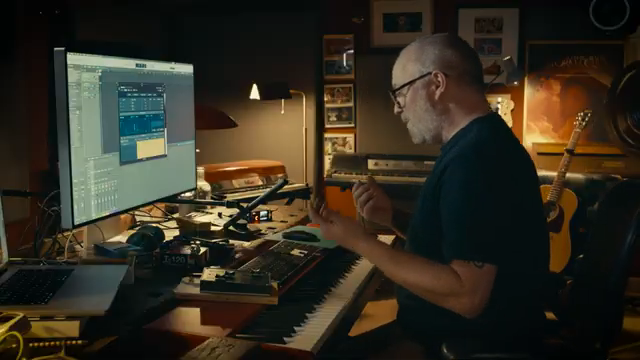
Step into the fog-draped soundscape of CROW HILL, where orchestral samples become more than digital ghosts—they become living, breathing entities under your fingertips. In this immersive deep dive, Christian Henson unspools the tangled threads of string programming, revealing secrets that shimmer between the cracks of tradition and technology. The video is a journey through the magnetic resonance of shorts and longs, velocity’s hidden valleys, and the creative chaos that only a computer can conjure. For those who see music as a landscape to wander, this is a rare glimpse into the art of sculpting orchestral emotion from zeros and ones. Prepare to drift inside the nebula of sampled strings, where every note is a story waiting to unfold.
13. December 2025
LUMINA
CROW HILL’s Sonic Cartography: Mapping Orchestral Depths with Strings and Shadows
Breaking the Cage: Overcoming Sample Library Limits
Orchestral sampling, as Christian Henson reminds us, began as an act of compression—a grand symphony squeezed into a fleeting second of tape. The earliest samplers were heavy, expensive beasts, their memory measured in heartbeats, not hours. Yet from this constraint, a new kind of magic was born: the possibility of conjuring the majesty of 90 players with a single touch. Henson’s narrative is not one of resignation to these limits, but of alchemy—transforming scarcity into creative opportunity.
He draws us into the story of Stravinsky’s Firebird, a moment in time that echoes through the digital age, showing how a single orchestral gesture can become immortal, endlessly reimagined. The limitations of early technology become the crucible in which new techniques are forged: slicing, truncating, and layering, all in pursuit of a sound that breathes. For Henson and CROW HILL, the sampler is not a cage, but a key—unlocking new forms of musical storytelling that transcend the boundaries of the concert hall.
Shorts and Longs: Two Sides of the Sonic Moon
The world of orchestral samples divides along a shimmering fault line: shorts and longs, each with their own gravity. Shorts, born from the staccato pulse of drum machines, are all about immediacy and impact—each note a flash of light, a percussive spark. Henson traces their lineage back to that iconic Firebird stab, demonstrating how technology’s evolution allowed for dynamic layers and round robins, making each strike less mechanical, more alive.
Longs, by contrast, are the slow exhalations of the string world, rooted in compositional intent and sustained emotion. Henson’s poetic framing reveals how these two archetypes grew up together but in different households, each carrying the DNA of their origins. Yet, both are haunted by their own pitfalls: shorts risk the cold repetition of machine-gunning, while longs can struggle to articulate rapid passages. The dance between these extremes is where the true art of orchestral programming lies.
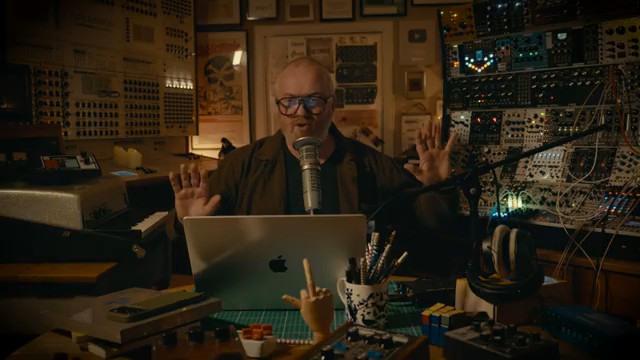
"I thought I'd start today with the great divide longs and shorts they grew up together but very much in different households."
© Screenshot/Quote: Thecrowhillco (YouTube)
Velocity and Round Robins: The Pulse of Realism
"Crow Hill we make a policy of five ten sometimes thirteen round robins sometimes more."
© Screenshot/Quote: Thecrowhillco (YouTube)
To breathe life into the sampled orchestra, Henson illuminates the twin engines of velocity and round robin sampling. Velocity is more than just force—it’s the speed of intention, the secret handshake between performer and machine. Yet, as Henson notes, it is a fickle beast: different keyboards, different hands, all yield unique results, making control both an art and a challenge. He advocates for slowing down, for listening deeply to the layers, and for embracing the subtle imperfections that make a performance human.
Round robins, meanwhile, are the ghosts in the machine—multiple recordings of the same note, shuffled to banish the specter of repetition. But even here, there are traps: too few, and the illusion collapses into a loop; too many, and chaos reigns. CROW HILL’s philosophy is to err on the side of abundance, introducing enough variation that the line between reality and simulation blurs. The result is a tapestry of sound that pulses with organic unpredictability, each note a unique fingerprint.
Tradition vs. Transformation: The Digital Orchestra Unbound
Henson draws a line in the sand between the old world and the new, contrasting the inertia and resonance of live strings with the explosive immediacy of samples. In the analog world, air and wood conspire to create a continuous bloom; in the digital realm, each note begins from stillness, a spark in the void. This difference, he suggests, is not a flaw but a feature—an invitation to explore new musical geographies.
The computer becomes a playground for impossible textures: modulating, layering, and bending samples in ways that would confound a traditional orchestra. Henson encourages us to embrace the artificial, to celebrate the quirks and glitches that arise from sequencing and sampling. In this space, creative freedom is not just permitted—it is demanded. The digital orchestra is unbound, its possibilities as vast and unpredictable as a shifting aurora.
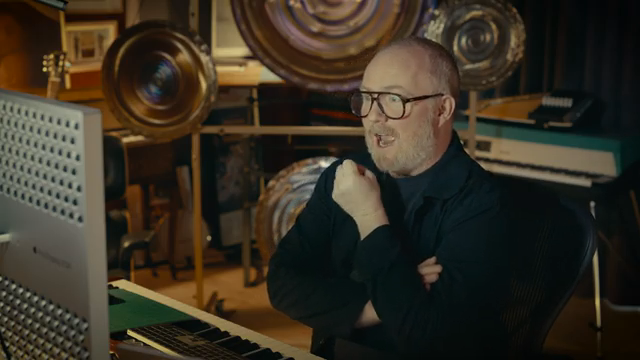
"If anything is worth having fun with with orchestral samples is creating the impossible."
© Screenshot/Quote: Thecrowhillco (YouTube)
Sound in Motion: Demonstrations and Sonic Storytelling
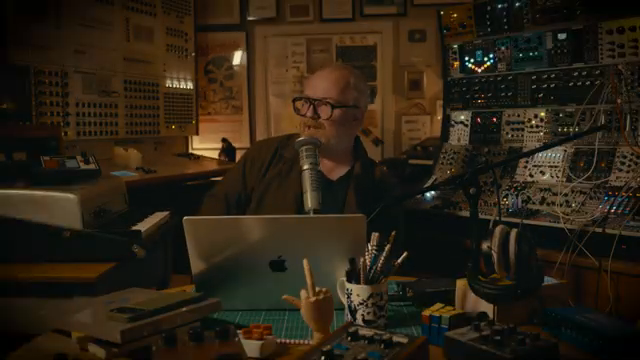
"Variation in timbre really is what will make it sound realistic."
© Screenshot/Quote: Thecrowhillco (YouTube)
Throughout the video, Henson offers not just explanations but living, breathing soundscapes. We witness the granular details of programming—velocity tweaks, round robin cycling, and the subtle art of quantization. Each demonstration is a window into the process, revealing how small gestures can transform a sterile sequence into a living performance. The use of techniques like col legno and creative transpositions adds further color, painting with the full palette of the digital string section.
Yet, as with all true storytelling, some mysteries are best experienced firsthand. The real impact of these techniques—the shimmer of a minor third transposition, the ghostly resonance of layered samples—can only be felt by immersing oneself in the video’s sonic nebula. For those who crave the tactile thrill of sound in motion, CROW HILL’s demonstrations are a masterclass in turning code into emotion, zeros and ones into swirling clouds of orchestral light.
This article is also available in German. Read it here: https://synthmagazin.at/crow-hills-klangkartografie-saiten-und-schatten-im-orchester-deep-dive/
Watch on YouTube:
Latest articles
Watch on YouTube:
Visit the channel:
https://www.youtube.com/TheCrowHillCo
https://www.youtube.com/TheCrowHillCo
Links from TheCrowHillCo:
Website: https://thecrowhillcompany.com
Socials: https://linktr.ee/thecrowhillcompany
Podcast & Extras: https://youtube.com/@crowhillxtras
Facebook: https://facebook.com/TheCrowHillCompany/
Instagram: https://www.instagram.com/thecrowhillcompany