In the world of digital music production, there are icons and pioneers, and Charlie Steinberg is undoubtedly one of them. In a multifaceted talk on MusoTalk, he reveals, together with Holger Steinbrink, the latest developments around VST, Cubase 15, and the exciting possibilities of music production with Artificial Intelligence. It becomes clear: Whether open-source dreams or live performance revolutions – in the creative process, it’s not just about technical progress, but above all about visionary dedication.
7. November 2025
RAUMKLANG
Charlie Steinberg in the Sound Sphere of musotalk
The Open-Source Patch: VST Unlocks the Doors
In an insightful talk on MusoTalk, Charlie Steinberg takes the stage and unveils one of the most groundbreaking developments in recent software history: the VST package is now open source. The story of the VST format, which first saw the light of day in 1996, is full of anecdotes and technical milestones. The format was originally passed on to the developer community in the spirit of free use. Yet Steinberg explains that it was initially important to prevent misuse and maintain some quality control through registration requirements. The goal: to avoid what he describes as “inflationary use.” Now, with its release as open source, it allows for even greater freedom of integration into open-source projects without bureaucratic baggage. This opening is a significant move that could substantially enrich the music software landscape.

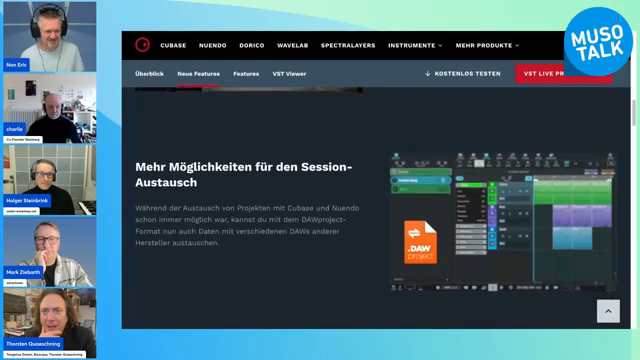
"Today everything revolves around one topic and that's Deinberg."
("Heute dreht sich wirklich alles nur um ein Thema und das ist Deinberg.")© Screenshot/Quote: Musotalk (YouTube)
Cubase 15: Modulation and Click-to-Audio
The latest updates for Cubase 15 reveal a host of exciting features that are of interest to both live performers and studio enthusiasts. Thorsten Quaschning, a prominent user and member of Tangerine Dream, particularly highlights features like Click-to-Audio, which simplifies setlist automations and literally gives musicians time by enabling concert settings at the press of a button. A true patch geometry that efficiently connects the workflow. The new modulators in the update expand creative potential by now allowing algorithmic modulation. This opens up sound architectures that were previously hard to realize, providing musicians with the tools to design their sound spaces down to the smallest detail. Often, it is the small, almost imperceptible features that make the biggest difference, rewarding those who dive deeper into the matter of Cubase 15 with an incalculable advantage. Thus, the path to sound expression is further unfolded – a true art of time and effect control.
VST Live: An Orchestra on Your Laptop
"If you have questions, Mr. Question, you can ask them now."
("Wenn Sie Fragen haben, Herr Queschen, können Sie die jetzt stellen?")© Screenshot/Quote: Musotalk (YouTube)
VST Live duly lives up to its promise as a bridge between studio environment and live music. Steinberg describes it as a system that conjures up a symphony orchestra on stage with full control over audio, light, and video. The core idea of VST Live is to store and retrieve various songs as standalone projects with all their necessary sound and effect layers. Whether it’s the chorus or a bridge – anything is possible, even synchronized from different monitors. This technology elevates live performances to a new level as it allows seamless integration of MIDI, guitar, and keyboard. Every element is structured through stacks and layers. Holger Steinbrink is impressed that these functions greatly simplify professional use. It’s a revelation for artists who want to make their performance technique more creative, extending their shows beyond traditional playback. In line with machine ethics: keep everything in natural flow but orchestrate with technical means.
Omnivocal and the AI Revolution in Music
In the discussion about the new Omni Vocal Synth, the fusion between sound generation and artificial intelligence shines in full glory. Holger Steinbrink describes that the Omni Vocal Synth by Yamaha goes far beyond simple synthesis as it is directly integrated into Cubase and offers a vivid, expressive vocal presence. The synth is a bold move in sound art, particularly for those who lack vocal abilities. Steinbrink explains that AI has the ability to anticipate melody notes in advance to generate natural breaths and lead-in breaths – a capability based on the latency compensation of the VST framework. This detail-oriented technology is still in its infancy, but the vision would be to inspire unique forms of expression with machine voices fused with human intuition. As musotalk shows, this opens up new sound spaces and multi-layered textures for musical exploration. A small step for the tool, a giant leap for synthesis.

"It really goes much faster, especially since you only have to enter the text on the first note and it is automatically distributed on the following notes."
("Das geht auch wirklich viel schneller, vor allen Dingen, weil man den Text nur auf die erste Note eingeben muss und der wird automatisch dann auf Folgenoten verteilt.")© Screenshot/Quote: Musotalk (YouTube)
The Future of Music Production and AI
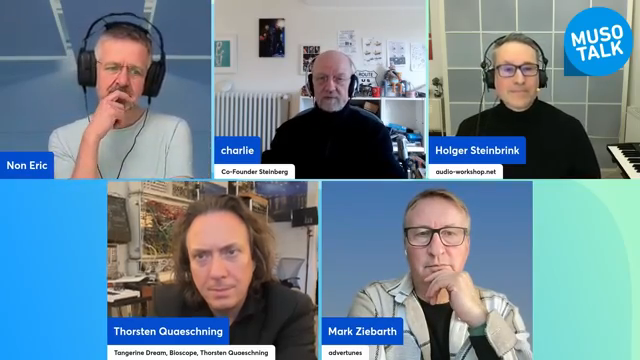
"It is a disruptive technology or technology leap. We will all have to take a closer look."
("Das ist eine disruptive Technologie oder Technologiesprung. Da werden wir uns alle noch umgucken.")© Screenshot/Quote: Musotalk (YouTube)
The discussion revolves around the profound effects of AI on music production, highlighting various opportunities and limits. Steinberg and his team share a very real assessment: the power of AI could radically simplify and make music composition and production more accessible. Yet, they also warn of the risk that music could lose its human expression and emotionality if it is purely algorithm-based. Here, a profound discussion about machine ethics and the true value of artistic creation unfolds. Thorsten Quaschning signals his skepticism towards a world where music is fully AI-generated. The debate shows that it’s about more than technical perfection, but about the emotional nuances of the sound world, originating from human experience. The integration of humans and machines remains a balancing act, which could mean the end of creative surprises if the influence of algorithms spreads too far.
Price Question: Cubase, Nuendo, and the Pitfalls of Updates
The final section of the musotalk talk brings Charlie Steinberg and Holger Steinbrink to discuss the economic aspects of software updates. Great interest is on Cubase 15’s update policy and the question of how the price is justified. Yet, a humorous glance at the old Steinberg dongles and the nostalgia associated with them brings a lightness to the conversation. Steinbrink explains that the price for an update is justified by the enormous technical investments and that users can benefit from the numerous new features. Additionally, the crossgrade option from other DAWs like Logic is an argument that could convince potential Cubase users. The comparison with Apple’s own platform and the clever possibility of crossgrades reflects the dynamic that always prevails in the market. It is a balancing act between technological advancement and the financial capabilities of the users – an aspect that often triggers controversial discussions, especially in the creative realm.
Translated from German. Read the original here: https://synthmagazin.at/charlie-steinberg-im-klangraum-von-musotalk/
Watch on YouTube:
Latest articles
Watch on YouTube:
Visit the channel:
https://www.youtube.com/musotalk
https://www.youtube.com/musotalk
Sponsored links:
If you purchase via these links, we may earn a small commission – at no extra cost to you. The link opens an Amazon keyword search, and results may vary depending on availability.
Cubase 15
🔗 Check price on Amazon
🔗 Check price on Amazon
Omnivocal Vocal Synth
🔗 Check price on Amazon
🔗 Check price on Amazon
VST Live
🔗 Check price on Amazon
🔗 Check price on Amazon