Behringer steps into the legendary world of octave fuzz with their new OCTAVIA OCTAVE FUZZ pedal, promising a riot of unpredictable, analogue sound. In this official demo, the brand’s trademark accessibility meets a circuit with a notorious reputation for glitchy, expressive chaos. From its silicon-based signal path to the pedal’s reactive controls, Behringer aims to capture the spirit of a classic effect that shaped the sound of Hendrix and Vaughan. We take a closer look at the features, quirks, and creative patching possibilities as demonstrated in the video—plus a nod to the pedal’s storied past and its place in the pantheon of fuzz.
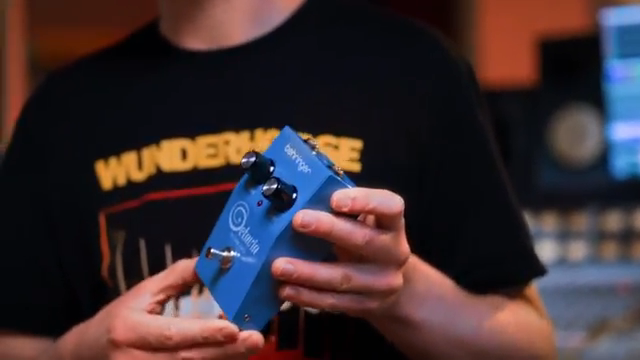
Unpredictable Analogue: The OCTAVIA Arrives
Behringer introduces the OCTAVIA OCTAVE FUZZ as an effect that thrives on unpredictability and sonic imperfection. The video wastes no time in positioning this pedal as something for the adventurous, with a nod to the idea that not everyone can handle its wild, glitchy output. The OCTAVIA is described as more than a standard octave pedal—its appeal lies in the beautifully imperfect, analogue chaos it injects into a signal chain.
From the outset, Behringer’s presentation leans into the pedal’s reputation for throwing out a plethora of pleasing glitches and octave artefacts. The focus is on the characterful, analogue nature of the effect, which is said to morph and react in ways that are as much about performance as they are about predictable tone. This sets the stage for a pedal that’s less about clinical precision and more about embracing the unexpected.

"It's this unpredictable nature that really makes this thing special."
© Screenshot/Quote: Behringer (YouTube)
Silicon Circuits and Reactive Controls
"First off, don't let the boost fool you. The boost is affecting the amount of fuzz, and turning this up will decrease the amount of octave you hear."
© Screenshot/Quote: Behringer (YouTube)
The OCTAVIA’s all-analog, silicon-based signal path is highlighted as a key part of its sound. Behringer claims to have recreated the original’s circuit topology, resulting in a pedal that is highly reactive to playing dynamics and input level. The controls are deceptively simple, but the video makes clear that understanding their interaction is crucial to unlocking the pedal’s full potential.
A particular point of interest is the boost control, which doesn’t just add gain but also shapes the balance between fuzz and octave. Turning the boost up increases the fuzz but reduces the prominence of the octave effect, a quirk that’s central to the pedal’s character. The video suggests that many users run the boost low to maximise the octave, underlining the importance of experimenting with the controls to find the sweet spot.
Fuzz, Glitch and the Art of the Boost
The audio demonstrations in the video showcase how the pedal responds to different boost settings. With the boost set low, the octave effect is pronounced, delivering that signature, imperfect upper harmonic that defines the classic sound. As the boost is increased, the fuzz becomes thicker and more saturated, but the octave element recedes, shifting the pedal’s voice from glitchy octave to full-on fuzz assault.
This interplay is not just a technical detail—it’s the core of the OCTAVIA’s appeal. The video demonstrates how the pedal can move from subtle, expressive octave textures to wild, saturated fuzz simply by adjusting a single control. The unpredictability and the way the pedal throws out “pleasant surprises” are emphasised as part of the fun.
Behringer’s demo also highlights the pedal’s ability to retain its glitchy, analogue charm even at higher fuzz levels, especially when paired with other pedals. The result is a sound that’s both nostalgic and fresh, capable of cutting through a mix or descending into controlled chaos at the twist of a knob.
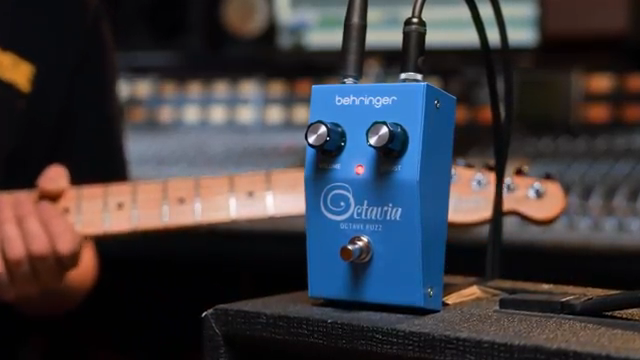
"As you can hear, it's giving that beautifully imperfect octave-up, throwing all sorts of pleasant surprises into the mix."
© Screenshot/Quote: Behringer (YouTube)
Patching Possibilities: Stacking and Expressive Play

"Playing into this pedal is very expressive and almost a performance in and of itself."
© Screenshot/Quote: Behringer (YouTube)
The video suggests that the OCTAVIA really comes alive when combined with other pedals, such as a fuzz blender. Stacking it in this way enhances both the fuzz and the glitchy octave character, opening up new textures and performance options. This approach is presented as a common and highly effective workflow for those seeking maximum sonic mayhem.
Equally important is the pedal’s responsiveness to playing dynamics. The demonstrator notes that the OCTAVIA rewards expressive, dynamic input—playing into it becomes almost a performance in itself. This quality makes it more than just a static effect; it’s a tool for real-time interaction and creative exploration, especially in the hands of players who like to push their gear to the edge.
A Legendary Lineage: From Hendrix to Today
The OCTAVIA’s backstory is woven into the video, tracing its origins to the late 1960s and the creative partnership between Jimi Hendrix and Roger Mayer. The effect’s first appearance on the solo of “Purple Haze” is highlighted as a pivotal moment in music history, with the pedal’s unpredictable sound becoming a hallmark of Hendrix’s style.
The narrative continues by naming other iconic users, including Stevie Ray Vaughan, Jeff Beck, and Kenny Wayne Shepherd, cementing the pedal’s status as a legendary tool for expressive, unconventional guitar work. Behringer’s take on the circuit is presented as both a tribute to this heritage and an accessible entry point for a new generation of players eager to channel some of that analogue magic.
This article is also available in German. Read it here: https://synthmagazin.at/behringer-octavia-octave-fuzz-analoge-unberechenbarkeit-im-pedalformat/
Watch on YouTube:
Latest articles
Watch on YouTube:
Visit the channel:
https://www.youtube.com/behringer
https://www.youtube.com/behringer
Links from behringer:
website: https://www.behringer.com
facebook: https://www.facebook.com/Behringer
twitter: https://twitter.com/BEHRINGER
instagram: https://instagram.com/Behringer