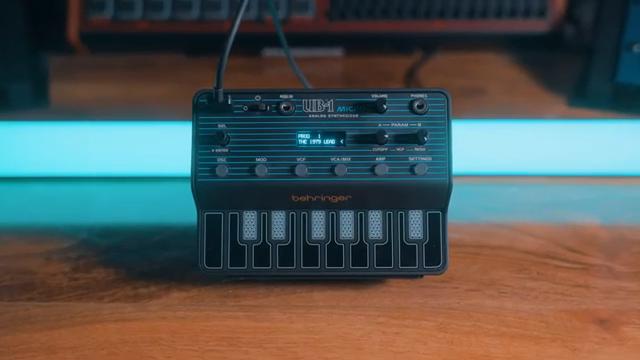
Behringer’s UB-1 Micro is a synth that seems determined to defy the laws of physics—and perhaps a few expectations along the way. In this official first-look video, Behringer showcases their ultra-compact, analog-style UB-1 Micro, a device that aims to put classic synth tones and hands-on control quite literally in your pocket. Despite its diminutive size, the UB-1 Micro is packed with features: dual DCOs, a four-pole VCF, dual LFOs, a three-mode arpeggiator, and a touch keyboard, all powered by legendary analog chips. The focus here is on portability without sacrificing sonic heft, making it a tempting tool for modular heads and mobile producers alike.
18. December 2025
MILES
Behringer UB-1 Micro: Pocket-Sized Powerhouse with Classic Analog Attitude
A Micro Synth with Macro Ambitions
Behringer kicks off the UB-1 Micro presentation by contrasting it with their larger UBX8, highlighting the new synth’s ultra-portable form factor. The UB-1 Micro is positioned as the world’s smallest full-featured analog synthesizer, a claim that sets the tone for the rest of the video. While the synth’s size is its headline feature, Behringer is quick to stress that this isn’t just a novelty—there’s genuine sound-shaping power under the hood.
The video’s opening moments are laced with a sense of playful disbelief: pulling a micro synth from your pocket is described as a unique experience, one that even the most futuristic visions of the 1980s couldn’t have predicted. This sets up the UB-1 Micro as a product that’s both forward-thinking and rooted in classic analog sensibilities, aiming to bridge the gap between portability and serious synthesis.
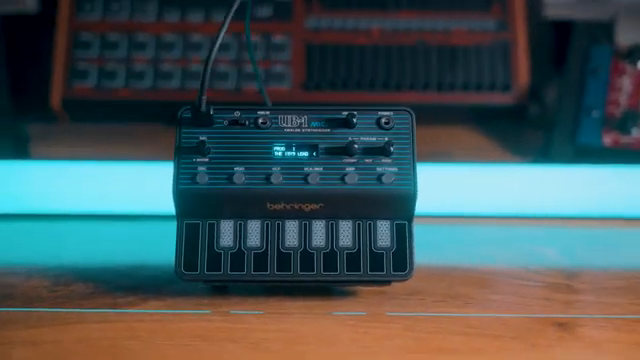
"This is the world's smallest, full-featured analog synthesizer."
© Screenshot/Quote: Behringer (YouTube)
Dual DCOs, Classic Filter, and Hands-On Control
"It's powered by the legendary 3396 and 3397 analog chips."
© Screenshot/Quote: Behringer (YouTube)
Underneath its tiny exterior, the UB-1 Micro boasts a surprisingly robust architecture. At its core are the legendary 3396 and 3397 analog chips, which Behringer credits for the synth’s rich and beefy tones. The video walks through the front panel, starting with USB-C power and MIDI connectivity—a nod to modern workflows and mobile setups. There’s also a dedicated power switch, a feature that’s become something of a rarity on compact USB devices, and a permanent MIDI input for seamless integration into live rigs.
Sound-wise, the UB-1 Micro offers two DCOs with sawtooth, triangle, and square waveforms (including PWM), a noise generator, and a sub-oscillator for extra low-end punch. The filter is a classic four-pole VCF with controls for cutoff and resonance, capable of delivering everything from smooth sweeps to raunchy resonance. The controls double as menu navigators, with an OLED display and encoder streamlining patch editing. The synth also supports both monophonic and duophonic modes, giving users flexibility for basses, leads, or layered textures.
Performance Tools: Arpeggiator and Touch Keyboard
Performance features are front and centre, with Behringer highlighting the UB-1 Micro’s three-mode arpeggiator. This arpeggiator includes hold, note division, gate, swing, and both internal and external sync options, making it a versatile tool for rhythmic and melodic experimentation. The inclusion of a 16-note touch-sensitive keyboard further enhances the instrument’s playability, allowing for expressive jamming and real-time sound exploration.
The video also notes the presence of dual LFOs with multiple waveforms (triangle, sawtooth, square) for modulating pitch and filter, plus two ADSR envelopes for shaping amplitude, filter cutoff, and oscillator pitch. These features combine to give the UB-1 Micro a surprisingly deep modulation palette, especially for a device that could easily disappear into a coat pocket.
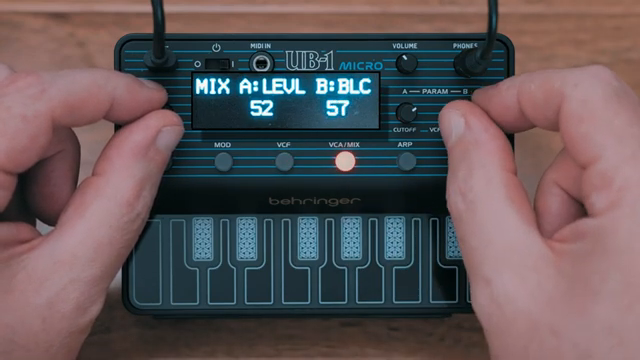
"A three-mode arpeggiator with hold, note division, gate, swing, and internal or external sync options."
© Screenshot/Quote: Behringer (YouTube)
Portability Meets Connectivity
Portability is a recurring theme, and Behringer makes a point of demonstrating how the UB-1 Micro can be powered via USB-C from a phone or power bank. The addition of a permanent MIDI input and a stereo headphone output (which doubles as a master output) means the synth is ready for both mobile jams and integration into more complex setups. This focus on connectivity ensures that the UB-1 Micro isn’t just a travel toy—it’s a legitimate tool for producers and performers on the go.
Presets, Software, and Creative Potential
Rounding out the feature set, Behringer highlights the UB-1 Micro’s 32 built-in presets, created by alternate patches. Users can save their own sounds and manage patches through the Synth Tribe software, opening the door to extensive customization and backup options. This integration encourages a workflow that balances instant gratification with deeper sound design, making the UB-1 Micro a flexible companion for both spontaneous jams and more deliberate studio work.
This article is also available in German. Read it here: https://synthmagazin.at/behringer-ub-1-micro-taschenformat-mit-klassischem-analog-charakter/
Watch on YouTube:
Latest articles
Watch on YouTube:
Visit the channel:
https://www.youtube.com/behringer
https://www.youtube.com/behringer
Links from behringer:
website: https://www.behringer.com
facebook: https://www.facebook.com/Behringer
twitter: https://twitter.com/BEHRINGER
instagram: https://instagram.com/Behringer
Sponsored links:
If you purchase via these links, we may earn a small commission – at no extra cost to you. The link opens an Amazon keyword search, and results may vary depending on availability.
Behringer UB-1 Micro
🔗 Check price on Amazon
🔗 Check price on Amazon