Behringer’s BM-14M Analog Delay isn’t just another echo box—it’s a full-on sound-sculpting playground for the patch-happy and sonically adventurous. In classic Behringer style, this pedal revives a sought-after BBD circuit with modern twists, offering deep modulation and expanded control. The official video walks us through its all-analog path, harmonic preamp, and a raft of features that make it more than a nostalgia trip. If you’re after chorus, vibrato, or just want to push delay into experimental territory, the BM-14M aims to be your new modulation workhorse.

5. September 2025
MILES
Behringer BM-14M Analog Delay: Beyond the Bucket Brigade
A Delay with a Collector’s Pedigree
The Behringer BM-14M Analog Delay is introduced as anything but your average stompbox. Drawing on the legacy of a cult-classic pedal from the early 2000s, it’s positioned as a versatile sound-sculpting machine for those who see delay as more than just an echo effect. The video wastes no time reminding us that this isn’t a mere reissue; it’s a rebirth, aiming to capture the spirit of a discontinued favourite that became a collector’s item due to its unique character and hard-to-source BBD chip.
Behringer’s pitch is clear: the BM-14M is for creative musicians and tone explorers who want more than standard repeats. With a nod to its influence on producers, synth players, and guitarists alike, the pedal is framed as a tool for those who want to push sonic boundaries, not just revisit the past.

"This one will quickly make you realise that's just not the case."
© Screenshot/Quote: Behringer (YouTube)
All-Analog Pathways and LFO Magic
At the heart of the BM-14M is a fully analog signal path, starting with a harmonic-rich preamp that sets the stage for everything downstream. The video highlights that this isn’t just a digital emulation with a bit of analog dust sprinkled on top—it’s a true bucket brigade design, with all the warmth and quirks that entails. The enclosure itself is a sturdy mix of wood and metal, giving it a reassuring heft on the pedalboard or desktop.
But what really sets this pedal apart is the onboard LFO, which modulates delay times for a wide range of effects. The controls are familiar, but the possibilities go well beyond slapback or simple repeats. By introducing movement and pitch modulation, the BM-14M opens up territory usually reserved for rack units or modular setups. The video demonstrates how twisting the time knob or engaging the LFO leads to everything from classic vibrato to more experimental pitch-shifting textures.
Hidden Tricks and Tap Tempo Tactics
"In spillover mode, your delay will continue when you bypass it, which is really nice if you're transitioning out of a solo, back to your rhythm part."
© Screenshot/Quote: Behringer (YouTube)
The BM-14M isn’t content with just the basics—there are hidden features lurking beneath the surface. The bypass switch, for example, offers two distinct modes: normal, which cuts the delay when bypassed, and spillover, which lets the repeats continue after disengagement. This is a thoughtful touch for live performers who want smooth transitions between solos and rhythm parts.
Further up the cleverness scale, the tap tempo function does double duty. Hold it down, and instead of just setting delay time, you can tap in the LFO rate, allowing for real-time modulation changes without menu diving. These advanced control features give the pedal a flexibility that’s rare in analog delays, making it a strong candidate for both pedalboard minimalists and modular maximalists.
Patch Points and Creative Connectivity
Where the BM-14M really flexes its muscles is in the I/O department. The video showcases a rear panel bristling with audio ins and outs, CV control, and MIDI—an unusual sight on a pedal of this type. This opens the door to integrating the BM-14M into complex modular rigs, DAWless setups, or even as a centrepiece in a feedback loop experiment.
The demonstration includes patching an external LFO (from a Behringer Neutron, no less) into the delay, as well as using expression pedals and splitting wet/dry signals. It’s clear that Behringer intends this pedal to be more than a guitar effect—it’s a modular-friendly tool for anyone who wants to push analog delay into new territory.
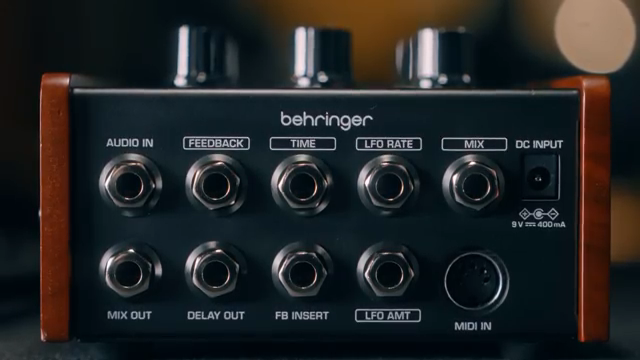
"This level of control over an analog pedal gives you the perfect sound pit for creative experimentation."
© Screenshot/Quote: Behringer (YouTube)
From Chorus to Chaos: Expanding the Sonic Palette
The BM-14M is shown delivering everything from lush chorus and vibrato to custom feedback patterns, all thanks to its modulation and routing options. The video suggests that this pedal isn’t just for echoing notes—it’s for building evolving textures, rhythmic patterns, and experimental soundscapes.
For musicians who want to move beyond the predictable, the BM-14M offers a playground of analog delay tricks, making it a device you’ll want to revisit time and again as your patching ambitions grow.
This article is also available in German. Read it here: https://synthmagazin.at/behringer-bm-14m-analog-delay-mehr-als-nur-bucket-brigade/
Watch on YouTube:
Latest articles
Watch on YouTube:
Visit the channel:
https://www.youtube.com/behringer
https://www.youtube.com/behringer
Links from behringer:
website: https://www.behringer.com
facebook: https://www.facebook.com/Behringer
twitter: https://twitter.com/BEHRINGER
instagram: https://instagram.com/Behringer
Sponsored links:
If you purchase via these links, we may earn a small commission – at no extra cost to you. The link opens an Amazon keyword search, and results may vary depending on availability.
Behringer BM-14M Analog Delay
🔗 Check price on Amazon
🔗 Check price on Amazon
Behringer Neutron
🔗 Check price on Amazon
🔗 Check price on Amazon