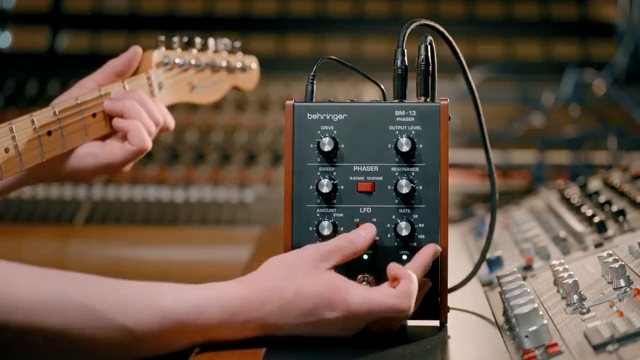
Behringer steps boldly into the phaser arena with the BM-13 PHASER, an analogue pedal that channels the spirit of a 1970s rack-mount legend. In their latest video, Behringer’s team walks us through the BM-13’s unique 12-stage circuit, flexible controls, and the sort of I/O that invites both traditionalists and sonic tinkerers alike. This isn’t just a guitar pedal—it’s a modular-friendly effect box with enough attitude to handle synths, drum machines, or even a saxophone solo. If you’re after swirling textures, stereo trickery, or just a bit of vintage phase character, the BM-13 aims to deliver, all with Behringer’s usual nod to accessibility and hands-on experimentation.
A New Phase Dawns: BM-13’s Heritage and Intent
Behringer’s BM-13 PHASER arrives as a modern tribute to a classic 1970s 12-stage rack-mount phaser, a device once renowned for its outlandish looks and the ability to push speakers to their limits. The video wastes no time in establishing the BM-13’s lineage, referencing its roots in a piece of kit that graced the studios of Kraftwerk and Tangerine Dream, and was as infamous for its sonic power as for its imposing design.
While the original could allegedly “blow up your speakers,” Behringer assures us that the BM-13 retains the musicality and complexity of the classic circuit, minus the risk of accidental destruction. The pedal is pitched as both a respectful homage and a practical update, offering the same 12-stage phase architecture in a more accessible, pedalboard-friendly format. This sets the stage for a device that’s as much about creative exploration as it is about vintage authenticity.
12 Stages, 6 Stages, Infinite Possibilities
Central to the BM-13’s appeal is its 12-stage phasing circuit, which can be switched down to 6 stages for subtler effects. The video offers a concise explanation of phaser topology: the signal is split, one half passing through a cascade of all-pass filters—twelve in this case—while the other remains dry. When recombined, these paths produce a series of notches in the frequency spectrum, with an LFO sweeping the notches for that signature phase movement.
The ability to toggle between 12 and 6 stages isn’t just a numbers game—it’s a practical tool for tailoring the complexity of your sound. More stages mean more notches and a denser, more intricate phase texture, while fewer stages yield a gentler, more classic sweep. This flexibility is demonstrated in the video with audio examples, underscoring the BM-13’s range from subtle shimmer to full-on psychedelic swirl.
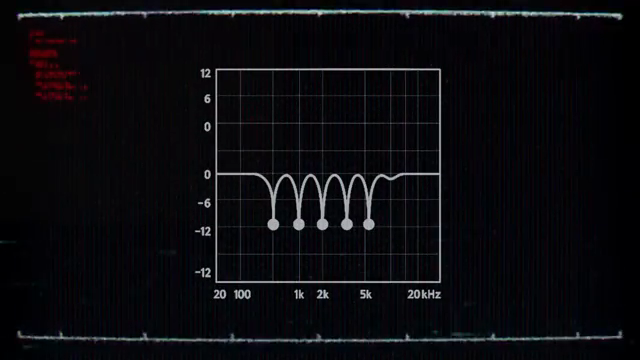
"An LFO then moves these notches up and down, creating a phaser effect that we all know and love."
© Screenshot/Quote: Behringer (YouTube)
Hands-On Control: LFOs, Resonance, and Connectivity
"The CV control on this series of pedals is really one of the main things that sets them apart from most."
© Screenshot/Quote: Behringer (YouTube)
The BM-13 doesn’t skimp on tweakability. Up top, you’ll find drive and output controls for shaping both input gain and final output, making it easy to dial in anything from clean phase to saturated analogue warmth. The sweep and resonance knobs allow for precise sculpting of the phaser’s frequency range and intensity, while a rocker switch lets users flip between 6- and 12-stage operation on the fly.
Where things get especially interesting is the LFO section. Unlike many phasers, the BM-13 provides a dedicated LFO range switch, rate, and amount controls, giving users deep access to the movement and modulation at the heart of the effect. The video highlights the pedal’s comprehensive CV and expression pedal connectivity, enabling external modulation of parameters like sweep and resonance. This opens the door for integration with modular synths or other control sources, making the BM-13 a flexible tool for both pedalboards and Eurorack-style setups.
Beyond Guitar: BM-13 as a Creative Workhorse
Behringer positions the BM-13 as far more than a guitar pedal. The video demonstrates its suitability for a wide range of sources, from synthesizers to drum machines and even wind instruments. The drive and output stages are designed to accommodate various input levels, ensuring that everything from hot synth signals to delicate acoustic sources can be processed with ease.
The inclusion of CV control and expression pedal inputs further cements the BM-13’s role as a creative hub. Whether you’re manually sweeping the phase with your foot or patching in an LFO from a synth like the Neutron, the pedal encourages hands-on experimentation. The video’s closing montage of different sound sources being phased underscores the BM-13’s versatility in both studio and live contexts.
Stereo Phase: Expanding the Soundstage
One of the BM-13’s standout features is its stereo capability, achieved by running the main and aux outputs to separate speakers. The aux output delivers the same effect as the main, but with a phase shift, resulting in a wide, immersive stereo image when panned left and right. The video demonstrates this with a clear before-and-after comparison, highlighting how the effect transforms a mono instrument into a swirling, room-filling experience.
This stereo trickery isn’t just for show—it’s a practical way to simulate rotary speaker effects or add movement to static sources. Behringer’s demo makes it clear that the BM-13 isn’t limited to traditional pedalboard duties; it’s equally at home as part of a larger, more experimental setup where stereo imaging and spatial modulation are key creative tools.

"The aux output has the same effect as the main output, just shifted in phase."
© Screenshot/Quote: Behringer (YouTube)
This article is also available in German. Read it here: https://synthmagazin.at/behringer-bm-13-phaser-klassischer-phaser-modernes-mojo/
Watch on YouTube:
Latest articles
Watch on YouTube:
Visit the channel:
https://www.youtube.com/behringer
https://www.youtube.com/behringer
Links from behringer:
website: https://www.behringer.com
facebook: https://www.facebook.com/Behringer
twitter: https://twitter.com/BEHRINGER
instagram: https://instagram.com/Behringer
Sponsored links:
If you purchase via these links, we may earn a small commission – at no extra cost to you. The link opens an Amazon keyword search, and results may vary depending on availability.
Behringer BM-13 PHASER
🔗 Check price on Amazon
🔗 Check price on Amazon