Behringer steps into the portable PA arena with the B6X, a column loudspeaker system engineered for gigging musicians, DJs, and event hosts who demand reliability and sonic clarity without the usual setup headaches. On their official channel, Behringer walks us through how the B6X combines deep bass, crisp highs, and a digital mixer with app-based control—all in a package that fits in the back of a small car. This video isn’t just a spec sheet; it’s a workflow-focused look at how the B6X aims to take the anxiety out of live sound, from dodgy cables to wireless pairing and real-world flexibility. Let’s break down what’s actually shown, what’s clever, and what still needs a closer look.

24. September 2025
LYRA
Behringer B6X: Portable Power and Digital Flexibility for Modern Performers
Column Convenience: The B6X’s Portable Promise
The video opens with a familiar anxiety: will the sound system hold up, or will technical gremlins sabotage your set? Behringer positions the B6X as the answer to this perennial performer’s fear, highlighting its role as a portable column loudspeaker system. The presenter frames the B6X not just as another speaker, but as a tool designed to bridge the gap between talent and audience, especially in environments where reliability is non-negotiable.
From the outset, the B6X is shown as a solution for a wide range of scenarios—pub gigs, weddings, street performances—where portability and trustworthiness are paramount. The system’s compact footprint is emphasized, with a nod to its ability to fit in the back of a Mini while still leaving room for other gear. This isn’t just about saving space; it’s about reducing setup stress and making quality sound accessible for performers who can’t afford to gamble on unreliable rigs.
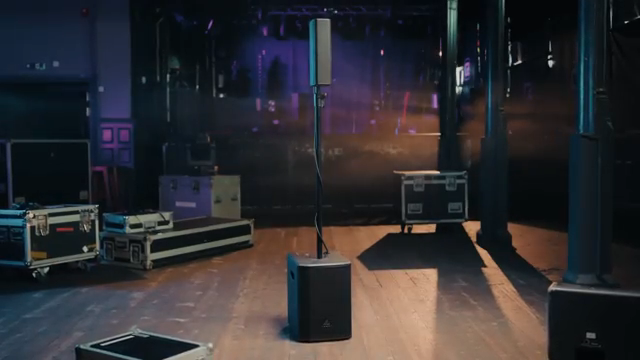
"This is what we call a column loudspeaker system."
© Screenshot/Quote: Behringer (YouTube)
Bass, Highs, and Smart Dispersion: Anatomy of the B6X
"By putting it on the floor you're actually getting a boost in the low end. About 3 dB perceived bass."
© Screenshot/Quote: Behringer (YouTube)
Behringer’s architectural approach is clear: the B6X is split into a subwoofer for low-end punch and a satellite speaker for articulate highs. The sub, placed on the floor, leverages boundary gain to deliver a perceived 3 dB bass boost, giving performances a fuller sound without the need to crank the volume. This design choice is practical, especially for small venues where excessive loudness is a liability.
The satellite speaker is engineered for directional high-frequency projection, aiming sound directly at the audience’s ear level. This helps the B6X maintain clarity over distance and cut through ambient noise, even at lower volumes. The absence of bulky tripod stands and the promise of 800 watts of output reinforce the system’s blend of portability and power, making it suitable for both intimate and moderately sized events.
Inputs and Independence: Connection Flexibility
A core strength of the B6X, as demonstrated, is its array of input options and independent volume controls. The system offers two combo XLR/quarter-inch inputs, accommodating microphones, guitars, keyboards, and DJ controllers. Each input has its own dedicated level control, ensuring that vocals and backing tracks don’t compete for sonic space—a workflow detail that’s often overlooked in entry-level PAs.
Beyond the basics, the B6X includes a 3.5mm input for laptops, phones, or synths, and supports Bluetooth streaming with its own independent volume. There’s even a nod to Behringer’s wireless mic ecosystem: plug a USB receiver into the dedicated port, and both A and B inputs go wireless. The mix output allows for recording, live streaming, or sending the blend to a separate monitor, rounding out a connectivity suite that’s genuinely flexible for modern performance setups.

"Everything has its own level. I don't think I can say that enough."
© Screenshot/Quote: Behringer (YouTube)
Digital Mixer, Effects, and App Control: The Brains of the B6X
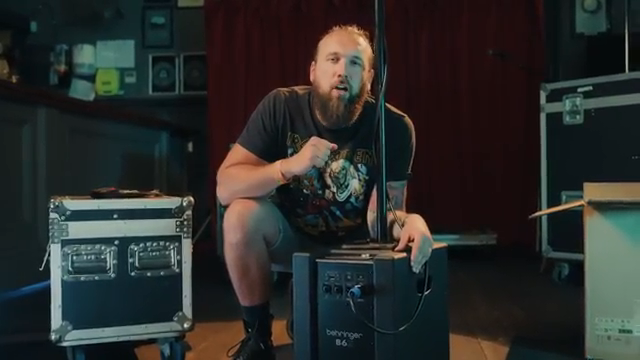
"It's got built-in room correction presets designed by The Sound Wizards from Clark Technic and you can tune the system to the floor, the wall or the corner of the room."
© Screenshot/Quote: Behringer (YouTube)
Where the B6X distinguishes itself from typical portable PAs is its built-in digital mixer and remote control app. The video highlights the ability to manage all settings either from the onboard panel or via the app, catering to both hands-on and remote workflows. This is particularly relevant for performers who want to make real-time adjustments without leaving the stage or for engineers managing multiple zones.
The system comes loaded with room correction presets, designed by Clark Technic, allowing users to tune the B6X for floor, wall, or corner placement. This kind of DSP-driven adaptation is a significant step up from basic EQ knobs, promising more consistent results across different venues. Integrated effects—echo, chorus, concert hall reverbs, and delays by TC Electronic—are touted as studio-quality, giving performers a palette of sound-shaping tools without external processors.
Additional workflow touches include a panel lock to prevent accidental changes mid-gig and preset management for storing favorite setups. There’s also speaker delay compensation for synchronizing sound in larger, multi-unit deployments. While the video keeps things high-level, it’s clear that the B6X’s digital backbone is designed for both simplicity and depth, depending on how far users want to dig into the menu system.
Wireless Pairing and Scalable Sound: Expanding the B6X Ecosystem
The B6X’s wireless pairing capabilities are a highlight for performers seeking scalable sound without cable clutter. Pairing two units via Bluetooth creates an instant stereo setup, expanding coverage and creating a more immersive experience for audiences. The video even mentions the ability to link up to eight units for party mode, making the system adaptable for both solo acts and larger events.
Speaker delay compensation and preset management further support complex setups, ensuring that sound remains tight and tailored regardless of the number of units deployed. While the video doesn’t dive into latency or real-world pairing robustness, the workflow on display is clearly aimed at users who value both flexibility and ease of expansion.
This article is also available in German. Read it here: https://synthmagazin.at/behringer-b6x-tragbare-power-und-digitale-flexibilitaet-fuer-moderne-performer/
Watch on YouTube:
Latest articles
Watch on YouTube:
Visit the channel:
https://www.youtube.com/behringer
https://www.youtube.com/behringer
Links from behringer:
website: https://www.behringer.com
facebook: https://www.facebook.com/Behringer
twitter: https://twitter.com/BEHRINGER
instagram: https://instagram.com/Behringer
Sponsored links:
If you purchase via these links, we may earn a small commission – at no extra cost to you. The link opens an Amazon keyword search, and results may vary depending on availability.
Behringer B6X
🔗 Check price on Amazon
🔗 Check price on Amazon