Behringer steps up to the 500 series game with the 73, a compact preamp channeling the spirit of the legendary 1073. In this official video, the brand’s signature accessibility meets a deep dive into vintage-inspired warmth, courtesy of Midas transformers and a Class A all-discrete signal path. The focus is on practical studio workflows, tactile controls, and the subtle sonic magic that made the original a staple of classic records. If you’re after that elusive blend of British grit and modern reliability, this video gives a thorough look at what the Behringer 73 brings to the rack.
11. March 2025
MILES
Behringer 73: Classic Preamp Vibe in a Modern 500 Series Suit
A Modern Take on a Studio Legend
The Behringer 73 is introduced as a compact 500 series preamp, designed to capture the essence of the classic 1073. The video sets the stage with a nod to the original’s reputation for making vocals shine and guitars roar, positioning the 73 as a must-have for any serious studio setup. There’s a clear emphasis on the unit’s ability to deliver the iconic tone that has defined countless recordings, with Behringer aiming to reimagine this audio history for today’s studios.
Tracing its lineage back to Rupert Neve’s 1970 design, the 1073 preamp is credited with shaping the sound of rock, soul, and more. The video highlights how Behringer, with input from engineer John Price, seeks to bring this revered sound to a new generation. The pitch is straightforward: whether you’re a seasoned producer or just starting out, the 73 promises vibrant analog richness and a sonic character that’s both familiar and freshly accessible.
"This will make every sound bigger, richer and more alive."
© Screenshot/Quote: Behringer (YouTube)
Class A Discrete Path and Midas Transformers
Central to the Behringer 73’s design is its Class A all-discrete signal path, a hallmark of classic analog preamps. The unit is housed in a solid steel chassis, providing both durability and isolation from other modules in a 500 series rack. The video points out that this makes the 73 suitable for both studio installations and mobile rigs, a nod to practical versatility.
The real star here is the pair of custom-built Midas transformers, which are credited with delivering a balanced, smooth tone reminiscent of the original 1073. The preamp accommodates mic, line, and instrument inputs, with a front-panel combo connector and input switching that allows for quick changes without the need for a patch bay. This flexibility is clearly aimed at streamlining signal flow for modern workflows while staying true to the classic circuit topology.
Stepped Gain and Illuminated Controls: Precision Meets Tactility
"The large stepped gain control knob allows for precise operation and accurate recall and gives the unit a sturdy, tactile professional feel."
© Screenshot/Quote: Behringer (YouTube)
The control layout of the Behringer 73 is designed for both precision and ease of use. The large stepped gain control knob is highlighted for its sturdy, tactile feel and its ability to provide accurate recall—a boon for engineers who value consistency between sessions. The video notes the presence of slightly unusual off positions on the gain knob, a quirk inherited from the original design, supposedly to allow the unit to be put into a kind of stasis.
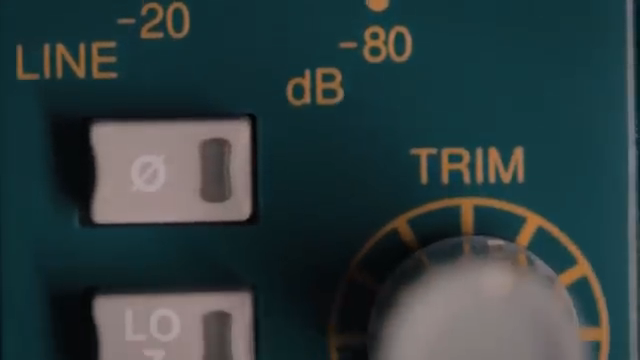
Additional features include a trim level control for finer gain adjustments and illuminated switches for key functions like phase, input selection, and low Z mode. All switching is handled by mechanical relays, providing both a satisfying click and long-term reliability. The illuminated controls not only enhance usability in dim studio environments but also add a touch of modern flair to the classic aesthetic.
Front-Panel Switching and Low Z Mode: Streamlining Studio Workflows
A standout feature of the Behringer 73 is its front-panel input switching, which lets users toggle between rear and front inputs without re-patching cables. This is especially handy for quickly plugging in a new mic or instrument on the fly. The inclusion of a low Z mode caters to specific microphone types, such as ribbons and certain dynamics, ensuring optimal impedance matching and signal integrity. These touches are aimed squarely at making the engineer’s life easier during fast-paced sessions.
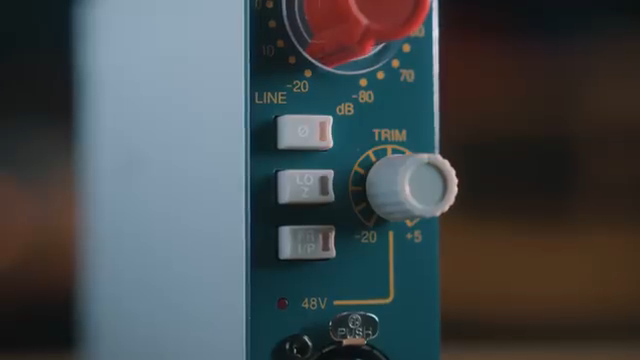
"You have these for selecting phase, switching between front and rear inputs and low Z mode."
© Screenshot/Quote: Behringer (YouTube)
Richness in the Mix: Sonic Character and Real-World Application
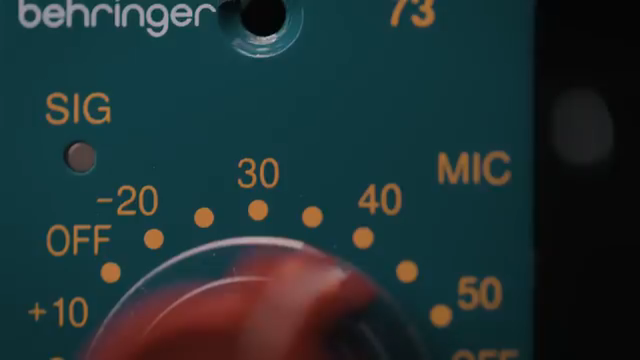
"This preamp provides the depth, richness and clarity that every recording deserves with engineering and design that brings you much closer to the original vintage mic preamp."
© Screenshot/Quote: Behringer (YouTube)
The video demonstrates the Behringer 73’s sonic capabilities by passing guitar through the preamp, focusing on the subtle saturation and harmonic richness it imparts. The stepped gain control operates in 5 dB increments, with the trim knob allowing for precise level setting. The presenter notes that the saturation is subtle in isolation but becomes much more apparent and beneficial once the recorded material is placed in a mix, helping tracks stand out with body and strength.
Whether capturing the nuances of a vocal or the power of a guitar, the 73 is positioned as a tool for adding depth, clarity, and vintage character to any recording. The engineering choices—such as electronically controlled gain switching and a boosted 30V rail—are presented as moves that bring the unit closer to the original’s performance, while also offering modern reliability. For those seeking to inject classic warmth into their productions, the Behringer 73 aims to deliver that legendary sound in a streamlined, accessible package.
This article is also available in German. Read it here: https://synthmagazin.at/behringer-73-klassischer-preamp-charme-im-modernen-500er-format/
Watch on YouTube:
Latest articles
Watch on YouTube:
Visit the channel:
https://www.youtube.com/behringer
https://www.youtube.com/behringer
Links from behringer:
website: https://www.behringer.com
facebook: https://www.facebook.com/Behringer
twitter: https://twitter.com/BEHRINGER
instagram: https://instagram.com/Behringer
Sponsored links:
If you purchase via these links, we may earn a small commission – at no extra cost to you. The link opens an Amazon keyword search, and results may vary depending on availability.
Behringer 73
🔗 Check price on Amazon
🔗 Check price on Amazon