The Behringer 676 isn’t just another channel strip—it’s a deliberate nod to the golden age of recording, marrying a 610-style tube preamp with an 1176-inspired FET compressor in a single rackmount chassis. On their official channel, Behringer walks us through the 676’s design, controls, and sonic possibilities, all with their trademark focus on accessible, powerful gear. For those who crave vintage warmth, dynamic punch, and flexible routing in their recording chain, this video offers a thorough look at what the 676 brings to the table—and how it might slot into both studio and live rigs. Let’s see how this hybrid beast shapes up, from subtle saturation to full-on compression mayhem.

14. March 2025
MILES
Behringer 676: Vintage Vibe, Modern Muscle – A Channel Strip for the Patch-Hungry
Vintage DNA, Channel Strip Ambitions
Behringer’s 676 is pitched as a channel strip that fuses two legendary circuits: a tube preamp inspired by Bill Putnam’s 610 console and a FET compressor in the style of the classic 1176. The video wastes no time setting the historical scene, referencing the original hardware’s role in shaping the sounds of icons like Frank Sinatra, The Beach Boys, and Van Halen. This isn’t just nostalgia for nostalgia’s sake—the 676 aims to capture that elusive blend of warmth and punch that made those circuits staples in professional studios.
From the outset, Behringer positions the 676 as a tool for serious recording environments, whether you’re tracking vocals, guitars, or anything else that benefits from a bit of analog magic. The combination of tube saturation and fast, aggressive compression is presented as a way to bring out the best in any source, with the flexibility to go from smooth enhancement to outright sonic transformation.
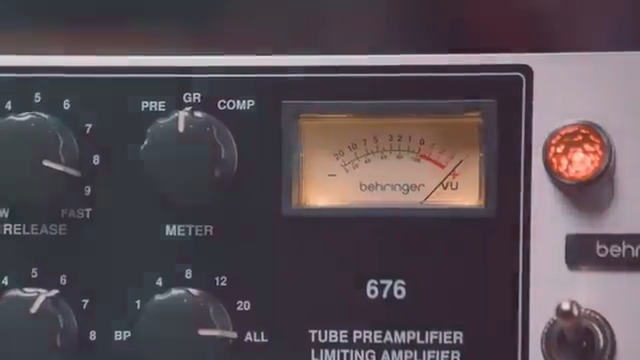
"If you're looking for the unmistakable valve warmth on your recordings, a tool that delivers all from smooth to aggressive, then this might just be what you've been looking for."
© Screenshot/Quote: Behringer (YouTube)
Two Circuits, Countless Possibilities
"From the connectors, you'll notice straight away that the 676 actually houses two completely separate devices, a 610-style tube mic preamp and an 1176 VET compressor."
© Screenshot/Quote: Behringer (YouTube)
A look at the rear panel reveals the 676’s split personality: the 610-style tube preamp and the 1176-inspired compressor each have their own input and output transformers, allowing for independent or combined operation. This means you can patch in just the preamp for some tube colour, hit only the compressor for dynamics control, or run your signal through both for the full channel strip experience.
Internally, Behringer highlights the use of four custom Midas transformers and premium tubes, aiming for that rich harmonic lift and presence. The video makes it clear that this isn’t just a one-trick pony—the 676 is designed to be as versatile as your patchbay, whether you’re after subtle enhancement or dramatic processing.
EQ, Dynamics, and the Art of Control
The preamp section offers a classic set of controls: input gain trim, output level, and a rotary input selector for impedance matching, plus a two-band shelving EQ with switchable frequencies. The EQ section lets you dial in high and low shelves, with selectable frequencies (4.5kHz, 7kHz, 10kHz for highs; 200Hz for lows), giving you the ability to add air, weight, or just a bit of extra sparkle to your signal. The video demonstrates how boosting the high shelf at different frequencies can open up the top end, while the low shelf brings out body in an acoustic guitar.
On the compressor side, you get ultra-fast attack times (20 to 800 microseconds) and a wide release range (50 to 1100 milliseconds), allowing for everything from gentle taming to brickwall limiting. The VU meter provides visual feedback for gain reduction and output, and the joint/split switch lets you decide whether to process signals together or separately. The video walks through practical examples, like using the compressor to tame dynamic guitar performances or add snap to a snare drum, showing how the controls respond in real time.
Other features include a switchable pad, polarity reverse, and 48V phantom power, rounding out the preamp’s utility. The compressor’s ratio control goes up to 12:1 for limiting, and the infamous “all button mode” is demonstrated for that classic, aggressive 1176-style distortion—ideal for vocals that need to cut through a dense mix.
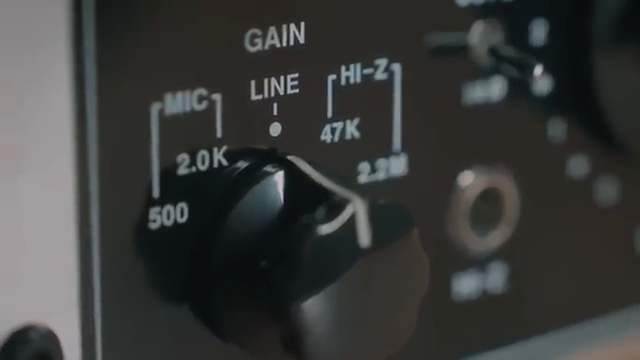
"There's a two-band shelving equalizer with switchable filters so you can shape the tone even further."
© Screenshot/Quote: Behringer (YouTube)
From Subtle to Savage: Real-World Applications
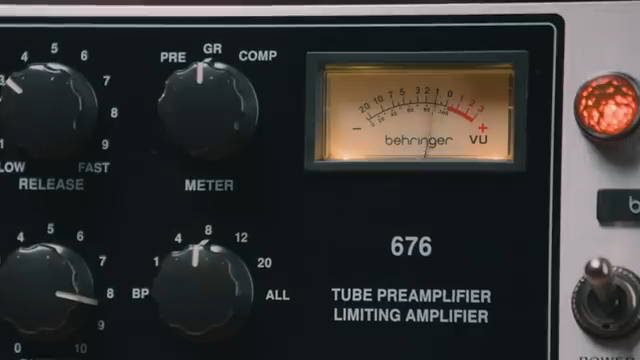
"So why don't we look at something more extreme, something of a speciality for this particular compressor, the all button mode originally discovered by somebody in the early days jamming in all of the ratio buttons and finding that it created this very extreme effect."
© Screenshot/Quote: Behringer (YouTube)
The 676 isn’t just for one-trick processing. The video showcases its range by running everything from acoustic guitar to snare drum and even extreme vocals through the unit. On guitar, the preamp’s saturation and EQ add warmth and body, while the compressor tightens up dynamics without squashing the life out of the performance. For drums, the fast attack and release settings let you sculpt transients, adding punch or smoothing out peaks as needed.
Perhaps most telling is the demonstration of the compressor’s all-button mode on aggressive vocals—a trick borrowed from classic rock and metal sessions. Here, the 676 delivers distortion and grit, helping vocals slice through even the densest arrangements. Behringer’s video makes a point of showing how the unit adapts to different sources and styles, reinforcing its role as a flexible tool in any recording or live setup.
Build, Components, and the Case for Durability
Physically, the 676 is housed in a solid metal rackmount chassis, with switches and dials that are described as satisfying to use. The video points out the robust build quality, suggesting it’s ready for both studio installation and the rigours of the road. The inclusion of an auto-ranging universal power supply means it’s equally at home in international setups—a nod to practical realities for touring engineers and producers.
Behringer emphasises the use of premium tubes and custom-wound Midas transformers, aiming to deliver both sonic character and reliability. The attention to detail in the component selection is pitched as a key factor in achieving authentic analog warmth and dynamic response.
Ultimately, the 676 is positioned as a professional-grade solution for creators who want vintage-inspired sound without the fragility or price tag of original hardware. Whether you’re capturing subtle nuances or pushing signals into creative distortion, the 676 is shown as a versatile, durable addition to any signal chain.
This article is also available in German. Read it here: https://synthmagazin.at/behringer-676-vintage-vibes-und-moderne-power-ein-channel-strip-fuer-patch-fans/
Watch on YouTube:
Latest articles
Watch on YouTube:
Visit the channel:
https://www.youtube.com/behringer
https://www.youtube.com/behringer
Links from behringer:
website: https://www.behringer.com
facebook: https://www.facebook.com/Behringer
twitter: https://twitter.com/BEHRINGER
instagram: https://instagram.com/Behringer
Sponsored links:
If you purchase via these links, we may earn a small commission – at no extra cost to you. The link opens an Amazon keyword search, and results may vary depending on availability.
Behringer 676
🔗 Check price on Amazon
🔗 Check price on Amazon