Bastl Instruments returns with a deep dive into live modular performance, this time with John Dee at the helm, orchestrating a Eurorack setup that’s equal parts precision and unpredictability. The video is a showcase of Bastl’s own modules—Basil, 1983, Neo Trinity, Pizza—woven together with the Michigan Synthworks MSW810 and M8 sequencer. Expect a journey through synchronized LFOs, real-time delay manipulation, and the kind of organic modulation that makes a patch feel alive. If you’re curious how a modular rig can drift, sync, and surprise all at once, this is a performance worth dissecting.
26. March 2025
MILES
Bastl Instruments: Sync Drift and the Art of Modular Space Echo
Bastl 1983, Bastl Aikido, Bastl Basil, Bastl Cinnamon, Bastl Neo Trinity, Bastl Pizza, M8, Michigan Synthworks MSW810
Patchwork Foundations: The Bastl Modular Setup
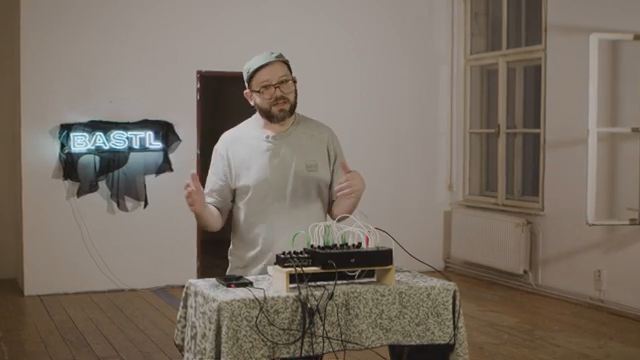
The video opens with John Dee introducing his live modular performance, built around a Bastl-centric Eurorack system. At the heart of the setup is the M8, serving as both sequencer and drum machine, sending MIDI data to Bastl’s 1983 module. This module then translates the MIDI into CV and gate signals, driving two distinct voices: the Michigan Synthworks MSW810 for bass duties and the Bastl Pizza oscillator for leads. The Pizza’s main and octave outputs are routed through Aikido’s VCAs, then mixed and processed via the Cinnamon filter before being sent to the Basil stereo delay. It’s a compact but carefully considered patch, designed for hands-on manipulation and sonic exploration.
Synchronized LFOs and the Basil Delay: Modulation in Motion
John Dee demonstrates the power of synchronized LFO modulation, using Bastl’s Neo Trinity to inject life into the patch. Multiple LFO channels—set to random stepped or smooth waveforms—are assigned to modulate parameters across the system. Notably, the LFOs morph the Pizza oscillator’s shape and modulate the Cinnamon filter’s cutoff, while simultaneously controlling the Blur and Speed parameters on the Basil delay. This results in a constantly shifting, organic soundscape that evolves in real time.
The real magic emerges when John tweaks Basil’s delay divisions and speed both manually and via modulation. The delay remains tempo-synced, yet the modulated divisions and speed create a sense of movement and unpredictability. The interplay between hand control and LFO-driven changes means the delay never settles, always offering fresh rhythmic and spatial textures. This hands-on approach is central to the performance, making the Basil module a performative instrument in its own right.
"They're all random LFOs, either stepped or smooth, and this adds kind of an organic evolving texture as well, and manipulates the sound in real time with the speed, the space on the basal, and the shape and the filter cut off on the cinnamon."
© Screenshot/Quote: Bastlinstruments (YouTube)
Organic Evolution: Modular Integration in Action
Throughout the performance, the integration of Bastl modules and supporting gear is highlighted by the way sounds morph and interact. The M8’s sequencing, 1983’s MIDI-to-CV translation, and Neo Trinity’s modulation form the backbone, while the Pizza oscillator and MSW810 provide the melodic and bass content. The Aikido VCA allows for dynamic mixing and modulation depth control, letting John fade waveforms and modulations in and out on the fly.
What stands out is the system’s ability to generate complex, evolving textures without losing musicality. The combination of random LFOs, real-time delay tweaks, and careful signal routing means the patch feels alive—never static, always in flux. It’s a demonstration of how modular integration can yield results that are both intricate and playable, with each module playing a distinct but interconnected role.
MSW810: The Bassline Backbone

"I am a really big fan of the MSW 810 from Michigan Synthworks, it is just a solid synth for bass lines and leads, especially for the electro type of music I make."
© Screenshot/Quote: Bastlinstruments (YouTube)
John singles out the Michigan Synthworks MSW810 as a key player for basslines and leads. He notes its reliability and solid sound, particularly for the electro-tinged music at the heart of this performance. The MSW810 receives CV and gate from the 1983, anchoring the patch with a robust low end while also being flexible enough to handle melodic duties. Its straightforward integration into the Bastl ecosystem underscores its effectiveness in a compact modular setup.
Controlled Chaos: Performance and Interaction
The performance thrives on a balance between unpredictability and rhythmic cohesion. John highlights how the Basil delay, when tempo-synced, can be manipulated both manually and via modulation to introduce variation without losing sync. This creates a sense of organic drift—rhythms ebb and flow, but always snap back to the grid, maintaining musicality even as textures shift.
Random modulation from Neo Trinity ensures that no two performances are identical. The system’s unpredictability is embraced, with each run-through offering new surprises as modulation and manual tweaks interact. Despite the chaos, the underlying structure provided by MIDI sequencing and synced delay keeps everything locked together, resulting in a performance that feels both alive and coherent.

"It will stay in sync yet have variation to the divisions and the speed kind of giving it this organic flowing sound, and always staying in sync yet kind of feeling that it drips."
© Screenshot/Quote: Bastlinstruments (YouTube)
This article is also available in German. Read it here: https://synthmagazin.at/bastl-instruments-sync-drift-und-die-kunst-des-modularen-space-echo/
Watch on YouTube:
Latest articles
Watch on YouTube:
Visit the channel:
https://www.youtube.com/bastlinstruments
https://www.youtube.com/bastlinstruments
Links from bastlinstruments:
linkinbio: https://linkin.bio/bastlinstruments
instagram: https://instagram.com/bastlinstruments
facebook: https://facebook.com/bastlinstruments
twitter: https://twitter.com/bastlinstrument
soundcloud: https://soundcloud.com/bastl-instruments
Sponsored links:
If you purchase via these links, we may earn a small commission – at no extra cost to you. The link opens an Amazon keyword search, and results may vary depending on availability.
Bastl 1983
🔗 Check price on Amazon
🔗 Check price on Amazon
Bastl Aikido
🔗 Check price on Amazon
🔗 Check price on Amazon
Bastl Basil
🔗 Check price on Amazon
🔗 Check price on Amazon
Bastl Cinnamon
🔗 Check price on Amazon
🔗 Check price on Amazon
Bastl Neo Trinity
🔗 Check price on Amazon
🔗 Check price on Amazon
Bastl Pizza
🔗 Check price on Amazon
🔗 Check price on Amazon
Michigan Synthworks MSW810
🔗 Check price on Amazon
🔗 Check price on Amazon