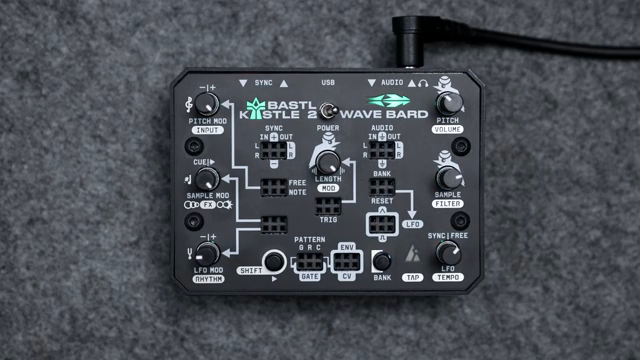
Bastl Instruments, the Czech wizards of modular mischief, have unleashed the Kastle Wave Bard—a portable, patchable stereo sample player that’s as happy in a backpack as it is in a sprawling Eurorack setup. In their latest video manual, Bastl’s own Wes guides us through the Bard’s experimental approach to rhythm, melody, and hands-on sound manipulation. Expect a deep dive into real-time controls, modular I/O, and a web-based sample loader that turns firmware into a playground for sonic explorers. If you’re after quirky beats, evolving textures, or simply want to push familiar samples into uncharted territory, this video lays out the Bard’s spellbook in full detail.
10. May 2025
MILES
Bastl Instruments Kastle Wave Bard: Patchable Sample Sorcery in Your Pocket
Meet the Wave Bard: Portable Patchable Sample Wizardry
The Bastl Kastle Wave Bard enters the scene as a compact, patchable stereo sample player with a clear focus on experimental rhythm and hands-on sound exploration. Bastl’s presentation style is as playful as ever, framing the Bard as a tool for auditory adventures—whether you’re after beats, melodies, or just want to mangle samples in new ways. The device is designed for portability, making it equally at home in a studio, on stage, or wherever inspiration strikes.
What sets the Wave Bard apart is its modular interface, which encourages users to push familiar sounds to their limits. Built-in pattern and rhythm genres offer a starting point, but the real magic happens when you start patching and modulating. Effects like delay and a wild chorus/flanger are onboard, and you can even process external gear through these effects. Bastl’s open, community-driven ethos is evident here, inviting users to fully customise their experience—right down to uploading new sample banks, scales, and rhythm patterns via a web-based app.
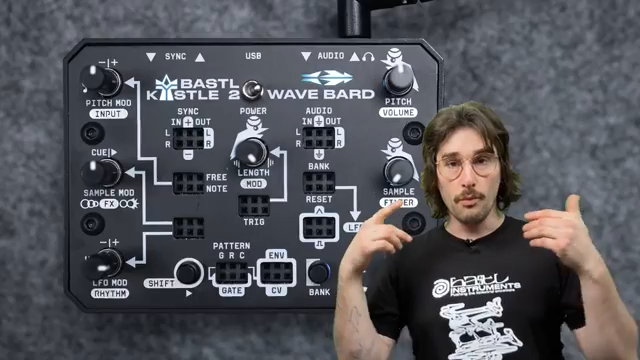
"WaveBard is a portable, patchable, stereo sample player with an experimental take on discovering rhythms, riffs, beats, melodies, or just experimenting with sound in a hands-on way anywhere your auditory adventures might take you."
© Screenshot/Quote: Bastlinstruments (YouTube)
Real-Time Controls and Modulation: Sculpting Samples on the Fly
"The sample mod and its input choose not only how much modulation is applied to this knob, but how it's applied."
© Screenshot/Quote: Bastlinstruments (YouTube)
The Wave Bard’s front panel is dominated by three main real-time controls: sample selection, pitch, and playback length. The sample knob scrubs through available samples (from 3 up to 32 per bank), while the pitch knob offers a two-octave sweep—expandable to four octaves via shift functions. The length knob is particularly versatile, shaping not only sample duration but also the envelope and playback direction, enabling everything from tight stabs to reversed textures.
Modulation is central to the Bard’s design. Each control has a corresponding modulation input with an attenuverter, allowing for both positive and negative modulation. The sample mod knob is especially flexible: in cued mode, it updates sample position only on triggers; in continuous mode, it responds to every modulation change, creating evolving or shifty patterns. The LFO, with both clock-synced and free-running modes, adds further movement, and subtle tweaks to tempo or modulation depth can yield entirely new beats or textures.
Modular I/O: Integrating and Expanding the Bard’s Sonic Palette
Bastl has ensured the Wave Bard plays nicely with other gear, thanks to a robust set of modular inputs and outputs. Audio I/O is accessible via jumper wires, and the device features dedicated modulation points for bank, LFO, sample, and pitch—each with their own quirks. The envelope output, derived from the length mod, serves as a unique modulation source for external modules.
The pattern generator outputs CV and gate, while the sync bay at the top provides a window to the eighth-inch sync jacks for connecting to other CV gear. The Bard is designed to be forgiving—plugging outputs into inputs or stacking modulation won’t harm the device. Advanced mode unlocks further routing options, including stereo/mono input selection, effects bypassing, and tempo sync control. The quantizer, accessible via the bank button, keeps melodies in scale and is perfect for integrating with sequencers or other modular sources.
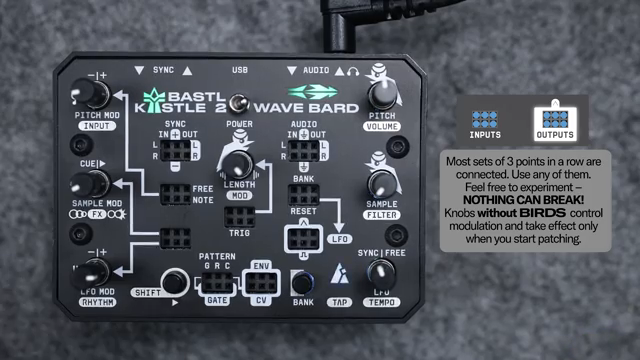
"But the wave bar is a very robust little tool. So you're not you shouldn't be worried about breaking anything by plugging outputs, inputs or stacking modulation."
© Screenshot/Quote: Bastlinstruments (YouTube)
Sample Loader App: Custom Banks, Rhythms, and Scales at Your Fingertips
A standout feature is the web-based sample loader app, which lets users build and customise sample banks, rhythms, and scales before flashing them as firmware. The app supports between 1 and 32 banks, with 3 to 32 samples per bank (all banks must have the same sample count). Users can drag and drop samples, edit their order, adjust stereo/mono settings, and tweak quality to manage memory usage. There’s also basic sample processing—fade, trim, and batch operations—to help fit longer loops or create lo-fi textures.
Scales and rhythms are equally editable, with intuitive interfaces for adding, deleting, and previewing patterns. Once satisfied, users can save drafts, swap out banks, or generate firmware for upload via USB-C. The app can even be installed as an offline tool, making it easy to update the Bard’s sonic arsenal wherever you are. This workflow cements the Bard’s role as a highly customisable, ever-evolving instrument.
Patch Tips and Performance Tricks: Unlocking the Bard’s Full Potential
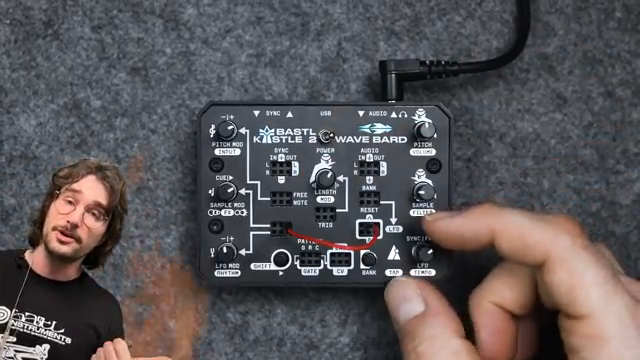
"You're going to have to quest for your own mystical, magical rhythms and wave-alicious wave barred sounds."
© Screenshot/Quote: Bastlinstruments (YouTube)
The video closes with a series of patching tips that highlight the Bard’s versatility and encourage creative exploration. Using the LFO as a trigger source, modulating its speed with CV, and patching into the note input can produce evolving, scale-locked progressions—especially effective with chord samples. The interplay between the sample mod knob and sample position is key to generating new rhythmic patterns, and variable voltage patched into the gate input can randomise or invert rhythms for less predictable results.
Effects shouldn’t be overlooked: holding shift and spinning the sample knob unlocks delay and chorus/flanger textures that can radically transform beats. Changing banks and experimenting with modulation routings keeps the Bard’s output fresh. Ultimately, Bastl’s approach is about discovery—users are encouraged to quest for their own magical rhythms and textures, making the Wave Bard a true playground for patch-happy explorers.
This article is also available in German. Read it here: https://synthmagazin.at/bastl-instruments-kastle-wave-bard-patchbares-sample-zauberwerk-fuer-die-hosentasche/
Watch on YouTube:
Latest articles
Watch on YouTube:
Visit the channel:
https://www.youtube.com/bastlinstruments
https://www.youtube.com/bastlinstruments
Links from bastlinstruments:
linkinbio: https://linkin.bio/bastlinstruments
instagram: https://instagram.com/bastlinstruments
facebook: https://facebook.com/bastlinstruments
twitter: https://twitter.com/bastlinstrument
soundcloud: https://soundcloud.com/bastl-instruments
Sponsored links:
If you purchase via these links, we may earn a small commission – at no extra cost to you. The link opens an Amazon keyword search, and results may vary depending on availability.
Bastl Kastle Wave Bard
🔗 Check price on Amazon
🔗 Check price on Amazon