Bastl Instruments, known for their playful yet deeply functional approach to modular hardware, unveil the Citadel—a Eurorack adaptation of their Castle 2 platform. In this comprehensive video manual, Bastl’s Wes walks through every facet of the Citadel, from its dual firmware options (WaveBard and FX Wizard) to advanced patching, MIDI integration, and audio routing tricks. The video is a treasure trove for anyone curious about how the Citadel can serve as a central hub in both compact and sprawling modular setups. Expect a deep dive into voltage ranges, real-time modulation, and creative workflows that highlight Bastl’s signature blend of utility and sonic mischief.
25. October 2025
MILES
Bastl Instruments Citadel: The Modular Nexus Revealed
Citadel: Bastl's Modular Stronghold
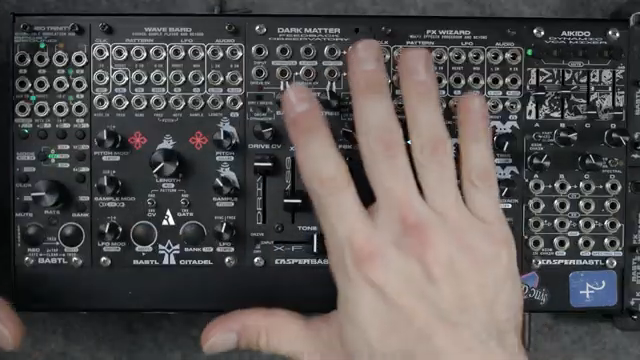
The Bastl Citadel is introduced as a Eurorack powerhouse, inheriting its core from the Castle 2 platform but expanding on it with thoughtful enhancements. Bastl positions the Citadel as more than just a repackaged Castle 2—it’s a central module designed to act as a nexus for voltage, audio, and creative patching in any modular system. The video underscores its suitability for both newcomers and seasoned modular users, thanks to its compact form factor and the sheer breadth of functions packed within.
Every submodule from the Castle series is broken out and accessible, allowing users to deploy them independently or in tandem. This modular independence is a key theme: the Citadel is pitched as equally at home as a system starter or as a dense utility hub in larger racks. Bastl’s community-driven ethos is evident in the way the module is presented—as a tool for experimentation, patch programmability, and hands-on exploration.
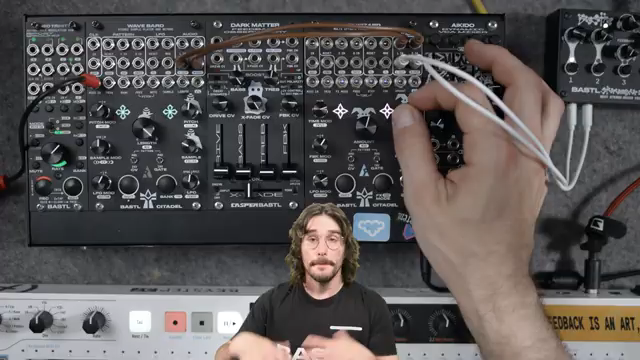
"This device is really going after its namesake to be a towering module that can act as a sort of nexus for your modular and voltage experiments."
© Screenshot/Quote: Bastlinstruments (YouTube)
Dual Firmware, Expanded Features
"The WaveBard is a stereo sample player with a unique length macro that controls both the envelope and the playback direction of the sample."
© Screenshot/Quote: Bastlinstruments (YouTube)
A major highlight of the Citadel is its ability to run two distinct firmware options: WaveBard and FX Wizard, both inherited from the Castle 2 but now with added hardware perks. WaveBard operates as a stereo sample player, boasting a unique length macro that simultaneously manipulates envelope and playback direction. It also brings delay and chorus effects, a robust quantizing system, and a web-based editor for deep sample and scale management. FX Wizard, on the other hand, is a multi-effect processor with stereo spread, time buffer manipulation, pitch and frequency effects, and hands-on panning. Both firmwares are easily swappable thanks to a reversible panel and USB-C connectivity for updates.
The Citadel’s hardware upgrades include a TRS MIDI input, a robust headphone output capable of driving up to 250 ohm cans, and larger, more tactile metal potentiometers. MIDI integration is particularly well thought out, with both firmwares offering nuanced control schemes—WaveBard maps features across the keyboard and responds to MIDI CCs, while FX Wizard leverages the mod wheel and assigns creative functions to different keyboard zones. The video also details the panel layout, with a clearly segmented patchbay, shift and bank buttons for expanded control, and new switches that alter pattern generator behaviour. These additions make the Citadel not just a firmware host, but a genuinely enhanced modular instrument.
Patch Programmability and Creative Sound Design
Bastl’s video manual leans heavily into patching tips and the creative autonomy the Citadel offers. Each submodule—clock, pattern generator, LFO, audio input/output—can be patched independently, encouraging users to treat the Citadel as a modular playground. The LFO, for instance, is deceptively simple at first glance but reveals complex, patch-programmable waveforms when modulated or reset with external signals. The pattern generator benefits from switches and voltage-controlled behaviours, allowing for real-time injection of randomness or inversion in sequences.
The video demonstrates how the Citadel’s modular independence enables intricate behaviours: users can create evolving rhythms, modulate sample playback, or generate quirky modulation sources by combining internal and external signals. The emphasis is on hands-on exploration—Bastl encourages users to experiment with patching, modulation, and sequencing to unlock unique sonic results, making the Citadel a fertile ground for creative sound design.
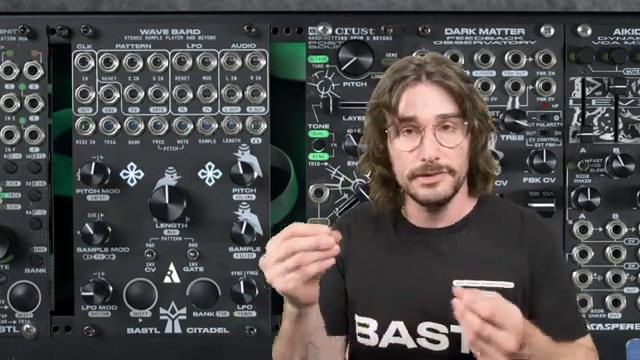
"You can create, you know, patch programmable functions and behaviors that are really, really awesome."
© Screenshot/Quote: Bastlinstruments (YouTube)
Real-Time Modulation and Rhythmic Adaptability
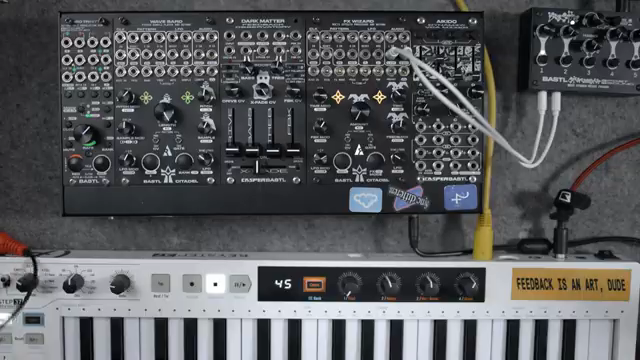
"You can, of course, now use TRS MIDI to control both the Citadel WaveBart and the Citadel effects wizard."
© Screenshot/Quote: Bastlinstruments (YouTube)
Demonstrations throughout the video showcase the Citadel’s prowess in real-time modulation and rhythm generation. The module can sync to external clocks via analog or MIDI, with visual feedback indicating sync status. Users can divide or multiply incoming clock signals, and the pattern generator’s behaviour can be altered on the fly using both switches and CV inputs. This adaptability is highlighted as a key strength for live performance and generative patches.
The Citadel’s LFO and envelope outputs can be routed to modulate effects, sample playback, or other parameters, enabling dynamic, evolving textures. MIDI control further expands real-time possibilities, allowing for chromatic sample triggering, CC-based parameter modulation, and seamless integration with external sequencers. The result is a module that thrives in both tightly sequenced and freeform, exploratory contexts.
Advanced Settings and Audio Routing: The Heart of Integration
The advanced settings menu and audio routing options are given a thorough walkthrough, revealing the Citadel’s flexibility in handling audio and control signals. Users can route audio inputs through internal effects or mix them at the output, with visual indicators and shift functions making configuration intuitive. Input gain and output levels are easily set, and the headphone output mirrors the main output for monitoring.
The video details the various voltage ranges for CV and audio inputs/outputs, ensuring compatibility with a wide range of Eurorack and external gear. The sample loader and web-based editor are also demonstrated, showing how users can upload samples, edit scales and rhythms, and manage firmware updates. These features cement the Citadel’s role as a central, programmable hub—capable of both standalone operation and deep integration within a modular ecosystem.
This article is also available in German. Read it here: https://synthmagazin.at/bastl-instruments-citadel-das-modulare-kraftwerk-im-ueberblick/
Watch on YouTube:
Latest articles
Watch on YouTube:
Visit the channel:
https://www.youtube.com/bastlinstruments
https://www.youtube.com/bastlinstruments
Links from bastlinstruments:
linkinbio: https://linkin.bio/bastlinstruments
instagram: https://instagram.com/bastlinstruments
facebook: https://facebook.com/bastlinstruments
twitter: https://twitter.com/bastlinstrument
soundcloud: https://soundcloud.com/bastl-instruments
Sponsored links:
If you purchase via these links, we may earn a small commission – at no extra cost to you. The link opens an Amazon keyword search, and results may vary depending on availability.
Bastl Citadel
🔗 Check price on Amazon
🔗 Check price on Amazon