In this vibrant track breakdown, Arturia’s official channel hands the reins to Yetundey, who crafts a Reggaeton groove using only Analog Lab’s sound palette. The video is a showcase of how Analog Lab’s preset banks—especially the Reggaeton Essentials—can be shaped into punchy basslines, melodic plucks, and lush pads, all within a modern DAW workflow. We get a close look at how creative manipulation of macros, layering, and arpeggiator tricks can elevate a groove from static to dynamic. For producers curious about Analog Lab’s versatility in genre-specific production, this walkthrough offers a clear, hands-on demonstration of both sound design and arrangement techniques.
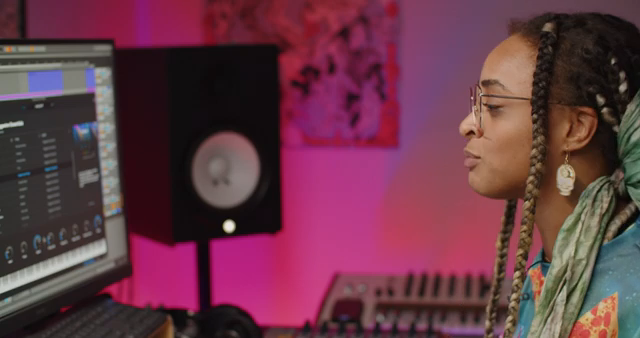
26. November 2024
LYRA
Arturia Analog Lab: Reggaeton Essentials Dissected – A Workflow Deep Dive
Reggaeton Foundations – Analog Lab Only
The video opens with Yetundey introducing a track built entirely from Analog Lab’s Reggaeton Essentials sound bank. This sets a clear constraint: every sound in the production, from drums to leads, is sourced from Analog Lab’s preset architecture. The focus is on demonstrating how a single software instrument can provide all the elements needed for a genre-specific groove.
By limiting the palette to Analog Lab, the workflow emphasizes both the breadth of the preset library and the flexibility of its macro controls. There’s no external sound design or third-party plugins—just careful selection and tweaking of presets to fit the Reggaeton aesthetic. This approach not only highlights Analog Lab’s sonic range but also its potential as a one-stop shop for in-the-box production.
Core Sounds: Bass, Plucks, and Genre-Tailored Presets
The backbone of the track is established with the ‘Moscow Bass’ preset, which provides a deep, sustained foundation. Yetundey demonstrates how minimal EQ tweaks can make a preset sit perfectly in the mix, underscoring the out-of-the-box quality of Analog Lab’s sound design. The bass is complemented by a lead pluck—’Pulse Bell’—which is shaped further by adjusting its macro controls to blend better and reduce harshness, illustrating how even subtle parameter changes can yield significant mix improvements.
Rhythmic complexity is introduced with the ‘Jungle Drum’ preset, filling the spaces left by the bass and pluck. This layering technique is essential for the Reggaeton groove, ensuring each element occupies its own frequency and rhythmic space. The demonstration continues with the addition of the ‘Lies Synth’ for warm chords and ‘Nairy Pluck’ for airy, high-frequency content, both of which are tweaked using Analog Lab’s macro knobs. This hands-on manipulation shows how the presets are not static—they’re starting points for further creative exploration.
A melodic lead, ‘Lost Synth,’ is brought in, with Yetundey actively shaping its modulation, sustain, and delay to ensure it fills the right sonic role without dominating the mix. The workflow here is iterative: select a preset, tweak macros, and blend it into the evolving arrangement. The video makes clear that Analog Lab’s Reggaeton Essentials bank is more than a collection of genre clichés; it’s a toolkit for nuanced, layered production.
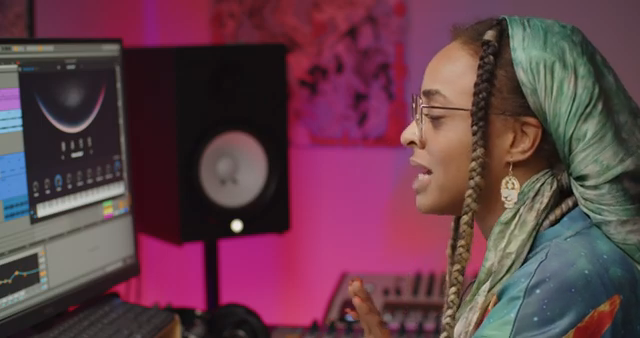
"Just the sound as it is already sounds amazing."
© Screenshot/Quote: Arturiaofficial (YouTube)
Performance Macros and Dynamic Arrangement
"Really take advantage of these knobs down here. Play around with them. It changes the sound so much and it really makes your whole production sound so much fuller and gives it that little space, you know?"
© Screenshot/Quote: Arturiaofficial (YouTube)
A key takeaway from the walkthrough is the emphasis on using Analog Lab’s macro controls to inject life into the arrangement. Yetundey repeatedly demonstrates how adjusting parameters like filter, envelope, and effects can transform a preset from flat to dynamic. This is particularly evident with the ‘Lies Synth’ and ‘Nairy Pluck,’ where small tweaks yield a fuller, more expressive sound that adapts to the needs of the track.
Arrangement-wise, elements are introduced gradually, with the arpeggiator and leads entering later to open up the mix and drive the track’s energy. The workflow is less about static loops and more about evolving textures—each sound is manipulated and automated to keep the groove fresh. This approach highlights Analog Lab’s suitability for producers who want to move quickly from idea to finished arrangement without sacrificing sonic depth.
Arpeggiator Tricks: Creative Rhythms and Movement
The final section spotlights advanced arpeggiator techniques within Analog Lab. Yetundey demonstrates how unsyncing the arpeggiator rate and experimenting with step counts can yield unexpected, organic rhythmic patterns. By automating the chorus mix with an external LFO (in this case, Ableton’s), she adds further movement, breaking up the static feel of a typical arpeggiated line.
Recording the manipulated arpeggiator output to a separate audio channel enables even more creative possibilities, such as chopping or layering the resulting textures. This workflow showcases how Analog Lab’s arpeggiator isn’t just a basic note repeater—it’s a tool for generating unique, genre-bending rhythmic material. For producers looking to inject unpredictability and motion into their tracks, these techniques are a compelling demonstration of Analog Lab’s depth.
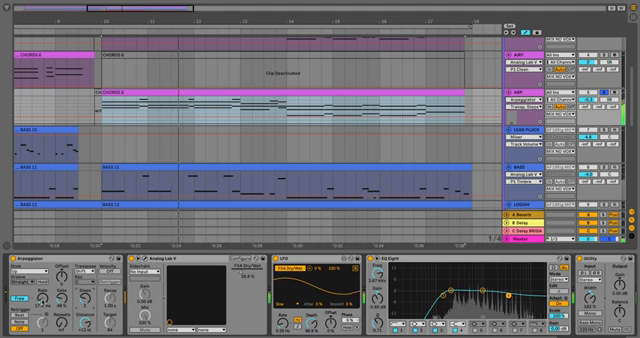
"When you go into the arpeggiator, unsync the rate and then play around with the rate and the steps and then really cool things happen."
© Screenshot/Quote: Arturiaofficial (YouTube)
This article is also available in German. Read it here: https://synthmagazin.at/arturia-analog-lab-reggaeton-essentials-seziert-ein-workflow-deep-dive/
Watch on YouTube:
Latest articles
Watch on YouTube:
Visit the channel:
https://www.youtube.com/ArturiaOfficial
https://www.youtube.com/ArturiaOfficial
Links from ArturiaOfficial:
website: https://www.arturia.com
instagram: https://instagram.com/arturia_official
twitter: https://twitter.com/ArturiaOfficial
soundcloud: https://soundcloud.com/arturia-official/albums
Sponsored links:
If you purchase via these links, we may earn a small commission – at no extra cost to you. The link opens an Amazon keyword search, and results may vary depending on availability.
Arturia Analog Lab
🔗 Check price on Amazon
🔗 Check price on Amazon