ASM Ashun Sound Machines returns with a modern take on sequencing in their Leviasynth, pushing beyond the basics with real-time recording, track layering, and parameter sequencing. This official walkthrough targets sound designers and performance-focused musicians, diving into the interface, track assignments, and the creative engines powering the Leviasynth’s evolving patterns. We dissect how these digital workflows are constructed and where ASM’s sequencing architecture stands out—or leaves us with questions.
25. July 2026
LYRA
Architectures in Motion: ASM’s Leviasynth Sequencer Unpacked
Leviasynth Sequencer: More than Just Steps
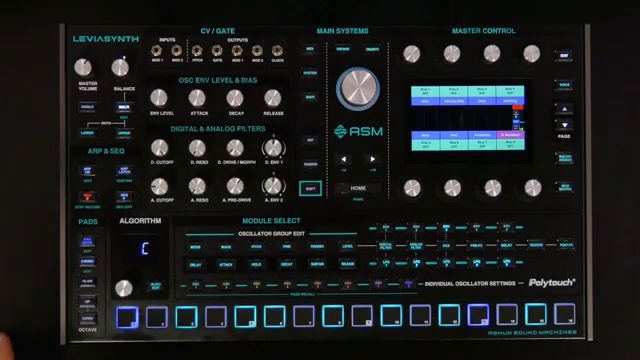
The Leviasynth sequencer is pitched as a rapid prototyping tool for musical ideas, going far beyond the confines of a traditional step sequencer. ASM emphasizes its ability to record not only notes and chords but also expressive performance gestures and live macro parameter movements. The architecture is clearly designed for immediacy: users can edit and reshape sequences directly from the front panel, with hands-on controls that encourage fluid experimentation.
While the video focuses on the Desktop version, ASM clarifies that the sequencer controls are conveniently mapped to the Arp and Sequence area, with distinct differences between Desktop and Keyboard editions. The workflow revolves around a combination of dedicated transport controls and deep menu options accessible via the display, soft buttons, and pads. This hybrid of tactile and menu-driven interaction is central to how Leviasynth invites users to sculpt evolving soundscapes.
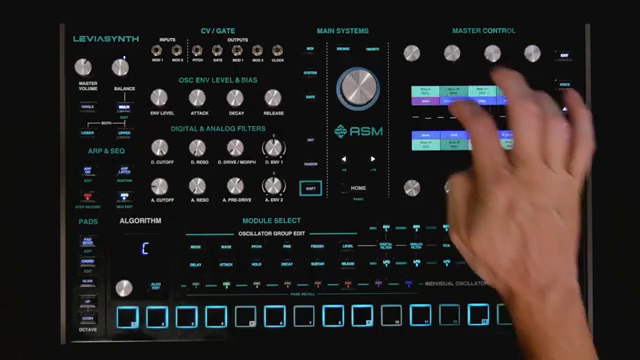
"It's not just a basic step sequencer, it can record notes, chords, performance gestures, and macro movement."
© Screenshot/Quote: Ashunsoundmachines (YouTube)
Tracks, Real-Time Recording & Macro Power
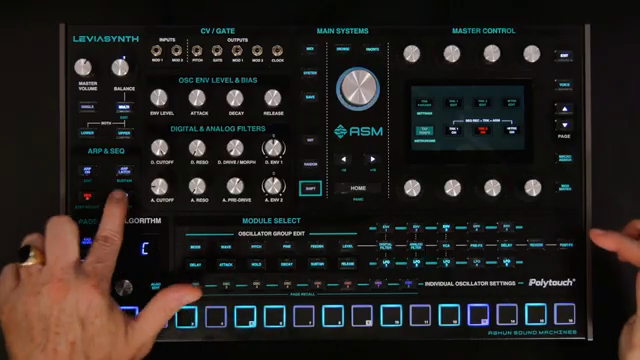
"The macro track functions a little bit differently than the other two tracks. The macro track is for your parameter values of your macros."
© Screenshot/Quote: Ashunsoundmachines (YouTube)
A key highlight of the Leviasynth sequencer is its multi-track approach, enabling users to assign tracks to different layers within a patch—such as lower and upper layers for distinct melodies or parts. The track parameter screen exposes a granular set of controls: rate (with divisions down to 1/16 note), sequence length, lock status for dynamic looping, swing percentage, and playback direction. These parameters allow for both rigid and organic sequencing tailored to the user’s needs.
Recording is refreshingly flexible. The video demonstrates both real-time and step-recording modes. Real-time recording is as simple as holding the record button and playing, capturing not just notes but also nuances like macro movements. The macro track, in particular, stands out: it’s dedicated to sequencing parameter values for performance macros, letting users automate evolving timbral changes or effect sweeps. Macro automation can be set to unique sequence lengths, creating interlaced cycles of modulation atop melodic and harmonic content.
Step Recording, Track Muting & Creative Tools
Leviasynth’s step recording workflow is robust, offering per-step editing of notes, velocity, gate length, multi-triggers, probability, drift, and entropy deviation. The inclusion of entropy deviation is particularly interesting, allowing controlled randomization for evolving sequences—a feature that appeals to experimental creators. The system supports offsetting and batch-adjusting step values, which is demonstrated in the walkthrough with entropy deviation distributed across selected steps, then printed into the pattern for permanent variation.
Track muting is immediate: any track, including the dedicated macro lane, can be muted or reactivated with a single touch. This real-time muting, combined with step muting and pattern editing from the pad view, opens up live performance and improvisational possibilities. The ability to lock sequence lengths independently across melodic and macro tracks further enhances the architecture’s flexibility.
"Entropy deviation allows us to make interesting variations to our pattern and lock them in."
© Screenshot/Quote: Ashunsoundmachines (YouTube)
Metronome Mastery & Playback Modes Unveiled
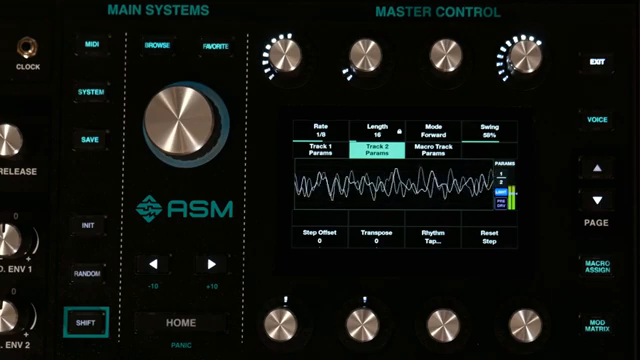
"You can also do random modes."
© Screenshot/Quote: Ashunsoundmachines (YouTube)
ASM addresses the supporting cast of sequencing: metronome controls are deeply integrated, with options for volume, output routing (headphones or line outs), sound selection, and playback behavior—such as metronome-on-only-during-record or always-on. These details are handled through dedicated shift and tap commands, ensuring quick access during sessions.
Playback modes are versatile: users can select forward, backward, zigzag, random, and more for each track, and transpose functions are available for instant melodic shifts. The pad mode reveals step-by-step pattern layouts, allowing real-time step muting and visualization of sequence length. Finally, the video underscores the sequencer’s ability to send data to external gear and configure voice scales per sequence, hinting at wider integration potential. While the walkthrough is comprehensive, ASM reminds viewers that this is just the starting point and encourages consultation of the manual for deeper features.
This article is also available in German. Read it here: https://synthmagazin.at/architekturen-in-bewegung-asm-leviasynth-sequencer-im-detail/
Watch on YouTube:
Latest articles
Watch on YouTube:
Visit the channel:
https://www.youtube.com/AshunSoundMachines
https://www.youtube.com/AshunSoundMachines
Links from AshunSoundMachines:
website: https://ashunsoundmachines.com
instagram: https://instagram.com/AshunSoundMachines
twitter: https://twitter.com/AshunSound
soundcloud: https://soundcloud.com/AshunSoundMachines
Sponsored links:
If you purchase via these links, we may earn a small commission – at no extra cost to you. The link opens an Amazon keyword search, and results may vary depending on availability.
ASM Leviasynth Desktop
🔗 Check price on Amazon
🔗 Check price on Amazon