Step into a world where tabla ghosts swirl with neon circuitry, as Alex Ball unravels the story behind Charanjit Singh’s enigmatic 1982 album, ‘Synthesizing – Ten Ragas to a Disco Beat.’ This is not just a tale of machines and melodies, but a journey through cultural echoes, technological serendipity, and the spectral overlap of genres. Ball, with his signature cinematic lens, explores how Singh’s fusion of Indian classical ragas and early Roland synths conjured a soundscape decades ahead of its time. Prepare to drift through a narrative where history, myth, and magnetic resonance blur, inviting us to question where Acid House truly began.

23. January 2026
LUMINA
Alex Ball Illuminates: The Sonic Mirage of Acid House’s Indian Genesis
Roland Jupiter-8, Roland TB-303, Roland TR-808, Roland VC-10, Roland VP-330
Ragas in the Neon Fog
The opening of Alex Ball’s exploration is a plunge into a sonic mirage—music that shimmers with the pulse of disco yet breathes with the ancient soul of Indian ragas. We are greeted by the spectral question: could this be Chicago, 1980s, or is it something else entirely? The answer dissolves the boundaries of time and place, revealing Charanjit Singh’s 1982 Bombay experiment, where tradition and circuitry entwine.
‘Synthesizing – Ten Ragas to a Disco Beat’ is not merely an album; it is a nebula where Indian classical motifs drift through the circuitry of early Roland machines. Singh’s vision was to translate the raga’s narrative into electronic language, layering the TB-303’s serpentine bass with the heartbeat of the TR-808 and the lush atmospheres of the Jupiter-8. The result: a soundscape that feels both ancient and futuristic, a fog of melody and machine that lingers long after the final note.
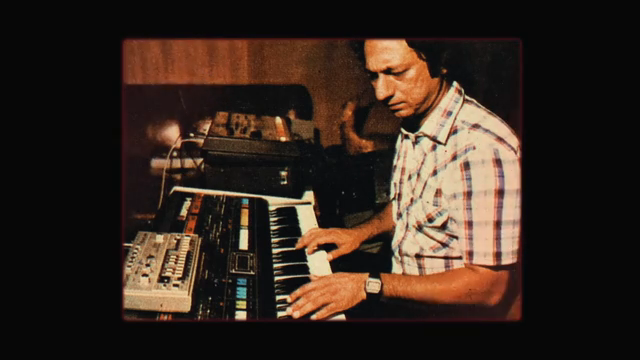
"Singh hit upon the idea of using them to create synthesized versions of Indian ragas with a contemporary disco beat behind."
© Screenshot/Quote: Alexballmusic (YouTube)
Machines as Storytellers
"Oh, he was very proud of it, because this was his most personal thing, you know."
© Screenshot/Quote: Alexballmusic (YouTube)
Singh’s hands summoned a new mythology from the Roland pantheon. The TB-303, TR-808, and Jupiter-8 became his brushstrokes, painting raga forms in electric color. Each device, imported with care and curiosity, was more than a tool—it was a co-conspirator in Singh’s quest to synthesize tradition and innovation.
Ball guides us through Singh’s process: the 303’s basslines entwined with the 808’s disco pulse, Jupiter-8’s textures mimicking the timbres of sitar, santur, and monsoon. Even a vocoder, whispering mantras, finds its place in this electronic tapestry. What emerges is not imitation, but transformation—a new landscape where the ghosts of Indian instruments flicker in LED-lit shadows, and every note is a step into uncharted territory.
Parallel Currents: Context and Connection
The cultural and musical context surrounding Singh’s creation is a river with many tributaries. Ball, ever the cinematic narrator, draws lines between continents and decades, showing how Singh’s outlier recording was both a product of its environment and a harbinger of things to come. The rediscovery of the album by Dutch DJ Edo Bauman decades later is itself a story of sonic ghosts resurfacing, their echoes suddenly resonant in a new era.
Here, Ball and his interview with Johanz Westerman reveal how Singh’s music, though born in obscurity, found new life on global stages. The uncanny resemblance to Acid House is dissected: shared machinery, disco’s four-on-the-floor heartbeat, and the double harmonic scale—a scale that blooms in both Indian ragas and seminal Acid tracks. Yet, beneath the surface, the intentions and expressions diverge, shaped by the magnetic fields of culture and personal vision.
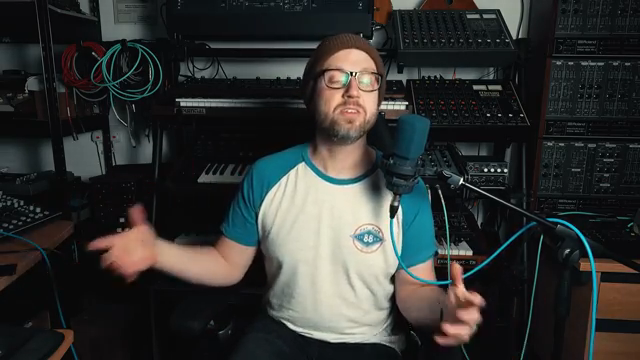
"We have different people in different places at different times with different cultural backdrops making music, and the outcomes are eerily similar, but not the same."
© Screenshot/Quote: Alexballmusic (YouTube)
Divergence in the Acid Mist

"If it was acid, you would crank the resonance on the filter, and you would add accents."
© Screenshot/Quote: Alexballmusic (YouTube)
To drift deeper is to sense the subtle but profound differences between Singh’s compositions and the Acid House that would later rise in Chicago’s underground. Ball slows the tempo, strips away resonance and distortion, and reveals that Singh’s approach was rooted in phrasing and melodic storytelling—each line a river rather than a loop.
Where Acid House producers sculpted single-bar loops into hypnotic fractals, Singh sought to emulate the living world: the shimmer of rain, the call of peacocks, the breath of the tempura. His Jupiter-8 solos are improvisational flights, not mechanical repetitions. The machines, in Singh’s hands, do not simply repeat—they evoke, they narrate, they remember. This is not Acid House, but something parallel, luminous, and singular.
Echoes and Inheritance: The Ongoing Resonance
Singh’s legacy is a question mark suspended in the vapor trail of electronic music history. Ball’s conclusion is not a verdict, but an invitation to reflect. The story of Acid House’s possible Indian genesis is a myth we want to believe—a magnetic resonance that draws us in, even as the facts resist simple resolution. Singh and the Chicago pioneers were separated by oceans and intent, their sounds converging by cosmic accident rather than direct lineage.
Yet, the impact of Singh’s vision ripples outward. His synthesis of ancient and modern, of raga and Roland, continues to haunt the underground, inspiring new generations to blur boundaries and reimagine the possibilities of machine and melody. Ball’s narrative leaves us with a sense of wonder: perhaps it was inevitable that the 303’s spectral voice would find its way into such disparate worlds, weaving a tapestry of shared frequencies across time and space.
For those who wish to truly feel the magnetic pull of these sounds, Ball’s video offers more than words can convey. The real ghosts of this story—those nebula drones and disco beats—are best experienced in the shifting light and resonance of the music itself.
This article is also available in German. Read it here: https://synthmagazin.at/alex-ball-beleuchtet-die-klangspiegelung-des-acid-house-indiens-geheime-genesis/
Watch on YouTube:
Latest articles
Watch on YouTube:
Visit the channel:
https://www.youtube.com/AlexBallMusic
https://www.youtube.com/AlexBallMusic
Links from AlexBallMusic:
Patreon: https://patreon.com/AlexBallMusic
Bandcamp: https://alexball.bandcamp.com/releases
Instagram: https://instagram.com/alexballmusic
Facebook: https://facebook.com/alexballmusic
Alex Ball Music: https://alexballmusic.com
Sponsored links:
If you purchase via these links, we may earn a small commission – at no extra cost to you. The link opens an Amazon keyword search, and results may vary depending on availability.
Roland Jupiter-8
🔗 Check price on Amazon
🔗 Check price on Amazon
Roland TB-303
🔗 Check price on Amazon
🔗 Check price on Amazon
Roland TR-808
🔗 Check price on Amazon
🔗 Check price on Amazon
Roland VC-10
🔗 Check price on Amazon
🔗 Check price on Amazon
Roland VP-330
🔗 Check price on Amazon
🔗 Check price on Amazon