The Catalyst Sequencer from 4ms Company isn’t your average stepper—it’s an 8-channel CV and gate powerhouse that invites modular users to rethink what a sequencer can do. In this in-depth demo, 4ms walks through both the basics and the more esoteric features, from phase-based sequencing to per-channel modulation tricks. If you’re after a sequencer that can swing, ratchet, and drift off the grid at will, this video lays out exactly how the Catalyst fits into a creative Eurorack workflow. Expect a patch-oriented approach, plenty of hands-on examples, and a clear look at how phase and probability can turn a simple pattern into something far more alive.
5. April 2024
MILES
4ms Company Catalyst Sequencer: Phase, Probability and Patchable Chaos
Catalyst Unleashed: 8 Channels, Infinite Possibilities
4ms Company’s Catalyst Sequencer enters the Eurorack arena as an 8-channel CV and gate sequencer, but it’s clear from the outset that this isn’t just another grid of blinking LEDs. Each of the eight outputs can be freely assigned as either a CV or gate channel, making the module highly adaptable for a range of voices and modulation duties. The demo opens with a brisk rundown of the core concept, highlighting the flexibility in output assignment and the module’s knack for both straightforward and experimental sequencing.
What sets the Catalyst apart is its dual nature: it’s equally at home handling basic melodic or rhythmic duties as it is pushing into more abstract territory. The introduction hints at a suite of advanced features, including the headline phase-based sequencing, which promises to shake up the usual step-by-step approach. For those accustomed to traditional clocked sequencers, Catalyst’s architecture invites a different way of thinking about time and modulation within a patch.
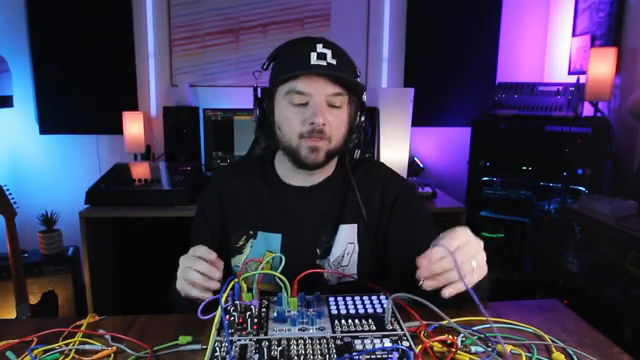
"It has a very unique way of sequencing that they're calling phase-based sequencing."
© Screenshot/Quote: 4Mscompany (YouTube)
Phase, Grids and Modulation: The Catalyst’s Secret Sauce
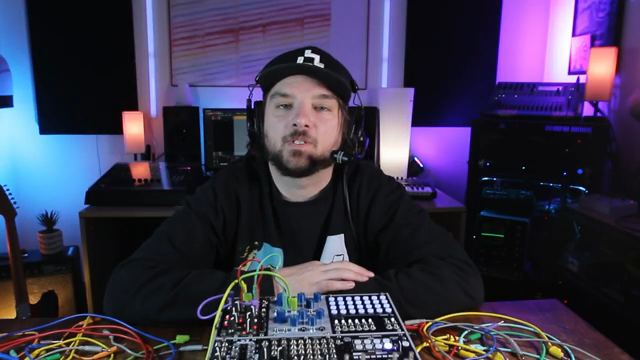
"What I find really fun with this is to mix the two."
© Screenshot/Quote: 4Mscompany (YouTube)
Phase-based sequencing is the Catalyst’s party trick, allowing users to scrub through a sequence using a dedicated fader or external CV. This means you’re not limited to advancing steps with a clock pulse—you can push, pull, or even warp the sequence position in real time, opening up a world of off-grid grooves and evolving patterns. The demo shows phase being driven by an LFO, resulting in sequences that move forward, backward, or bounce unpredictably, depending on the modulation source.
Beyond phase, the Catalyst offers a highly adjustable grid: step length, start point, and page structure are all mutable, and each channel can be modulated independently. The video demonstrates how CV and gate channels can be quantized to various scales, swung off the grid, or tied and ratcheted for rhythmic complexity. This level of per-channel modulation means that even a simple patch can quickly morph into a dense, shifting network of voltages and triggers.
Clocked or Free: Syncing the Catalyst to Your Modular World
The Catalyst Sequencer is built for both clock-driven and phase-driven sequencing, and switching between these modes is seamless. With an internal clock, users can set tempo via tap or knob, while external clocking allows for tight integration with other sequencers or drum machines. The demo walks through syncing the Catalyst to a Metron sequencer, ensuring that patterns lock in with the broader system, and shows how the reset input can keep everything aligned.
What’s particularly useful is the ability to combine clock and phase modulation. By patching an LFO or stepped CV into the phase input, users can create sequences that drift, stutter, or leap unpredictably, all while staying in sync with the master clock. This dual approach makes the Catalyst equally suitable for locked-in grooves or more experimental, generative patches—ideal for modular users who want their sequences to breathe a little.
Advanced Controls: Transpose, Direction and the Joy of Probability
Diving into the advanced features, the Catalyst offers a host of controls that go far beyond basic step sequencing. Direction can be changed on the fly, allowing patterns to run forwards, backwards, or alternate, while transpose and start point controls let users shift sequences melodically or rhythmically. The sequence length is also highly flexible, with support for multi-page patterns and per-channel adjustments, making odd time signatures and polymetric patterns a breeze.
The module’s gate and voltage channels each come with their own bag of tricks. Gates can be swung off the grid, ratcheted for rapid-fire triggers, or tied for longer notes, all on a per-step basis. Voltage channels support glide and quantization, and both types can have probability applied—meaning steps can randomly trigger or shift pitch within a defined range. The video shows how these features can inject subtle variation or outright chaos, depending on taste.
Perhaps most intriguing is the ability to layer these functions per channel or per page, allowing for deeply complex and evolving sequences. The demo illustrates how probability, glide, and ratchet can be combined, resulting in patterns that are never quite the same twice. For those who crave unpredictability or want to avoid repetitive loops, these tools are indispensable.
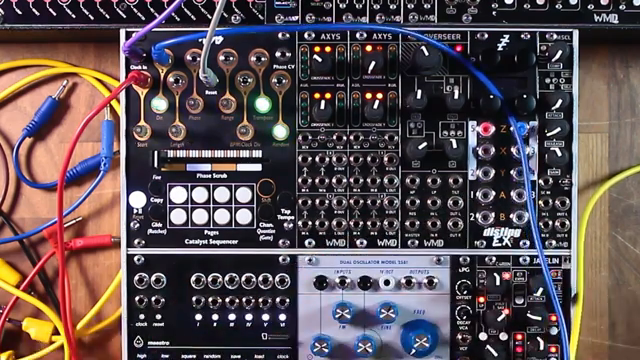
"That's a cool way to just add a little bit of variation to your gates."
© Screenshot/Quote: 4Mscompany (YouTube)
Patch, Play, and Push the Grid: Catalyst’s Experimental Edge
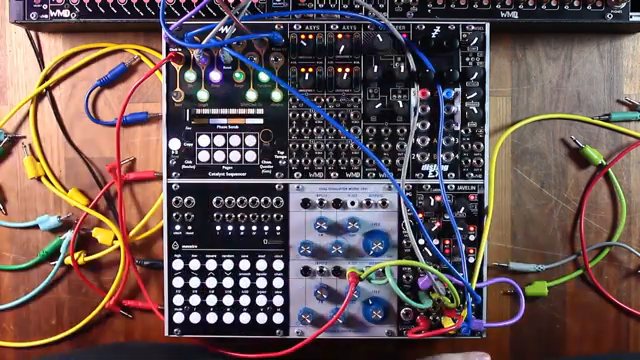
"You can get sequences you would have never thought of before."
© Screenshot/Quote: 4Mscompany (YouTube)
The final stretch of the demo is a playground for patchers, as multiple channels are routed to modulate everything from filter resonance to envelope release and drum triggers. By assigning different channel lengths and quantization settings, the Catalyst quickly generates polyrhythms and evolving textures, all with a few twists of the knob. The phase scrub and CV inputs are used to push sequences off the grid, resulting in patterns that feel organic and unpredictable.
4ms Company’s presentation makes it clear: the Catalyst Sequencer is designed to encourage experimentation. Whether you’re after tightly controlled grooves or wild, generative explorations, the module rewards those willing to patch outside the lines. It’s not just about dance music or four-on-the-floor—this is a sequencer for anyone who wants their modular system to surprise them, step after step.
This article is also available in German. Read it here: https://synthmagazin.at/4ms-company-catalyst-sequencer-phase-probability-und-patch-chaos/
Watch on YouTube:
Latest articles
Watch on YouTube:
Visit the channel:
https://www.youtube.com/4msCompany
https://www.youtube.com/4msCompany
Links from 4msCompany:
website: https://4mscompany.com
instagram: https://instagram.com/4ms_company
facebook: https://www.facebook.com/4mscompany
Sponsored links:
If you purchase via these links, we may earn a small commission – at no extra cost to you. The link opens an Amazon keyword search, and results may vary depending on availability.
Catalyst Sequencer
🔗 Check price on Amazon
🔗 Check price on Amazon